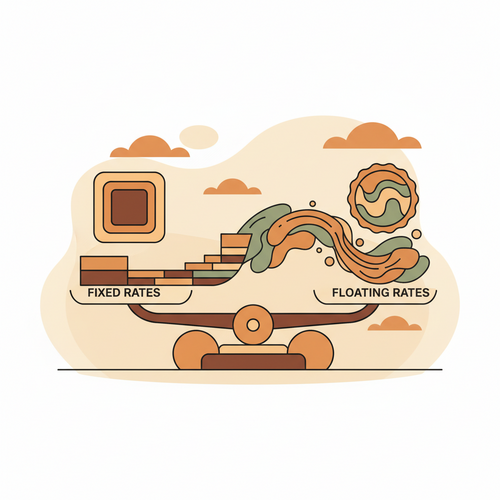
Navigating personal loans can feel like a maze, especially when it comes to interest rates. Understanding the difference between floating and fixed rates is crucial for making a smart financial decision.
This guide will cut through the jargon, helping you figure out which option best suits your wallet and peace of mind. Let’s dive in.
Quick Summary: Floating vs. Fixed Rates
- 💸 Fixed rates offer predictable payments throughout your loan term, shielding you from market changes.
- 📈 Floating rates can change based on market interest rates, potentially saving or costing you more over time.
- ⚖️ Your best choice depends on your comfort with risk and your outlook on future interest rate movements.
What Are Fixed-Rate Personal Loans?
A fixed-rate personal loan means your interest rate—and therefore your monthly payment—stays exactly the same for the entire life of the loan. No surprises, no sudden changes. You’ll know precisely what you owe each month from day one.
This stability can be a huge comfort, allowing for easy budgeting. You’re essentially locking in your cost of borrowing, regardless of what the broader economy does.
Pro Tip: Predictability is Power
If you prioritize a consistent budget above all else, a fixed-rate loan offers unmatched predictability. It’s like setting your financial GPS and knowing the route won’t change, no matter the traffic.
- ✅ Budget Stability: Your monthly payments are predictable and won’t change.
- ✅ Peace of Mind: You’re protected if general interest rates rise.
- ❌ Missed Savings: You won’t benefit if market interest rates fall significantly.
- ❌ Potentially Higher Initial Rate: Sometimes, fixed rates start slightly higher than floating rates.
What Are Floating-Rate Personal Loans?
Unlike fixed rates, a floating-rate personal loan means your interest rate can—and likely will—change over time. These rates are tied to a benchmark interest rate, such as the prime rate or a specific index.
When the benchmark rate goes up, your loan rate goes up, and so do your payments. When it goes down, your payments decrease. It’s a dynamic relationship with the market.
- ✅ Potential Savings: If market rates fall, your payments will decrease.
- ✅ Lower Initial Rate: Floating rates often start lower than fixed rates, offering immediate savings.
- ❌ Payment Uncertainty: Your monthly payments can fluctuate, making budgeting harder.
- ❌ Increased Costs: If market rates rise, your payments will increase significantly.
Understanding the Market: Interest Rate Trends
Making a smart choice between fixed and floating often comes down to your outlook on interest rates. Central bank decisions, like those from the Federal Reserve, heavily influence these trends. If the economy is growing strongly, rates might rise to curb inflation.
Conversely, during economic slowdowns, central banks might lower rates to stimulate activity. Keeping an eye on these broader economic signals can give you an edge in your decision.
Warning: Don’t Guess Blindly!
While no one has a crystal ball, making an informed guess about future interest rate movements is key. If you believe rates are poised to rise, a fixed rate might be your safer bet. If you expect a dip, floating could save you money.
Personal Loan Considerations Beyond Rates
While the rate type is critical, it’s not the only factor. Your credit score plays a massive role in the rates you’re offered, regardless of whether they’re fixed or floating. A higher score almost always means a better rate.
Also, consider the loan term. A longer term might mean lower monthly payments, but you’ll likely pay more in total interest. Shorter terms mean higher payments but less overall interest.
Finally, don’t forget fees. Origination fees, late payment fees, and prepayment penalties can significantly impact the true cost of your loan. Always read the fine print.
| Feature | Fixed-Rate Personal Loan | Floating-Rate Personal Loan |
|---|---|---|
| Interest Rate | Stays the same throughout the loan term. | Fluctuates based on a benchmark index. |
| Monthly Payments | Predictable and consistent. | Can increase or decrease over time. |
| Budgeting | Easier due to stability. | More challenging due to variability. |
| Risk Exposure | Low risk of rising costs. | High risk if interest rates climb. |
| Potential Savings | No benefit if market rates fall. | Potential for savings if market rates fall. |
| Best For | Borrowers prioritizing stability and certainty. | Borrowers comfortable with risk, expecting rates to drop. |
Who Should Choose a Fixed Rate?
If you’re someone who values knowing exactly what’s coming out of your bank account each month, a fixed-rate loan is probably your ideal choice. This stability makes budgeting straightforward and removes any anxiety about future rate hikes.
In my experience, many first-time borrowers prefer fixed rates for the sheer peace of mind. It’s also wise if you anticipate interest rates are generally on an upward trend.
Pro Tip: Lock It In!
When you secure a fixed rate, you’re effectively buying insurance against rising interest rates. This can be incredibly valuable in an unpredictable economic climate, ensuring your payments remain manageable.
Who Should Choose a Floating Rate?
A floating-rate loan can be appealing if you’re comfortable with a bit more financial flexibility and have a higher risk tolerance. You might snag a lower initial interest rate, and if overall market rates drop, your payments could shrink too.
This option is often considered by those who closely follow economic forecasts and believe rates are likely to fall in the near future. However, it’s a gamble that can backfire.
Warning: The Rate Rollercoaster
While floating rates offer potential savings, they also come with the risk of increasing payments. Always ensure your budget can comfortably absorb a potential rise in interest rates before committing to a variable loan.
My Experience: Making the Right Choice
I’ve seen many people rush into personal loans without truly grasping the rate implications. The biggest mistake is choosing based solely on the lowest initial payment without considering long-term stability or potential rate swings.
Before you commit, take the time to compare offers from multiple lenders. Don’t be afraid to use online calculators to project payments for both fixed and floating scenarios, under different rate assumptions. Knowledge truly is power here.
Expert Insight: Diversify Your Research
Beyond rates, always scrutinize lender reputation and customer service. A slightly higher rate from a reputable lender might be a better choice than a low rate with a poor support system. Read reviews and ask questions!
Key Takeaways for Your Loan Decision
- 🔍 Assess Your Risk Tolerance: How comfortable are you with fluctuating payments?
- 🗓️ Consider Your Loan Term: Longer terms increase exposure to rate changes.
- 💰 Review Current & Future Rate Trends: What’s the economic outlook?
- 📊 Compare APRs, Not Just Rates: The Annual Percentage Rate (APR) includes fees, giving you the true cost.
- 🤝 Shop Around: Always get quotes from several lenders.
Conclusion
Choosing between a floating and fixed-rate personal loan boils down to your personal financial situation, your comfort with risk, and your outlook on the economy. Both options have distinct advantages and disadvantages, and the “best” choice is truly subjective.
Armed with this knowledge, you’re now better equipped to make an informed decision that aligns with your financial goals. Which type of personal loan do you think is the best fit for your current financial situation, and why?
For further reading and market insights, consider these trusted resources: