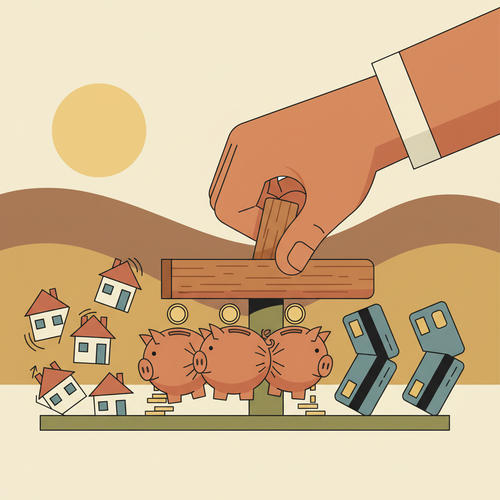
Ever find yourself scratching your head when financial news shouts about the “Fed” changing interest rates? You are definitely not alone in this confusion. These seemingly complex Fed rate decisions impact budget planning and quietly shape your daily financial life in profound ways. From the loan on your car to the interest you earn on your savings, understanding the Federal Reserve’s moves is incredibly important. Consequently, peeling back these layers allows you to see exactly how economic policy hits your personal wallet and monthly budget.
Many beginners feel that central banking is too abstract for their daily lives. However, every time the Fed meets, the outcome of their discussion ripples through every bank in the country. Therefore, staying informed is not just for economists; it is for anyone who wants to protect their purchasing power. This guide will demystify the mechanics of the Fed and provide actionable steps to safeguard your finances. Preparation is your best defense against shifting economic tides and sudden market volatility.
Quick Summary: How Fed Rate Decisions Impact Budget and Savings
- 📈 Loan Costs Fluctuate: Mortgages, car loans, and credit cards can become more expensive or surprisingly cheaper depending on the Fed’s stance.
- 💰 Savings Returns Change: The interest your bank pays on your cash might noticeably increase or unfortunately decrease.
- 💸 Daily Spending is Affected: Inflation directly impacts your purchasing power, shifting with these critical rate adjustments.
- 🛡️ Strategic Planning: You can take proactive steps to minimize the negative impact of higher rates on your personal debt.
What Exactly Are Fed Rate Decisions and Why Do They Matter?
The Federal Reserve, affectionately known as “the Fed,” stands as the central bank of the United States. They shoulder a massive responsibility: ensuring our economy remains stable and grows sustainably. One of their most potent tools is setting the federal funds rate. This isn’t an interest rate you pay directly to the Fed as an individual. Instead, it is the target rate banks use when they lend money to each other overnight. Although it sounds technical, these Fed rate decisions impact budget strategies across the globe.
Think of it as the ultimate financial domino effect. When the Fed moves this primary rate, commercial banks adjust their own prime rates. Subsequently, those changes cascade down to consumer loans and savings products. If the Fed raises the benchmark, it becomes more expensive for your bank to borrow money. As a result, the bank raises the interest rates on your credit cards and loans to maintain their profit margins. Understanding this chain reaction empowers you to anticipate financial shifts before they hurt your household budget.
Your Mortgage and Housing Costs: A Major Financial Shift
Are you currently thinking about buying your first home? Perhaps you are considering a move or already have an adjustable-rate mortgage (ARM). Specific Fed rate decisions impact budget allocations for housing more than almost any other factor. When the Fed opts to raise rates, the cost for new fixed-rate mortgages generally climbs significantly. This translates directly into higher monthly payments for anyone looking to secure a new home loan. Consequently, your purchasing power in the housing market can shrink rapidly as rates rise.
For homeowners with an ARM, the monthly payment is dynamic. It can go up or down as market interest rates fluctuate. This inherent unpredictability can pose a real challenge for careful monthly budgeting. Furthermore, refinancing an existing mortgage becomes far less appealing when overall rates are on an upward trend. Conversely, periods of lower rates often ignite a rush of homeowners refinancing to lock in substantial savings. Timing your refinance based on Fed moves can save you thousands of dollars over the life of your loan.
💡 Pro Tip: If you currently hold an adjustable-rate mortgage, make it a priority to track Fed announcements closely. Seriously consider refinancing into a stable fixed rate during periods of lower interest. This move secures predictable, unchanging monthly payments regardless of future Fed policy changes.
Credit Card Debt: The Hidden Cost of Higher Rates
Most credit card interest rates are designed to be variable. This means their Annual Percentage Rate (APR) is directly tied to a benchmark rate, such as the prime rate. Because the prime rate moves in lockstep with the Fed, higher Fed rate decisions impact budget flexibility by leading to higher credit card APRs. In my experience, consumers often overlook this crucial connection until they see their monthly statements increase. Even a seemingly small 0.25% increase can significantly inflate your minimum payment over time.
Carrying a balance on your credit cards becomes exponentially more expensive when interest rates start to climb. This added financial burden can quickly devour a substantial portion of your monthly budget. Consequently, it becomes harder to save or meet other essential expenses like groceries. Aggressively paying down high-interest debt is always a smart move, but it becomes an absolute necessity during a rate-hiking cycle. Being proactive and monitoring your statements can prevent costly surprises that derail your financial progress.
Auto Loans and Personal Loans: Borrowing Power Shifts
Are you planning to purchase a new car soon? Or perhaps you are contemplating taking out a personal loan for a home renovation. The interest rate you ultimately qualify for will be affected by the Federal Reserve’s actions. Lenders consistently adjust their rates based on the broader economic environment and their own borrowing costs. When the Fed makes it more expensive for banks to access capital, those increased costs are passed down to us, the consumers.
A higher interest rate can sometimes be the difference between qualifying for a loan or being rejected. It can also influence the specific car model you can afford or the size of a personal loan you can realistically manage. Your borrowing power is intimately linked to these rate shifts. Therefore, you should always take the time to compare offers from multiple lenders to find the most competitive rate available in the current market. Do not settle for the first offer you receive during a volatile rate environment.
- 🚗 New Car Loans: Brace for potentially higher monthly payments when interest rates are trending upwards.
- 🏠 HELOCs: These often have variable rates, meaning your payments can increase suddenly, impacting your renovation budget.
- 🎓 Student Loans: Some private student loans carry variable interest rates that fluctuate with Fed moves.
- 💲 Personal Loans: The cost of borrowing for unexpected expenses or debt consolidation rises directly with rate hikes.
Your Savings Account and Investments: Finding Opportunity
It is not all bad news for consumers. Higher Fed rate decisions impact budget planning positively when it comes to your savings. Banks frequently respond to hikes by increasing the interest rates they pay on savings accounts, Certificates of Deposit (CDs), and money market accounts. This means that your hard-earned money can begin to work harder for you. I have personally seen individuals significantly boost their emergency funds simply by moving cash to a high-yield savings account during these periods.
However, the stock market typically reacts with a different kind of volatility. Higher interest rates often make borrowing more expensive for corporations. This can potentially slow down their expansion and overall growth. Consequently, this might lead to increased stock market fluctuations and uncertainty. Maintaining a diversified investment portfolio remains a wise and resilient strategy. Furthermore, bond yields also tend to rise with Fed rates, making them more attractive to investors seeking fixed income. This creates new avenues for growth if you are looking beyond traditional savings accounts.
| Factor | Low Fed Rates Environment | High Fed Rates Environment |
|---|---|---|
| New Mortgages | Cheaper payments and more affordability. | More expensive with reduced buying power. |
| Credit Card APRs | Lower costs for carrying a balance. | Significantly higher debt costs. |
| Savings Interest | Lower returns on deposited cash. | Higher returns and passive income. |
| Stock Market | Encourages corporate growth. | May slow down corporate earnings. |
| Bond Yields | Generally lower and less attractive. | Generally higher and more appealing. |
Impact on Everyday Spending and Controlling Inflation
One of the Federal Reserve’s primary objectives is to manage inflation. When prices rise too rapidly, your money simply buys less than it used to. The act of raising rates makes borrowing money more expensive. This is designed to slow down overall economic activity and cool off inflationary pressures. Consequently, the cost of essential goods like groceries or gasoline might eventually stabilize. Your personal purchasing power is a direct beneficiary of successful inflation control.
Conversely, cutting interest rates is typically a move to stimulate economic activity. This encourages growth during slower periods. However, this can lead to increased inflation if consumer demand outstrips available supply too quickly. It truly is a delicate and complex balancing act for the Fed. Businesses also feel the pinch of higher borrowing costs. These increased expenses can sometimes be passed on to consumers through higher prices. Therefore, every aspect of the economy is deeply interconnected through these policy shifts. Understanding how Fed rate decisions impact budget stability is key to navigating these changes.
Practical Steps You Can Take to Protect Your Budget
Feeling a bit overwhelmed by all these connections? Do not be! The good news is that you possess significant power over your personal financial situation. First, make it a priority to thoroughly review all your current debts. Understand specifically if your credit card APRs are variable and how they are linked to the prime rate. Knowledge about your debt terms is always your strongest defense against rising costs. Check your statements monthly to see if your rates have shifted.
Next, meticulously check your savings accounts. Are you truly receiving a competitive interest rate for your money? If not, actively explore and consider moving your funds to a better-performing option. Your emergency fund and future savings absolutely deserve to grow as much as possible. High-yield online banks often react much faster to Fed moves than traditional brick-and-mortar institutions. Thus, a small amount of research can lead to significantly higher returns. This proactive management is essential when Fed rate decisions impact budget goals.
🚨 Warning: Resist the urge to make hasty, knee-jerk financial decisions based purely on a single Fed announcement. Always take a moment to carefully consider your unique personal financial goals. Consult your long-term strategic plan before making any significant financial moves. Stability is often more valuable than trying to time the market perfectly during economic shifts.
Developing a Resilient Financial Strategy for 2026
My best practical advice for anyone is to develop and stick to a detailed, realistic budget. Knowing precisely where every dollar of your money goes helps you quickly identify areas where you can optimize spending. Even small, consistent changes can accumulate into substantial savings over time. Furthermore, consider setting up automatic transfers to a dedicated savings account. “Paying yourself first” is a powerful habit that ensures your savings grow consistently, regardless of rate changes.
Finally, if you find yourself facing complex financial decisions, do not hesitate to consult a qualified financial advisor. They can help you navigate intricate choices tailored specifically to your unique circumstances and aspirations. Professional insights can often prove to be invaluable during periods of high economic uncertainty. By being proactive and educated, you turn the way Fed rate decisions impact budget management from a source of stress into a tool for financial optimization and long-term success.
Conclusion: Mastering Your Financial Landscape
Federal Reserve rate decisions might often appear as distant or abstract economic news items. Yet, as we have explored, they carry a very real and tangible impact on your daily budget. From the precise cost of your various loans to the actual returns you see on your savings, these fundamental changes reverberate throughout your entire financial life. By simply being aware and understanding these dynamics, you empower yourself to make far smarter, more informed choices.
Staying continually informed and consistently proactive is your ultimate financial advantage in 2026. What specific steps will you personally commit to taking to adjust and optimize your budget now? Your financial journey is a marathon, and understanding the rules of the road is the first step toward the finish line. For further research on how Fed rate decisions impact budget metrics, we recommend visiting these authoritative sources:
- FederalReserve.gov – Learn more about the Fed’s mission.
- Bloomberg – Get the latest global financial news.
- Reuters – Read in-depth economic analysis.
- Investopedia – Expand your understanding of financial terms.
- Wall Street Journal – Follow market trends and fiscal policy.