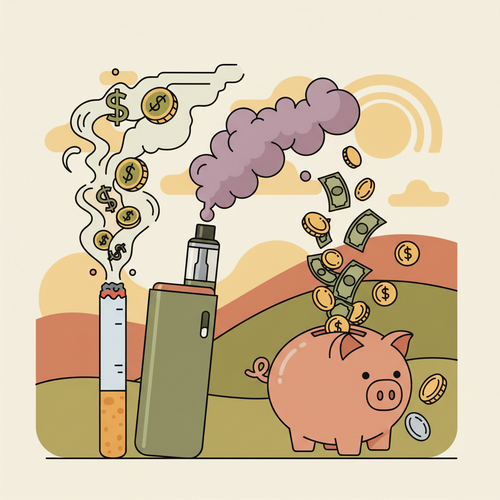
Understanding the financial implications of your daily habits is crucial for any beginner investor. Specifically, when comparing the cost of smoking vs vaping, the differences are significant, impacting both your wallet and your health. This article explores both the monetary and health costs associated with these habits. Furthermore, we will delve into how these choices can affect your long-term financial goals. Ultimately, making informed decisions about these habits can free up capital for investing.
The Financial Burden of Smoking
Smoking incurs substantial financial costs. Indeed, these expenses extend far beyond the mere purchase price of cigarettes. Investors seeking to optimize their personal finances must consider every outlay.
Direct Costs Accumulate Rapidly
The most obvious expense involves buying cigarettes. For instance, a pack of cigarettes can cost anywhere from $7 to $15 or more, depending on location. Daily smokers often spend thousands annually on this habit alone. Furthermore, this recurring expense represents money that could be saved or invested. Think about lighters, ashtrays, and even car air fresheners. These small, seemingly insignificant purchases add up over time. Consequently, they become a continuous drain on disposable income. Therefore, consistently tracking these direct costs reveals a stark financial reality.
Indirect Costs: A Hidden Drain
Beyond direct purchases, smoking carries numerous indirect financial burdens. Primarily, health insurance premiums for smokers are significantly higher. Insurers view smoking as a high-risk activity. Therefore, they charge increased rates to cover potential future medical costs. For instance, a smoker might pay hundreds more annually for coverage. Secondly, medical expenses related to smoking-induced illnesses are astronomical. Conditions like lung cancer, heart disease, and emphysema require extensive treatment. These treatments often include surgeries, medications, and prolonged hospital stays. Consequently, even with insurance, out-of-pocket costs can devastate personal savings. Moreover, lost productivity due to illness or smoke breaks impacts income. Indeed, a smoker might take more sick days. This directly translates to lost wages for many workers. Reuters often highlights such economic impacts. Therefore, the true financial cost of smoking extends much further than most people realize.
The Financial Landscape of Vaping
Vaping emerged as an alternative to traditional smoking. However, it also comes with its own set of financial considerations. These costs differ significantly from cigarettes, but still warrant careful examination for beginner investors.
Initial Investment and Ongoing Expenses
Vaping requires an initial investment in a device. For example, starter kits range from $20 to $100 or more. These kits typically include a mod (battery), a tank, and sometimes a few coils. Furthermore, ongoing costs involve e-liquids, coils, and pods. E-liquids, also known as vape juice, vary in price. A 30ml bottle might cost $10-$20. However, the consumption rate depends on individual usage. Coils, which atomize the e-liquid, need regular replacement. A pack of coils (usually 3-5) costs about $10-$25 and lasts a few weeks. Pod systems, increasingly popular, use pre-filled or refillable pods. These pods typically cost $4-$8 each. Consequently, while the initial outlay might seem higher, daily costs can sometimes be lower than smoking. Investopedia regularly discusses managing such recurring expenses.
Comparing Vaping and Smoking Costs
Generally, vaping tends to be less expensive than smoking over the long term. For instance, a daily smoker might spend $3,000 to $5,000 per year on cigarettes. A vaper, conversely, might spend $500 to $2,000 annually. This assumes moderate usage. However, heavy vapers might incur higher costs. Device upgrades and accessory purchases can also increase expenses. Therefore, careful budgeting is still essential for vapers. The immediate savings from switching can seem attractive. Nevertheless, these savings should ideally be directed towards investments. Thus, the financial comparison often favors vaping. However, both habits consume funds that could be growing your wealth.
The Health Ramifications of Smoking
The health consequences of smoking are extensively documented. Indeed, decades of research confirm its severe risks. Beginner investors should understand these health costs also translate to financial burdens.
Well-Documented Dangers
Smoking is a leading cause of preventable death worldwide. Specifically, it contributes to numerous chronic diseases. These include various cancers (lung, throat, mouth, bladder), heart disease, stroke, and chronic obstructive pulmonary disease (COPD). Furthermore, smoking damages nearly every organ in the body. Consequently, smokers face a significantly higher risk of premature death. The World Health Organization provides extensive data on these global impacts. Moreover, the chemicals in cigarette smoke are highly toxic. These chemicals include nicotine, tar, and carbon monoxide. Therefore, continuous exposure leads to progressive health decline.
Impact on Quality of Life
Beyond life-threatening diseases, smoking severely diminishes quality of life. Smokers often experience chronic coughs, shortness of breath, and reduced physical stamina. For instance, simple activities like climbing stairs become challenging. Furthermore, smoking affects appearance, causing premature wrinkles, yellow teeth, and bad breath. It also impacts senses like taste and smell. Consequently, daily enjoyment can decrease significantly. The financial cost of treating these conditions further compounds the problem. Indeed, a diminished quality of life impacts overall well-being. This can also affect one’s ability to work or enjoy retirement. Thus, the health costs extend broadly.
The Health Ramifications of Vaping
Vaping is a relatively newer phenomenon. Therefore, its long-term health effects are still under investigation. However, emerging concerns suggest it is not without risks.
Emerging Research and Unknowns
Initially, vaping was promoted as a safer alternative to smoking. It typically does not involve burning tobacco. Consequently, it avoids many harmful byproducts like tar and carbon monoxide. However, vaping devices heat e-liquids. These liquids contain nicotine, flavorings, and other chemicals. For instance, some flavorings might be safe to eat but harmful when inhaled. Furthermore, the long-term effects of inhaling these aerosols remain largely unknown. The CDC continues to research these potential health impacts. Therefore, a complete understanding of vaping’s health risks will take many more years of study. This uncertainty presents a risk in itself.
Specific Health Concerns
Despite being potentially less harmful than smoking, vaping carries specific risks. Primarily, most e-liquids contain nicotine. Nicotine is highly addictive. Therefore, vaping can lead to nicotine dependence, especially in young people. This can potentially act as a gateway to traditional cigarettes. Furthermore, some studies link vaping to lung injuries, cardiovascular issues, and respiratory problems. For instance, EVALI (e-cigarette or vaping product use-associated lung injury) caused severe illness and death. While often linked to illicit THC vaping products, it highlighted potential dangers. Moreover, concerns exist about heavy metals and other contaminants in some vape aerosols. Consequently, while often presented as ‘safer,’ vaping still poses tangible health threats. Indeed, health is wealth, as the saying goes.
Smoking, Vaping, and Your Investment Portfolio
Every dollar spent on discretionary habits like smoking or vaping is a dollar not invested. For beginner investors, understanding this opportunity cost is paramount.
Opportunity Cost: Investing What You Save
Consider the average daily cost of smoking. Let’s assume it is $10 per day. This totals $3,650 per year. If you quit smoking, you could invest this amount instead. Conversely, even if vaping costs $1,000 annually, that is still money that could be working for you. For instance, investing $3,650 annually over 30 years with an average 7% return could yield over $360,000. This calculation excludes any additional health-related savings. Therefore, the true cost of these habits is not just the direct expense. It includes the lost opportunity for wealth accumulation. Forbes frequently emphasizes the power of compounding. Indeed, the earlier you start investing, the more significant the returns.
The Compounding Effect of Savings
The magic of compound interest transforms small, consistent savings into substantial wealth. For example, choosing to forgo a daily smoking habit frees up significant capital. This capital, when invested wisely, grows exponentially over time. Consequently, avoiding the costs associated with smoking or vaping can accelerate your financial independence. Think about what a difference several hundred thousand dollars could make to your retirement or other financial goals. Therefore, shifting funds from these habits into a diversified investment portfolio is a powerful strategy. This approach aligns directly with smart money management principles. Indeed, your financial future benefits greatly from such prudent decisions.
Making Informed Choices for Your Future
Making conscious choices about smoking and vaping is not just about personal health. It directly impacts your financial trajectory. Prudent investors weigh all costs and benefits.
Prioritizing Health and Wealth
A strong financial future often begins with good health. Health issues, particularly those from smoking, lead to immense medical bills. These bills can quickly deplete savings and investment portfolios. Therefore, prioritizing your health is a direct investment in your financial well-being. Furthermore, a healthy individual often has more energy and fewer interruptions. This translates to greater productivity and earning potential. Consequently, the decision to avoid or quit smoking and vaping is a dual investment. It is an investment in both your physical vitality and your financial security. Indeed, these two aspects are deeply intertwined.
Financial Freedom Through Prudent Decisions
Every decision about your money matters. Choosing to reduce or eliminate spending on smoking or vaping redirects funds towards asset building. This path paves the way for greater financial freedom. For instance, imagine using those saved funds to pay off debt. Alternatively, you could contribute to a retirement account or build an emergency fund. These actions create a more secure financial foundation. Therefore, consider the long-term implications of your daily habits. Ultimately, the cost of smoking vs vaping is not merely a comparison of prices. It is a profound choice between immediate gratification and a healthier, wealthier future. Indeed, empower your financial journey with wise choices.
Conclusion
The financial and health costs associated with smoking and vaping are significant. Smoking, in particular, incurs massive direct and indirect financial burdens. It also carries well-documented, severe health risks. Vaping, while potentially less costly financially and health-wise in some aspects, still presents its own set of expenses and emerging health concerns. For any beginner investor, understanding these expenditures is vital. Redirecting funds from these habits towards investments offers substantial long-term financial benefits. Consequently, making informed decisions about smoking and vaping can profoundly impact both your physical health and your journey towards financial independence. Choose wisely for a healthier body and a wealthier future.