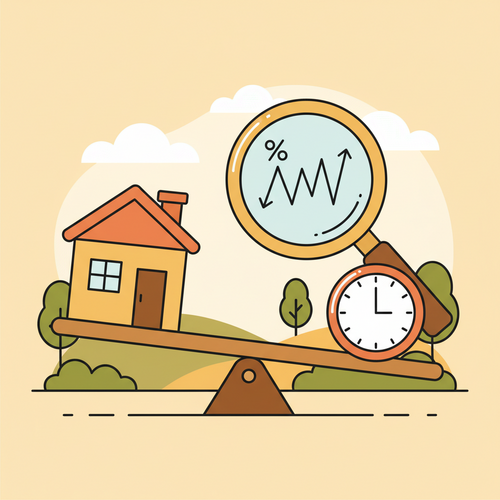
Understanding the Mortgage Rate Forecast 2026 is crucial for homeowners considering a refinance. The housing market constantly evolves, presenting both challenges and opportunities for those managing their mortgage. Consequently, staying informed about future interest rate movements can significantly impact financial decisions. This article explores the various factors that shape mortgage rates, provides insights into potential economic scenarios for 2026, and guides you on determining the opportune moment to refinance your home loan. We will delve into expert predictions and practical strategies to navigate the complexities of the mortgage landscape effectively.
Understanding Mortgage Rate Dynamics
Mortgage rates are not static; instead, they fluctuate daily based on a complex interplay of economic forces. Fundamentally, these rates reflect the cost of borrowing money for a home. Numerous indicators and policies influence their trajectory, making it essential for any homeowner to grasp these underlying mechanics. Therefore, a deeper understanding equips you to make more informed decisions about your property.
Key Factors Influencing Mortgage Rates
Several significant factors exert considerable influence over mortgage rates. Each element contributes to the broader economic picture, dictating whether borrowing costs will rise or fall. Analyzing these components provides a clearer view of potential future trends.
- Federal Reserve Policy: The Federal Reserve, often called the Fed, plays a pivotal role. The central bank sets the federal funds rate, which impacts short-term borrowing costs. While this is not directly a mortgage rate, changes signal the Fed’s stance on monetary policy. Moreover, the Fed’s actions regarding quantitative easing or tightening significantly affect the bond market, which directly influences mortgage rates. A hawkish Fed, for instance, typically leads to higher rates, whereas a dovish stance suggests lower rates.
- Inflation: Inflation remains a primary concern for lenders and borrowers alike. When prices for goods and services rise consistently, the purchasing power of money diminishes. Lenders, therefore, demand higher interest rates to compensate for the erosion of their future returns. Consequently, periods of high inflation often correlate with elevated mortgage rates. The Consumer Price Index (CPI) and Personal Consumption Expenditures (PCE) are key metrics economists monitor closely.
- Economic Growth: A robust economy usually translates into higher employment and increased consumer spending. Strong economic growth often creates demand for credit, prompting interest rates, including mortgage rates, to rise. Conversely, a weakening economy or recessionary fears can lead to lower rates as investors seek safe havens and demand for loans decreases. The Gross Domestic Product (GDP) report provides crucial insights into economic expansion or contraction.
- Bond Market Performance: Mortgage rates are closely tied to the yields on U.S. Treasury bonds, particularly the 10-year Treasury note. When bond yields increase, mortgage rates typically follow suit. Investors view bonds as a less risky alternative to mortgages. Thus, lenders must offer competitive rates to attract borrowers when bond yields are high. Fluctuations in the bond market are often a leading indicator for mortgage rate movements. For instance, increased demand for bonds pushes yields down, potentially lowering mortgage rates. Reuters often provides up-to-the-minute bond market analysis.
Mortgage Rate Forecast 2026: What to Expect
Forecasting mortgage rates for 2026 involves navigating a landscape of economic projections and potential geopolitical shifts. While predicting exact figures is inherently challenging, economists and financial institutions provide valuable insights into possible scenarios. Understanding these outlooks helps homeowners prepare for future market conditions.
Expert Predictions and Market Consensus
Financial analysts typically base their mortgage rate predictions on anticipated inflation trends, Federal Reserve policy, and broader economic stability. Many experts believe that while rates may experience short-term volatility, the long-term trend could see them stabilize or even gradually decline from recent peaks, assuming inflation cools. However, this consensus often shifts as new economic data emerges. Observing reports from major financial institutions like Fannie Mae and Freddie Mac can offer a glimpse into institutional expectations. Investopedia frequently publishes articles detailing expert mortgage rate forecasts.
Potential Scenarios for Interest Rates
Considering the inherent uncertainties, several scenarios could unfold for mortgage rates by 2026:
- Steady Rates: If inflation moderates to the Fed’s target range and economic growth remains stable but not overheated, rates could stabilize around current levels or slightly lower. This scenario would offer predictability for homeowners and buyers alike. Maintaining steady rates allows for consistent planning.
- Moderate Increases: Conversely, persistent inflation or unexpectedly strong economic growth could prompt the Federal Reserve to maintain a tighter monetary policy. Consequently, mortgage rates could see moderate increases, making borrowing more expensive. Homeowners should closely monitor inflation reports and Fed commentary in this situation.
- Unexpected Declines: A significant economic downturn, such as a recession, or unforeseen global events could trigger a flight to safety, driving down bond yields and, subsequently, mortgage rates. In such a scenario, the Federal Reserve might also cut its benchmark rates to stimulate the economy. While beneficial for refinancing, this situation often implies broader economic challenges. Historically, periods of economic stress have sometimes led to lower mortgage rates.
When Is the Right Time to Refinance?
Determining the optimal time to refinance your mortgage is a deeply personal financial decision, influenced by prevailing market rates, your current loan terms, and your financial goals. It is not simply about finding the lowest possible rate but rather aligning market opportunities with your individual circumstances. Therefore, careful evaluation is paramount.
Evaluating Your Current Mortgage
Before considering a refinance, meticulously review the details of your existing home loan. Firstly, compare your current interest rate with today’s prevailing rates. A general rule of thumb suggests refinancing might be worthwhile if you can secure a rate at least 0.75% to 1.0% lower than your current one. Secondly, assess the remaining term on your loan. If you are far into your mortgage, refinancing to a new 30-year term might extend your payment period unnecessarily, even with a lower rate. On the other hand, refinancing to a shorter term, like 15 years, can save you substantial interest over the life of the loan, though it typically entails higher monthly payments.
Benefits of Refinancing
Refinancing offers several compelling advantages, depending on your financial objectives. Each benefit addresses a specific need, making it a versatile financial tool.
- Lower Monthly Payments: The most common reason to refinance is to reduce your monthly mortgage payment. Securing a lower interest rate decreases the amount of interest you pay each month, freeing up cash flow for other expenses or savings. This can provide significant relief to your household budget.
- Shorter Loan Term: Many homeowners opt to refinance from a 30-year mortgage to a 15-year mortgage. While this often results in higher monthly payments, it drastically reduces the total interest paid over the life of the loan and allows you to pay off your home faster. Consequently, this builds equity more quickly.
- Cash-Out Refinance: A cash-out refinance allows you to tap into your home equity. You take out a new mortgage for more than you currently owe, receiving the difference in cash. This capital can be used for home improvements, debt consolidation, or other significant expenses. However, this option converts home equity into debt, so it requires careful consideration.
- Switching Loan Types: Sometimes, homeowners refinance to switch from an adjustable-rate mortgage (ARM) to a fixed-rate mortgage, or vice-versa. A fixed-rate mortgage offers payment predictability, shielding you from future rate increases. An ARM, conversely, might offer a lower initial rate.
Costs Associated with Refinancing
Refinancing is not without costs, and these must be factored into your decision. Understanding these expenses helps you determine the true benefit of a new loan. Consequently, a clear picture of all fees is essential.
- Closing Costs: These are fees paid at the closing of your refinance loan. They can range from 2% to 5% of the loan amount and include origination fees, title insurance, attorney fees, and recording fees. Always obtain a detailed Loan Estimate from lenders.
- Appraisal Fees: Most lenders require a new appraisal of your property to determine its current market value. This ensures the loan-to-value ratio is acceptable. Appraisal costs can vary but are typically a few hundred dollars.
- Application Fees: Some lenders charge an application fee to process your refinance request. This fee covers the administrative costs associated with reviewing your financial information.
- Prepayment Penalties: While less common today, some older mortgages might have prepayment penalties. Always check your existing loan documents to see if such a clause applies. If it does, this penalty must be included in your cost analysis.
Calculating your break-even point, which is how long it takes for the savings from your new, lower interest rate to offset the refinancing costs, is vital. For example, if you save $100 per month and your closing costs are $3,000, your break-even point is 30 months. If you plan to sell your home before reaching this point, refinancing may not be financially advantageous.
Strategies for Monitoring the Market
Proactive market monitoring is key to timing a refinance effectively. Staying informed and preparing in advance can help you seize opportunities when they arise. Therefore, establishing a routine for market surveillance is beneficial.
Stay Informed on Economic Data
Regularly follow major economic news and reports. Pay close attention to announcements from the Federal Reserve, inflation data like the Consumer Price Index (CPI), employment figures, and Gross Domestic Product (GDP) reports. These indicators often signal the direction of interest rates. Financial news outlets and reputable economic analysis sites are excellent resources. The Federal Reserve’s official website provides direct access to policy statements and economic data.
Consult with Financial Advisors
A qualified financial advisor or mortgage broker can provide personalized guidance tailored to your specific situation. They can help you analyze your current mortgage, evaluate potential refinance options, and navigate the application process. Their expertise is invaluable in assessing market conditions and determining if a refinance aligns with your broader financial plan. Moreover, they can often access different loan products and rates than those publicly advertised.
Pre-Approval and Rate Locks
If you anticipate rates might drop, consider getting pre-approved for a refinance. This involves submitting your financial information to a lender to determine how much you qualify for. Once you find a favorable rate, inquire about a rate lock. A rate lock guarantees your interest rate for a specific period, typically 30 to 60 days, protecting you if rates rise before your refinance closes. However, be aware that some lenders charge a fee for a rate lock, and there may be conditions attached.
Conclusion
Navigating the mortgage market requires diligence and an understanding of key economic drivers. While the Mortgage Rate Forecast 2026 offers potential scenarios, the exact timing for refinancing remains a nuanced decision. Homeowners must weigh their individual financial goals against prevailing market conditions, carefully considering both the benefits and costs involved. By staying informed, evaluating your current loan, and seeking expert advice, you can position yourself to make a financially sound decision. Ultimately, a strategic approach to monitoring economic indicators and understanding your personal financial landscape will empower you to determine if 2026 presents the right window for your mortgage refinance.