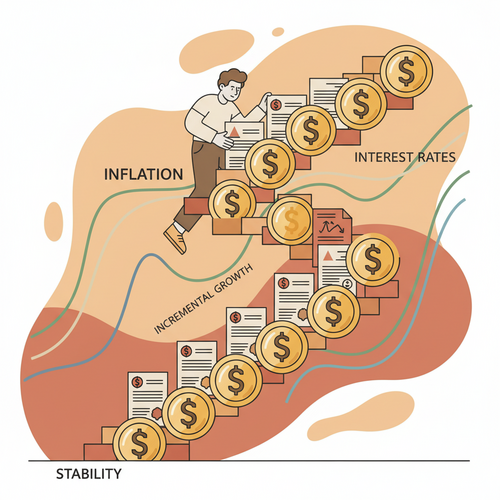
In an economic landscape often characterized by uncertainty, employing a robust CD ladder strategy emerges as a prudent financial maneuver. This approach offers a compelling blend of security and growth potential, particularly appealing when inflation erodes purchasing power and interest rates fluctuate unpredictably. Astute investors consistently seek methods to safeguard their capital while earning competitive returns. Consequently, understanding how to construct and manage a CD ladder becomes an invaluable skill. This article will delve into the intricacies of this proven investment vehicle, outlining its benefits and providing a clear, actionable guide for implementation.
Understanding the CD Ladder: A Foundation for Stability
What is a Certificate of Deposit (CD)?
A Certificate of Deposit, commonly known as a CD, represents a time deposit offered by banks and credit unions. Essentially, you deposit a sum of money for a fixed period. In return, the institution pays you a predetermined interest rate. Notably, CDs are renowned for their low-risk profile. They are typically insured by the Federal Deposit Insurance Corporation (FDIC) for banks or the National Credit Union Administration (NCUA) for credit unions. This insurance covers up to $250,000 per depositor, per institution, per ownership category. Therefore, your principal investment remains secure. However, withdrawing funds before maturity usually incurs a penalty, which is an important consideration.
The Core Concept of a CD Ladder
A CD ladder strategy involves dividing a larger sum of money into several smaller investments. Each of these investments goes into a separate CD with varying maturity dates. For instance, you might invest in CDs maturing in one, two, three, four, and five years. As each CD matures, you then reinvest the principal and earned interest into a new, longer-term CD at the end of your ladder. This continuous process creates a “ladder” of investments. Crucially, it ensures that a portion of your money becomes accessible at regular intervals. Meanwhile, it allows you to capture potentially higher interest rates offered by longer-term CDs. This systematic approach provides both flexibility and enhanced earning potential.
Why a CD Ladder Shines in Today’s Economic Climate
Shielding Your Savings from Inflation
Inflation, the persistent rise in prices, significantly diminishes the purchasing power of your money over time. While traditional savings accounts often offer meager interest rates that struggle to keep pace, CDs can provide a more robust defense. By locking in a fixed interest rate, your money earns a predictable return. This helps to mitigate the erosive effects of inflation, especially when interest rates are rising. A CD ladder, in particular, allows you to capitalize on those rising rates. As short-term CDs mature, you can reinvest them into new, higher-yielding CDs, thereby continually improving your inflation hedge.
Navigating Interest Rate Fluctuations
Interest rates are inherently volatile, constantly influenced by economic indicators and central bank policies. This unpredictability poses a challenge for investors. If you invest all your money in a single long-term CD and rates subsequently rise, you miss out on higher potential earnings. Conversely, if you invest solely in short-term CDs and rates fall, your returns could diminish rapidly upon renewal. A CD ladder strategy elegantly solves this dilemma. By staggering maturities, you avoid committing all your capital at a single rate. As a result, you consistently have funds maturing, allowing you to reinvest and take advantage of prevailing interest rates, whether they are rising or falling. This offers a balanced approach to rate volatility.
Liquidity with a Strategic Twist
Many investors hesitate to commit funds to CDs due to perceived lack of liquidity. A traditional CD locks up your money for the entire term, often with penalties for early withdrawal. However, a CD ladder significantly enhances liquidity without sacrificing returns. Since different segments of your ladder mature at various times, you gain access to a portion of your capital periodically. For example, with a five-year ladder, you would have money becoming available annually. This provides a balance between earning higher, long-term rates and maintaining access to your funds for unforeseen expenses or new investment opportunities. Therefore, it’s a strategically flexible option.
Step-by-Step Guide to Building Your CD Ladder
Determining Your Investment Horizon and Capital
The first step in constructing a CD ladder strategy involves assessing your financial goals and resources. Consider how long you are willing to commit your funds. Also, determine the total amount you wish to allocate to your CD ladder. A common approach divides your capital equally across several CDs. For example, with $50,000 and a five-year ladder, you would allocate $10,000 to each CD term. Your investment horizon dictates the longest CD term you should include. Longer horizons often allow for higher interest rates, but also greater commitment.
Selecting CD Terms and Institutions
Once you establish your capital and horizon, choose the specific CD terms. A typical ladder might use one-year, two-year, three-year, four-year, and five-year CDs. However, you can customize this based on your needs. For instance, some prefer shorter-term ladders with maturities every three or six months. Research various banks and credit unions. Compare their interest rates, minimum deposit requirements, and early withdrawal penalties. Online banks often offer more competitive rates than traditional brick-and-mortar institutions. You should always ensure that the institution is FDIC or NCUA insured. This protects your principal.
The Rolling Maturity Process Explained
The true power of a CD ladder strategy lies in its rolling maturity process. Once you have established your initial set of CDs, the strategy automatically continues. For example, when your one-year CD matures, you take that principal and interest. You then reinvest it into a new five-year CD. This effectively shifts the “shortest” rung of your ladder to the “longest” rung. Each subsequent year, another CD will mature. You will consistently reinvest those funds into a new, long-term CD. Consequently, after the initial setup period, you will always have a CD maturing annually (or whatever your chosen interval is). This ensures continuous access to capital and constant rate optimization.
Advanced Strategies and Considerations
Comparing Traditional vs. Brokered CDs
When implementing a CD ladder strategy, investors can choose between traditional CDs from banks or brokered CDs. Traditional CDs are purchased directly from a bank or credit union. Brokered CDs, conversely, are offered through brokerage firms. They can provide access to a wider range of issuers and sometimes more competitive rates. Furthermore, brokered CDs can offer increased FDIC insurance coverage. This is because they can be purchased from multiple banks, allowing you to exceed the $250,000 limit per institution. However, brokered CDs might trade on a secondary market, introducing potential for price fluctuations if sold before maturity. Understanding these differences is vital.
Understanding Early Withdrawal Penalties and Callable CDs
Most CDs impose a penalty for withdrawing funds before the maturity date. These penalties can vary significantly, often amounting to several months’ worth of interest. Before investing, always review the specific terms. Additionally, some CDs are “callable.” A callable CD gives the issuing institution the right to redeem the CD before its maturity date. This typically occurs when interest rates fall. If a CD is called, you receive your principal and accrued interest, but you lose the higher interest rate for the remaining term. Therefore, carefully consider the risks associated with callable CDs, especially for long-term strategies.
Tax Implications and Diversification
Interest earned on CDs is generally taxable as ordinary income at the federal, state, and local levels. This is an important consideration when calculating your net returns. However, CDs can be held within tax-advantaged accounts, such as IRAs, which can defer or eliminate tax on the interest earned. For further insights on tax implications, consult the IRS. Furthermore, while a CD ladder strategy offers safety, it should not be your only investment. Financial diversification remains a cornerstone of sound investing. Combining CDs with other asset classes, like stocks and bonds, can help achieve a balanced portfolio tailored to your risk tolerance and financial objectives. For further insights on tax implications, consult a financial advisor.
Potential Downsides and Who Benefits Most
Opportunity Cost and Lower Growth Potential
Despite their many advantages, CD ladders do have limitations. Primarily, the returns from CDs are generally lower than those from more volatile investments, such as stocks. While they protect principal, they may not offer the aggressive growth potential needed to achieve certain long-term financial goals, like significant wealth accumulation. This represents an opportunity cost. Investors might forgo potentially higher returns in exchange for stability and capital preservation. Therefore, it is crucial to balance security with growth.
Ideal Investors for a CD Ladder
A CD ladder strategy is particularly well-suited for specific investor profiles. Retirees and those nearing retirement often find them appealing. This is due to the strong emphasis on capital preservation and predictable income. Additionally, conservative investors seeking a safe harbor for a portion of their portfolio can benefit immensely. Individuals saving for a specific short-to-medium-term goal, such as a down payment on a house or college tuition, can also utilize a CD ladder to ensure their funds are secure and accessible when needed. Furthermore, anyone looking to diversify their fixed-income holdings with a reliable, low-risk component will find value in this strategy.
Conclusion
In conclusion, implementing a CD ladder strategy presents a compelling and secure method for managing your savings in an unpredictable financial environment. It effectively addresses concerns about inflation and fluctuating interest rates. Moreover, it strikes a beneficial balance between liquidity and competitive returns. By systematically investing in Certificates of Deposit with staggered maturity dates, you can protect your principal. You can also ensure regular access to your funds. Additionally, you can capitalize on the best available interest rates. This strategy, while offering lower growth than equities, provides stability and peace of mind. Therefore, for investors prioritizing safety, consistent income, and strategic flexibility, a CD ladder stands out as an exceptionally valuable component of a well-diversified financial plan. Consider integrating this robust approach into your investment portfolio today.