Introduction
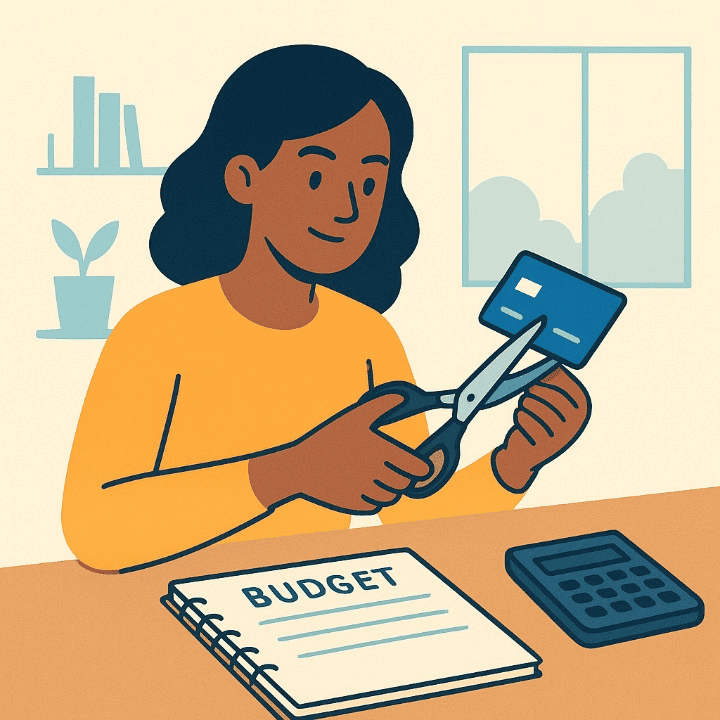
If you’ve ever felt the stress of a growing credit card balance, you are not alone. For many people navigating the world of personal finance, credit card debt can feel like a heavy weight, making it difficult to save, plan for the future, or even cover monthly expenses without worry. It’s a common challenge, but the good news is that it’s a manageable one. Taking control of your debt isn’t about blame or past mistakes; it’s about empowerment and acquiring the right knowledge and tools. The first step is to understand the forces at play, especially the powerful impact of the interest rate. This guide is designed for beginners and intermediate learners who want to create a clear, practical plan for managing credit card debt. We will explore how to assess your situation, compare effective payoff strategies, and build healthier financial habits to create a more secure future.
Why Does Credit Card Debt Feel So Overwhelming?
The primary reason credit card debt can spiral out of control is the effect of compound interest. When you don’t pay your balance in full, your provider charges an interest rate on the remaining amount. The next month, if the balance still isn’t paid, you’re charged interest on the original amount plus the interest that has already accumulated. It’s like a snowball rolling downhill—it starts small but picks up size and speed very quickly.
This cycle can be incredibly frustrating and can even impact your mental health, causing significant stress and anxiety. The high interest rate typical of many credit cards means that a large portion of your minimum payment might only be covering the interest charges, with very little going toward reducing the actual principal (the original amount you borrowed). Understanding this mechanism is crucial because it highlights why simply making minimum payments is often not enough to make significant progress. Breaking free requires a proactive strategy that attacks the principal balance directly.
The First Step: Assessing Your Financial Situation
Before you can create a plan, you need a clear picture of where you stand. This diagnostic step is the foundation of any successful debt management journey. It involves gathering information and facing the numbers without judgment. Think of it as creating a map; you can’t plot a course to your destination if you don’t know your starting point.
Here’s a simple way to begin:
- List All Your Debts: Create a list of every debt you have. For each one, write down the creditor (e.g., Bank A Credit Card), the total balance, the minimum monthly payment, and most importantly, the interest rate (APR).
- Track Your Income and Expenses: For one month, track every dollar that comes in and every dollar that goes out. This will help you identify areas where you might be able to reduce spending and free up more money to put toward your debt.
- Check Your Credit Score: Understanding your current credit score is also helpful. High balances on your credit card accounts can negatively impact your credit, which can affect your ability to secure better financing options in the future.
Once you have this information, you’ll be in a much better position to choose a strategy that works for you.
Two Popular Strategies for Paying Down Debt
When it comes to paying off multiple debts, there are two widely recognized methods. Neither is universally “better”—the best choice depends on your personality and what motivates you.
The Debt Snowball Method
This method focuses on building momentum and motivation. You continue making minimum payments on all your debts, but you throw every extra dollar you have at the debt with the smallest balance first, regardless of its interest rate. Once that smallest debt is paid off, you roll the payment you were making on it into the payment for the next-smallest debt. This creates a “snowball” effect, and the psychological wins from paying off accounts can keep you motivated.
The Debt Avalanche Method
This method is purely mathematical. You make minimum payments on all debts, but you focus all extra funds on the debt with the highest interest rate first. This approach saves you the most money over time because you are eliminating the most expensive debt faster. It may take longer to get your first “win” by paying off an account completely, but it is the most efficient strategy from a financial perspective.
Meet Leo: Let’s say Leo has three debts:
- Credit Card A: $3,000 at 22% interest rate
- Store Card B: $500 at 25% interest rate
- Personal Loan C: $5,000 at 10% interest rate
Using the Snowball method, Leo would focus on paying off the $500 store card first. Using the Avalanche method, he would target the store card as well, since it has the highest interest rate at 25%. In this specific case, the first target is the same, but if the credit card had a higher interest rate, the Avalanche method would prioritize it despite its larger balance.
Tools and Options to Consider
Beyond payoff strategies, there are financial tools that can help you manage your debt, especially if you have good credit. These often involve a form of financing designed to lower your overall interest payments.
- Balance Transfer Credit Card: Some credit cards offer an introductory period (e.g., 12-18 months) with a 0% interest rate on balances you transfer from other cards. This can provide a crucial window to pay down your principal without interest accumulating. Be aware of any balance transfer fees, which are typically a small percentage of the amount transferred.
- Debt Consolidation Loan: This involves taking out a new personal loan with a lower interest rate to pay off all your high-interest credit card debts. This simplifies your payments into one single monthly bill and can save you a significant amount of money in interest. Approval and the interest rate offered will depend heavily on your credit score.
Conclusion
Managing credit card debt is a fundamental aspect of personal finance that has a profound impact on your overall financial well-being. By moving beyond the stress and focusing on a structured plan, you can systematically work your way back to a position of control. The journey begins with understanding the powerful role the interest rate plays and getting a clear snapshot of your finances. From there, choosing a payoff strategy that aligns with your personality—whether it’s the motivational Snowball or the mathematically optimized Avalanche—gives you a clear path forward. Remember that managing debt is a marathon, not a sprint. It’s about building sustainable habits that will not only help you get out of debt but also ensure you stay out of it for good.