Introduction
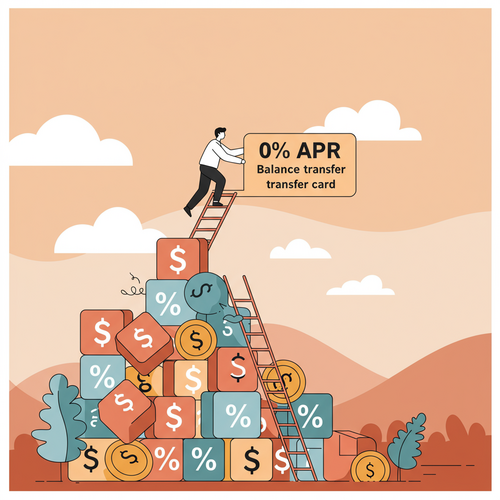
High-interest credit card debt can feel like a heavy burden. It often traps individuals in a cycle where a significant portion of their monthly payments goes towards interest rather than reducing the principal. This situation makes it incredibly challenging to achieve financial freedom. However, there is a powerful tool available that, when used correctly, can help you escape this cycle: 0% APR balance transfer cards.
These cards offer a unique opportunity to transfer existing high-interest debt from one or more credit cards to a new card, which then carries a 0% annual percentage rate (APR) for a specific promotional period. This means you can make payments directly towards your principal balance, accelerating your debt repayment journey. Understanding how these cards work and how to leverage them effectively is crucial for anyone looking to manage their debt strategically.
This article will guide you through the process, from deciding if a balance transfer is right for you to successfully paying off your debt. We will cover the benefits, potential pitfalls, and essential steps to make the most of this financial strategy. Our goal is to empower you with the knowledge to use 0% APR balance transfer cards as a stepping stone towards a healthier financial future.
Understanding 0% APR Balance Transfer Cards
What is a Balance Transfer Card?
A balance transfer card is a type of credit card designed to help you consolidate and pay off existing debt. Essentially, it allows you to move debt from one or more credit accounts, typically high-interest credit cards, to a new card. The most attractive feature of these cards is often a promotional 0% APR period. During this time, you pay no interest on the transferred balance.
This promotional period usually lasts anywhere from 6 to 21 months, depending on the card and issuer. It provides a valuable window to pay down your debt without the added cost of interest. Once this period expires, any remaining balance will typically revert to the card’s standard variable APR, which can be quite high. Therefore, strategic planning is essential to maximize the benefits.
Most balance transfers also involve a balance transfer fee. This fee is a percentage of the amount you transfer, commonly ranging from 3% to 5%. For example, a 3% fee on a $5,000 transfer would cost you $150. You must factor this fee into your calculations to ensure the balance transfer remains a cost-effective solution for your debt.
Benefits of a 0% APR Balance Transfer
The advantages of using a 0% APR balance transfer card can be significant. Firstly, and most obviously, you can save a substantial amount of money on interest payments. Instead of seeing a large portion of your payment vanish into interest charges, every dollar you pay goes directly towards reducing your principal balance. This can translate to hundreds or even thousands of dollars saved, depending on your debt amount and original interest rates.
Secondly, balance transfers often allow for debt consolidation. If you have multiple credit card balances with varying interest rates and due dates, a balance transfer can simplify your financial life. You consolidate these debts into a single monthly payment to one card issuer. This makes tracking your debt and managing your budget much easier, reducing the chances of missed payments.
Finally, by eliminating interest for a period, you can accelerate your debt repayment. Without interest accruing, you can make faster progress on your principal. This momentum can be incredibly motivating and helps you reach your debt-free goal much sooner than if you were battling high interest rates. It transforms your payments into direct investments in your financial future.
Is a Balance Transfer Card Right for You?
Assessing Your Debt Situation
Before applying for a 0% APR balance transfer card, it is crucial to honestly assess your current financial situation. Consider how much debt you carry across all your credit cards. What are the current interest rates on those balances? If you are paying rates above 15% or 20%, a balance transfer could offer significant savings.
More importantly, you need to determine your ability to pay off the transferred balance within the promotional 0% APR period. Do you have a steady income? Can you commit to making higher payments than the minimum required? If you can only afford minimum payments, the balance might not be paid off in time, and you could end up paying high interest rates once the promotional period ends. A realistic budget and payment plan are vital for success.
Also, evaluate the total amount you plan to transfer. Most balance transfer cards have a credit limit, and this limit might not be sufficient to cover all your existing debt. You might need to prioritize which balances to transfer based on their interest rates.
Credit Score Considerations
Your credit score plays a significant role in your eligibility for a 0% APR balance transfer card. Lenders typically reserve the best offers, including longer 0% APR periods and higher credit limits, for applicants with good to excellent credit scores (generally FICO scores of 670 and above). If your score is lower, you might still qualify for a card, but the terms might not be as favorable.
Applying for a new credit card results in a hard inquiry on your credit report, which can temporarily lower your credit score by a few points. However, this impact is usually minor and short-lived. A new credit line can also initially lower your average age of accounts, another factor in your score. Despite these initial dips, successfully paying off debt with a balance transfer card can ultimately improve your credit score in the long run.
By lowering your credit utilization ratio (the amount of credit you use compared to your total available credit) and making consistent, on-time payments, you build a positive credit history. This demonstrates responsible credit management, which is key to boosting your score over time. Always remember that the goal is to improve your financial standing, not just get a new card.
Steps to Successfully Using a 0% APR Balance Transfer Card
Using a 0% APR balance transfer card effectively requires a methodical approach. Follow these steps to maximize your chances of success.
Step 1: Research and Compare Cards
Do not simply pick the first card you see. Thorough research is critical. Focus on finding cards with the longest 0% APR promotional period possible. This gives you more time to pay off your debt interest-free. Look for periods of 15, 18, or even 21 months.
Next, carefully examine the balance transfer fees. While many cards charge 3% to 5%, some might offer no balance transfer fee, though these are less common and often have shorter promotional periods. Calculate how much the fee will add to your debt to ensure the savings on interest outweigh this cost. Consider any annual fees as well. Finally, check the standard APR that kicks in after the promotional period. This is important in case you cannot pay off the full balance.
You can use reputable financial comparison websites or directly visit card issuer sites to compare options. Read the fine print to understand all terms and conditions.
Here are key factors to compare:
- Length of 0% APR period for balance transfers.
- Balance transfer fee percentage.
- Any annual fees.
- The standard APR after the promotional period.
- Credit limit offered (if specified).
For additional resources on comparing cards, you might consult sites like Consumer Financial Protection Bureau or reputable financial news outlets.
Step 2: Apply for the Card
Once you have identified the best card for your needs, proceed with the application. Be honest and accurate with your financial information. Remember that applying for multiple cards within a short period can negatively impact your credit score due to multiple hard inquiries. Apply for one card that best fits your situation.
It is wise to apply for a card with a credit limit that can comfortably accommodate the balance you wish to transfer. However, don’t overextend yourself. Only transfer what you realistically plan to pay off.
Step 3: Transfer Your Balances
Upon approval, initiate the balance transfer. This process usually involves providing the new card issuer with the account numbers and amounts from your old credit cards. The new issuer then pays off your old cards directly, adding those amounts to your new balance transfer card.
During this transfer period, which can take a few weeks, continue to make minimum payments on your old cards to avoid late fees and interest charges. Once the transfer is complete, it is crucial to stop using your old, high-interest credit cards. If you continue to use them, you risk accumulating new debt, undermining your efforts. Many people cut up or freeze their old cards to remove the temptation.
Be aware that new purchases made on the balance transfer card itself often do not qualify for the 0% APR. They typically accrue interest at the standard variable APR immediately. Therefore, it is best to use your balance transfer card exclusively for the transferred debt.
Step 4: Create a Repayment Plan
This is arguably the most critical step. Without a solid repayment plan, the balance transfer is merely a temporary fix. Calculate exactly how much you need to pay each month to pay off the entire transferred balance before the 0% APR promotional period ends. Divide the total transferred balance (plus any balance transfer fees) by the number of months in your promotional period.
For example, if you transfer $6,000 with a 3% fee ($180) and have an 18-month promotional period, your total debt is $6,180. You would need to pay $6,180 / 18 months = $343.33 per month. Round up to ensure you have a buffer.
Integrate this payment into your monthly budget. Make sure it is a non-negotiable expense. Set up automatic payments to avoid missing due dates, which could result in losing your promotional APR and incurring late fees. Consider employing budgeting methods such as the zero-based budget or the 50/30/20 rule to help you allocate funds effectively and prioritize your debt payments. Understanding and sticking to your budget is the cornerstone of this strategy.
Step 5: Avoid New Debt
A balance transfer card is a tool for debt elimination, not an excuse to accumulate more debt. After transferring your balances, make a conscious effort to avoid taking on new debt. This means not using the old cards you transferred balances from, and also being disciplined with your spending on any other credit cards you might have.
Address the underlying reasons for your debt accumulation. Was it overspending, unexpected expenses, or a lack of budgeting? Identifying and rectifying these behaviors is crucial for long-term financial health. Build an emergency fund to cover unforeseen expenses, reducing the need to rely on credit cards in a crisis. This proactive approach helps prevent future debt cycles.
Potential Pitfalls and How to Avoid Them
While 0% APR balance transfer cards offer a powerful solution, they come with potential risks. Being aware of these pitfalls can help you navigate them successfully.
Missing Payments
One of the most significant dangers is missing a payment. Most balance transfer card agreements state that if you miss a payment, the issuer can revoke your promotional 0% APR. This means your remaining balance will immediately revert to the much higher standard APR, effectively negating the benefit of the transfer. To avoid this, set up automatic payments or calendar reminders to ensure you never miss a due date.
Not Paying Off the Balance in Time
Failing to pay off the entire transferred balance before the promotional period expires is another common pitfall. If a balance remains, it will start accruing interest at the card’s standard variable APR, which can be very high. This can quickly erode any savings you initially achieved. This situation highlights the importance of a strict repayment plan and sticking to it. If you foresee not paying it off, consider options like another balance transfer (if feasible) or a personal loan before the interest kicks in.
High Balance Transfer Fees
While the interest savings usually outweigh the balance transfer fee, it’s not always the case. For smaller balances or shorter promotional periods, the 3% to 5% fee might negate a significant portion of your savings. Always calculate the total cost, including the fee, against the interest you would have paid on your old cards. Only proceed if the transfer offers a clear financial advantage.
For instance, if you have a small balance and a short 0% APR period, the fee might make the transfer less beneficial. Always run the numbers carefully. Financial calculators available from sources like Bankrate’s Balance Transfer Calculator can help you make an informed decision.
Impact on Credit Score
While generally beneficial in the long run, a balance transfer can have a temporary negative impact on your credit score. The initial hard inquiry and the new credit line can slightly lower your score. More importantly, if you transfer a large balance and it represents a high percentage of your new card’s credit limit, your credit utilization ratio could be high. A high utilization ratio negatively impacts your score. To mitigate this, aim to keep your utilization below 30% and diligently pay down the balance.
Conclusion
0% APR balance transfer cards are undeniably powerful tools for managing and eliminating high-interest credit card debt. They offer a valuable window of opportunity to pay down your principal balance without the burden of accruing interest, ultimately saving you money and accelerating your path to financial freedom. However, their effectiveness hinges entirely on careful planning, disciplined execution, and a clear understanding of both their benefits and potential pitfalls.
By diligently researching the best card for your situation, creating a realistic repayment plan, and committing to avoid new debt, you can leverage these cards to transform your financial health. Remember to prioritize consistent, on-time payments and aim to pay off the entire balance before the promotional APR expires. With a strategic approach and unwavering commitment, 0% APR balance transfer cards can be a game-changer in your debt repayment journey, moving you closer to a more secure and prosperous financial future.