Introduction
Navigating the world of health insurance can feel like deciphering a complex financial puzzle. Every year, individuals and families face the crucial decision of selecting a health plan. This choice directly impacts not only their medical care but also their financial well-being. Understanding the differences between various plan types is paramount. This guide is dedicated to comparing top-tier health insurance plans to make that decision easier. Without proper knowledge, you might choose a plan that doesn’t align with your healthcare needs or your budget.
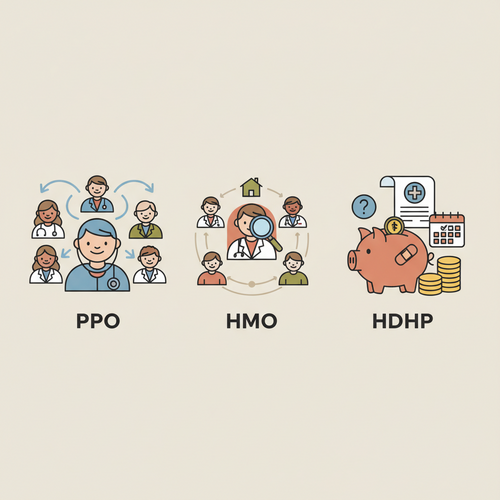
This comprehensive guide delves into three of the most common and top-tier health insurance plans available today: Preferred Provider Organizations (PPOs), Health Maintenance Organizations (HMOs), and High Deductible Health Plans (HDHPs). We will break down their core features, advantages, and disadvantages. Our goal is to equip you with the knowledge to confidently compare these options. Consequently, you can select the best health insurance plan for your unique circumstances.
Understanding Health Insurance Fundamentals
Before we dive into the specifics of PPO, HMO, and HDHP plans, it’s essential to grasp some fundamental health insurance terms. These terms are the building blocks of any health insurance policy. Knowing them helps you understand how your plan works and what costs you can expect.
Key Terminology Explained
- Premium: This is the fixed amount you pay, usually monthly, to your health insurance company. It’s like a subscription fee for your coverage. You pay the premium regardless of whether you use medical services or not.
- Deductible: Your deductible is the amount of money you must pay out of pocket for covered medical services before your insurance plan starts to pay. For instance, if your deductible is $2,000, you pay the first $2,000 in medical costs (excluding, in many cases, preventive care). This is a key mechanism for cost-sharing.
- Copayment (Copay): A copay is a fixed amount you pay for a covered healthcare service *after* you’ve met your deductible (though some plans offer copays for doctor visits *before* the deductible). You typically pay it at the time of service. For example, you might pay a $30 copay for a doctor’s visit or $50 for a specialist.
- Coinsurance: This refers to your share of the cost of a covered healthcare service, calculated as a percentage. It applies *after* you’ve met your deductible. If your coinsurance is 20%, your insurance pays 80%, and you pay 20% of the bill. This continues until you hit your out-of-pocket maximum.
- Out-of-Pocket Maximum: This is the absolute most you will have to pay for covered services in a plan year. Once you hit this limit (through a combination of deductibles, copays, and coinsurance), your health insurance plan pays 100% of your covered medical costs for the rest of the year. Premiums typically do not count towards this maximum.
Understanding these terms is crucial for estimating your total healthcare costs. Furthermore, it allows you to compare different plans on an equal footing. For more details on these terms, the official HealthCare.gov glossary provides excellent resources.
PPO Plans: Flexibility and Choice
Preferred Provider Organizations (PPOs) are a popular choice for many due to their flexibility. PPO plans offer a broader network of doctors and hospitals. They also provide more freedom in choosing your healthcare providers. This type of plan appeals to individuals who value choice and are comfortable managing their own referrals.
How PPOs Work
PPOs contract with a network of healthcare providers (“preferred” providers). These providers agree to offer services at a discounted rate to plan members. You can generally see any doctor or specialist within this network without needing a referral from a primary care physician (PCP). However, PPOs also offer coverage for out-of-network services. This comes with a catch: you will typically pay a much higher percentage of the cost.
For example, an in-network visit might have a $30 copay after your deductible. Conversely, an out-of-network visit might require you to pay 40% coinsurance, and that percentage is often based on a “usual and customary” fee, not what the doctor actually billed. PPO plans often have higher monthly premiums compared to other plan types. Nevertheless, they frequently come with lower deductibles. This structure provides a balance between cost and access.
Advantages and Disadvantages of PPO Plans
Advantages:
- Provider Choice: You have the freedom to choose almost any doctor or specialist you want. You do not need to select a primary care physician within the plan’s network.
- Out-of-Network Coverage: PPOs allow you to receive care from providers outside the plan’s network. While more expensive, this option provides crucial flexibility.
- No Referrals: You generally do not need a referral from a PCP to see a specialist. This streamlines the process of getting specialized care.
- Travel Convenience: PPO networks are often extensive and nationwide, making it easier to find covered care if you travel frequently.
Disadvantages:
- Higher Premiums: PPOs typically come with higher monthly premiums than HMO or HDHP plans. This is the trade-off for increased flexibility.
- Higher Out-of-Pocket for Out-of-Network: If you use out-of-network providers, your costs will be significantly higher. Your deductible and coinsurance rates are usually greater.
- Potential for Balance Billing: Out-of-network providers may “balance bill” you. This means they charge you the difference between their full fee and what your insurance pays.
When comparing top-tier health insurance plans, PPOs stand out for those who have specific doctors they wish to keep or who want the freedom to see specialists without permission.
HMO Plans: Coordinated Care and Cost Efficiency
Health Maintenance Organizations (HMOs) prioritize coordinated care and often come with lower costs. These plans emphasize preventive care and management through a primary care physician. HMOs are an excellent option for individuals who prefer a structured approach to their healthcare. They also suit those who are comfortable using an in-network provider system.
How HMOs Work
With an HMO, you choose a Primary Care Physician (PCP) within the plan’s network. This PCP becomes your main point of contact for all your medical needs. Your PCP manages your overall healthcare. They refer you to specialists if needed. Without a referral, your HMO generally will not cover specialist visits. This “gatekeeper” system ensures that care is coordinated. It also helps manage costs effectively.
HMOs typically do not cover out-of-network care, except in true emergencies. This strict network adherence helps keep premiums lower. Additionally, HMOs often have lower deductibles (sometimes $0) and lower copayments compared to PPOs. This makes them an attractive option for budget-conscious consumers.
Advantages and Disadvantages of HMO Plans
Advantages:
- Lower Premiums: HMOs generally have lower monthly premiums than PPO plans. This makes them more affordable on a recurring basis.
- Lower Out-of-Pocket Costs: You typically face lower deductibles, copayments, and coinsurance rates within the network.
- Coordinated Care: Your PCP manages all your healthcare, ensuring seamless communication among your providers. This can lead to better health outcomes and fewer duplicated tests.
- Simplified Billing: Since you primarily stay within the network, billing is often straightforward. There are fewer complex claims to manage.
Disadvantages:
- Limited Provider Choice: You must choose doctors and hospitals within the HMO’s network. This can be restrictive if you have preferred providers outside the network.
- Referral Requirements: You need a referral from your PCP to see a specialist. This can sometimes delay access to specialized care.
- No Out-of-Network Coverage: Except for emergencies, HMOs typically do not cover care from providers outside their network. This limits flexibility.
- Geographic Restrictions: HMO networks are often localized. This might be problematic if you travel frequently or live in an area with limited network options.
HDHP Plans: High Deductible, Lower Premiums, and HSAs
High Deductible Health Plans (HDHPs) are characterized by higher deductibles and, consequently, lower monthly premiums. These plans are often paired with a Health Savings Account (HSA). HDHPs appeal to healthier individuals who want to save on premiums. They also suit those who want more control over their healthcare spending through tax-advantaged accounts.
How HDHPs Work
With an HDHP, you pay a significant amount out-of-pocket before your insurance coverage fully kicks in. This amount is your high deductible. Until you meet this deductible, you are responsible for 100% of your medical costs (except for most preventive care, which is usually covered 100%). This includes doctor visits, prescriptions, and lab work. The lower monthly premiums are the trade-off for this higher deductible structure. The IRS sets minimum deductible and maximum out-of-pocket limits for HDHPs annually. You can find current limits on the IRS website.
The real power of an HDHP often comes when it’s combined with an HSA (Health Savings Account). An HSA is a tax-advantaged savings account. You can use it to pay for qualified medical expenses. Contributions to an HSA are tax-deductible. The money grows tax-free. Withdrawals for medical expenses are also tax-free. This “triple tax benefit” makes HSAs a powerful tool for healthcare savings and even retirement planning. The HSA makes the HDHP a unique contender when comparing top-tier health insurance plans.
Advantages and Disadvantages of HDHP Plans
Advantages:
- Lower Premiums: HDHPs typically have the lowest monthly premiums among the three plan types. This can lead to significant upfront savings.
- Health Savings Account (HSA) Eligibility: The primary benefit is the ability to open and contribute to an HSA. HSAs offer substantial tax advantages for medical savings and long-term investment.
- Consumer-Driven Healthcare: HDHPs encourage members to be more mindful of healthcare costs. You are empowered to shop for services and treatments.
- Flexibility: Many HDHPs are structured like PPOs (or EPOs), offering a broad network and often no referral requirements.
Disadvantages:
- High Out-of-Pocket Costs: You must pay a substantial deductible before your insurance covers most services. This can be a burden in case of unexpected, major medical events.
- Requires Financial Discipline: To maximize the benefits, you need to regularly contribute to your HSA. This ensures you have funds available for medical expenses.
- Not Ideal for Frequent Medical Needs: If you have chronic conditions or require frequent doctor visits, you might consistently pay out-of-pocket until your deductible is met.
- Potential for Medical Debt: Without a robust HSA balance, a high deductible can lead to significant medical debt if you experience a serious health issue.
Other Plan Types to Know: EPOs and POS
While PPO, HMO, and HDHP are the most common, you might also encounter two hybrid models. Understanding these can be useful in comparing top-tier health insurance plans.
- EPO (Exclusive Provider Organization): An EPO is like a hybrid of an HMO and a PPO. Like an HMO, it generally does not cover out-of-network care (except in emergencies). However, like a PPO, it usually does not require you to have a PCP or get referrals to see specialists within the network. It offers a large network with lower costs but no out-of-network flexibility.
- POS (Point of Service): A POS plan is another hybrid. Like an HMO, it requires you to choose a PCP and get referrals to see other providers. However, like a PPO, it allows you to go out-of-network for care, but at a significantly higher cost. These plans are less common today but offer a middle ground between the two models.
Comparing Top-Tier Health Insurance Plans: A Decision Matrix
The “best” health insurance plan is subjective. It depends entirely on your individual circumstances. There isn’t a one-size-fits-all answer. Considering several factors will help you narrow down your choices and make an optimal decision.
Your Current Health Status and Medical Needs
This is the most important factor.
If you are generally healthy, rarely visit the doctor, and take no regular prescriptions, an HDHP with an HSA might be ideal. You save on premiums and can build a tax-advantaged medical fund for the future.
If you have chronic conditions, require frequent specialist visits, or take expensive prescription medications, a PPO or HMO might offer more predictable costs. Their lower deductibles and copays can be beneficial and prevent you from hitting a high deductible year after year.
Your Budget for Premiums and Potential Out-of-Pocket Costs
Look at your cash flow. Are you willing to pay higher monthly premiums for greater flexibility and lower potential out-of-pocket costs (PPO)? Or do you prefer lower monthly premiums and are comfortable with a limited network (HMO)?
If considering an HDHP, you must ask: Can you comfortably cover a high deductible (e.g., $3,000 to $7,000) if a major medical event occurs? Do you have an emergency fund or a funded HSA to cover this gap? A low premium is not a good deal if a single hospital visit leads to medical debt.
Your Preference for Provider Flexibility
How important is choice to you? Do you have specific doctors or specialists you want to continue seeing, regardless of their network status? A PPO offers this freedom. Are you willing to switch doctors to stay in-network?
Are you comfortable choosing a PCP and getting referrals to navigate your care? An HMO might be a good fit and will save you money. Or does the idea of needing “permission” to see a specialist feel too restrictive? This personal preference is a major factor in comparing top-tier health insurance plans.
The Value You Place on an HSA
Are you interested in a tax-advantaged savings and investment vehicle for healthcare expenses? An HDHP is your only path to an HSA. Many people use their HSA as an additional retirement savings tool, given its triple tax advantage. If you are financially disciplined and max out your 401(k) and IRA, an HSA is the next logical step. If this appeals to you, an HDHP is the clear winner, even if you have moderate health needs.
Conclusion
Selecting the right health insurance plan is a critical financial and personal decision. PPOs, HMOs, and HDHPs each offer distinct advantages and disadvantages. They cater to different needs and financial situations. PPOs provide maximum flexibility with a broader network and no referrals, albeit with higher premiums. HMOs offer coordinated care and lower costs within a defined network, requiring referrals. HDHPs feature lower premiums but higher deductibles, often combined with the powerful tax benefits of an HSA.
Ultimately, the best plan for you depends on a careful evaluation of your health, financial situation, and preferences. Take the time to understand your options thoroughly. Compare premiums, deductibles, copayments, and out-of-pocket maximums across different plans. Comparing top-tier health insurance plans requires you to project your healthcare utilization and consider your financial comfort with potential expenses. Do not hesitate to seek advice from a financial advisor or insurance professional. They can help you navigate these complexities. Your health and financial future deserve an informed choice.