Executive Summary
- Biometric data integration redefines occupational health: Shifting from reactive incident management to proactive, quantitative risk mitigation and employee wellness optimization.
- Strategic implementation yields substantial ROI: Organizations witness reduced healthcare expenditures, diminished absenteeism, and significant enhancements in overall workforce productivity and retention.
- Ethical governance and robust data security are paramount: Navigating complex regulatory landscapes like HIPAA and GDPR ensures compliance while fostering employee trust and safeguarding sensitive personal information.
Defining Biometric Integration in Workplace Wellness
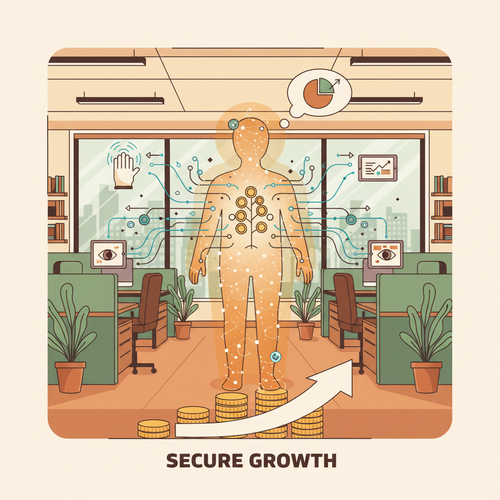
Biometric data utilization revolutionizes modern occupational health protocols. This process involves collecting unique physiological and behavioral characteristics from employees. Examples include real-time heart rate, sleep quality metrics, activity levels, and even nuanced voice patterns. Advanced biometric sensors and wearable technologies facilitate this continuous data acquisition. The overarching objective is to establish a truly proactive health management paradigm, moving beyond traditional episodic care models.
Organizations gain unprecedented, granular insights into their workforce’s well-being. These continuous data streams empower highly targeted and individualized interventions. The strategic focus shifts decisively towards preventative measures and early detection. This approach minimizes the onset of future health complications and significantly enhances overall workforce resilience. Data-driven decisions now supersede anecdotal observations, thereby elevating strategic human resources initiatives to a new echelon of precision and efficacy.
Furthermore, this integration allows for the monitoring of environmental stressors. Workplace noise levels, ambient temperature, and air quality can be correlated with physiological responses. Understanding these external factors provides a holistic view of occupational health. It enables a more comprehensive and adaptive approach to creating optimal working conditions. This directly contributes to a safer, more productive environment for all personnel.
Quantitative Protocols for Risk Mitigation and Performance Optimization
Quantitative occupational health protocols leverage comprehensive biometric datasets. They meticulously establish baseline physiological markers for each individual employee. Deviations from these established baselines serve as critical early warning signals for potential health issues. Real-time physiological monitoring actively identifies subtle stress biomarkers. It can also detect nascent signs of chronic fatigue, elevated cognitive load, or impending musculoskeletal disorders. This proactive identification is absolutely crucial for timely, effective intervention.
Such advanced protocols enable highly precise risk stratification across the workforce. Companies can therefore allocate preventative resources with unparalleled efficiency and strategic intent. High-risk profiles receive immediate, targeted support and tailored preventative programs. This significantly reduces the frequency and severity of workers’ compensation claims. It also substantially lowers long-term corporate healthcare liabilities. Furthermore, optimizing individual cognitive load, informed by real-time biometric feedback, demonstrably enhances overall employee performance. This directly and positively impacts the organization’s overall operational efficacy.
These protocols also extend to post-injury or post-illness rehabilitation. Biometric data monitors recovery progress objectively. It ensures employees return to work safely and at optimal capacity. This minimizes the risk of re-injury or relapse. The data provides empirical evidence for return-to-work assessments. This fosters a more secure and supported reintegration process for employees.
Expert Insight: “From an operational standpoint, integrating biometric analytics into health and safety frameworks has consistently demonstrated a tangible reduction in incident rates. We observe a measurable uplift in productivity when interventions are data-informed and precisely timed. This represents a significant paradigm shift in human capital management.”
Technological Underpinnings: Wearables, Sensors, and Data Fusion
The very foundation of robust biometric occupational health systems lies in advanced sensor technology. Contemporary wearable devices, including sophisticated smartwatches, smart rings, and even smart clothing, continuously collect a myriad of physiological data points. Beyond personal wearables, specialized environmental sensors precisely monitor crucial workplace conditions. These include detailed metrics on air quality, precise noise levels, lighting conditions, and potential exposure to chemical agents. Data streams emanating from these disparate sources necessitate highly sophisticated fusion techniques to ensure comprehensive and coherent data aggregation.
Cutting-edge Artificial Intelligence (AI) and Machine Learning (ML) algorithms are indispensable for processing these incredibly complex and vast datasets. They meticulously identify subtle, yet critical, patterns and latent correlations within the data. Advanced predictive analytics subsequently forecasts potential health events with remarkable accuracy. This empowers organizations to initiate timely, proactive preventative actions. A secure and scalable cloud infrastructure is absolutely vital for efficient data storage, processing, and retrieval. Crucially, seamless interoperability with existing Human Resources (HR) and Electronic Medical Record (EMR) systems is a non-negotiable prerequisite. This ensures an unimpeded, secure data flow, which directly underpins the entire system’s efficacy and reliability.
Further technological advancements include non-contact sensors. These can monitor vital signs remotely, offering greater convenience and broader application. Computer vision systems can analyze posture and movement patterns. This helps identify ergonomic risks in real-time. The continuous evolution of sensor miniaturization and battery life also expands deployment possibilities. These innovations ensure unobtrusive and persistent monitoring capabilities.
Ethical Considerations and Data Privacy Frameworks
Implementing biometric protocols inherently necessitates a framework of stringent ethical governance. Unambiguous and fully informed employee consent is an absolute, non-negotiable prerequisite before any data collection commences. Robust data anonymization and pseudonymization techniques are critical to safeguard individual privacy comprehensively. Strict adherence to HIPAA compliance is paramount for organizations handling healthcare-related personal data, particularly within the United States. Similarly, the comprehensive principles of General Data Protection Regulation (GDPR) dictate exceptionally strict data protection standards across the European Union, imposing significant compliance obligations.
Organizations must establish clear, transparent, and legally sound data retention policies. This avoids the prolonged, unnecessary storage of highly sensitive personal information. Furthermore, implementing robust, multi-layered cybersecurity measures is essential to prevent any unauthorized access, data breaches, or malicious exploitation. Assuming a data fiduciary role implies a heightened level of responsibility and accountability for protecting sensitive data. Transparency in how data is utilized, and for what specific purposes, is fundamental to building and maintaining invaluable employee trust. Any mismanagement of biometric data carries not only severe reputational risk but also significant regulatory penalties. Prioritizing privacy, therefore, actively fosters the long-term sustainability and acceptance of any biometric program.
Regular audits of data handling practices are also crucial. These verify ongoing compliance with internal policies and external regulations. Employee education on data security best practices further reinforces privacy efforts. A culture of data protection must permeate the entire organization. This minimizes human error, a common vulnerability in data breaches.
Economic Impact and Investment Justification
The financial justification for integrating biometric occupational health programs is profoundly compelling. A demonstrable reduction in absenteeism directly translates to substantial increases in overall workforce productivity. Prophylactic health interventions, informed by early biometric insights, significantly lower overall corporate healthcare costs. This encompasses fewer specialist visits, reduced emergency room utilization, and minimized hospitalizations. Rigorous actuarial analysis consistently demonstrates a compelling positive Return on Investment (ROI). These quantifiable metrics robustly validate the substantial financial gains realized.
Beyond direct cost savings, improved employee well-being directly fosters higher job satisfaction and morale. This critically contributes to enhanced talent retention rates. Companies effectively avoid the considerable financial burden associated with costly recruitment processes and extensive new employee training cycles. A demonstrably healthier and more engaged workforce invariably correlates with lower group insurance premiums. The tangible reduction in workers’ compensation claims provides additional, direct financial savings. These combined, multifaceted economic benefits collectively underpin an exceptionally strong business case for the widespread adoption of biometric health protocols.
Moreover, enhanced employee engagement resulting from proactive wellness programs boosts company reputation. This attracts top-tier talent. It positions the organization as an employer of choice. The long-term impact on brand equity is significant. This extends beyond immediate financial returns. It cultivates a sustainable competitive advantage in the labor market.
| Metric Category | Traditional Approach | Biometric-Enhanced Protocols | Impact (% Improvement/Reduction) |
|---|---|---|---|
| Healthcare Expenditure | Reactive, high incident costs | Proactive, preventative savings | Significant reduction (15-25%) |
| Absenteeism Rate | Standard industry averages | Consistently below industry benchmarks | Decreased by 10-20% |
| Workforce Productivity | Variable, prone to dips | Optimized, consistent output | 5-10% increase |
| Employee Retention | Market-dependent fluctuations | Improved, higher satisfaction and loyalty | Elevated by 8-12% |
| Workers’ Compensation Claims | Industry average claim frequency | Substantially reduced incidents | Reduced by 20-30% |
Implementation Challenges and Scalability in Enterprise Environments
Deploying comprehensive biometric occupational health solutions presents several distinct practical challenges. Integrating these novel systems with entrenched, often legacy, IT infrastructure can be exceptionally complex. Existing data silos frequently hinder comprehensive and cohesive data analysis. A significant hurdle involves potential employee resistance to continuous monitoring. Overcoming this requires clear, transparent communication regarding the tangible benefits to personal health and rigorous privacy protections. Comprehensive training for HR departments and management teams on these new protocols and data interpretation is also critically important.
Scaling these sophisticated programs across large, geographically dispersed enterprise environments demands an exceptionally robust and flexible architectural design. Standardizing precise data collection methodologies across diverse employee roles, work environments, and even international jurisdictions proves inherently difficult. Ensuring equitable access to necessary devices, technical support, and ongoing educational resources is absolutely vital for widespread adoption. Implementing controlled pilot programs allows for crucial refinement, iterative adjustments, and validation before committing to widespread, enterprise-level deployment. Effectively navigating these multifaceted challenges is paramount for achieving successful, sustainable, and scalable implementation across the entire organization.
Furthermore, cultural considerations play a significant role. Different regional or national norms regarding personal data and surveillance must be addressed. Customizing communication strategies to resonate with diverse employee demographics is essential. A one-size-fits-all approach often leads to skepticism and low adoption rates. Engaging employee representatives early in the planning process can foster greater acceptance.
Future Trajectories: Predictive Modeling and Hyper-Personalized Interventions
The future trajectory of biometric data in occupational health is poised for transformative advancements. Sophisticated predictive modeling capabilities will become exponentially more precise and granular. Artificial Intelligence will increasingly identify even the most subtle deviations in health trends at remarkably early stages. This empowers the development of truly hyper-personalized health interventions. Individual employee health profiles will dynamically guide tailored wellness programs. These programs will adapt in real-time to evolving physiological data and changing personal needs. This represents a fundamental paradigm shift from generic wellness advice to bespoke, adaptive health strategies.
Deep integration with cutting-edge neuro-ergonomics will allow for the precise optimization of cognitive performance. Continuous monitoring of complex stress biomarkers will inform targeted, proactive mental health support initiatives. The strategic convergence of physical, cognitive, and psychological well-being data offers profoundly holistic insights into employee health. Environmental factors, increasingly monitored by advanced sensor networks, will be seamlessly integrated into these comprehensive analyses. This creates a truly adaptive, responsive, and foresightful occupational health ecosystem. The potential for unparalleled human capital optimization and sustainable organizational productivity is demonstrably vast and largely untapped.
Further innovations include integrating genetic predisposition data, with strict ethical oversight. This could further refine risk assessments for specific health conditions. Blockchain technology may enhance the security and privacy of biometric data records. This offers immutable, transparent data management. The evolution towards predictive digital twins of employee health is also on the horizon. These could simulate health outcomes under various scenarios. This will revolutionize strategic health planning.
Conclusion
Biometric data utilization fundamentally transforms modern occupational health paradigms. It enacts a crucial shift from reactive treatment to proactive prevention and sustained wellness. Organizations gain unprecedented, actionable insights into employee well-being. This powerfully fuels data-driven decision-making across all levels. The ensuing economic benefits are substantial, quantifiable, and demonstrably measurable. These span from significantly reduced operational costs to markedly increased workforce productivity and higher retention rates.
However, successful adoption is inextricably linked to ethical data governance. Implementing robust privacy frameworks and ensuring transparent communication are non-negotiable imperatives. Effective technological integration demands meticulous planning and strategic foresight. Engaging employees through clear communication fosters vital trust and widespread program engagement. Are organizations strategically prepared to embrace this data-centric future, securing a healthier, more productive, and resilient workforce?