Executive Summary
- Actuarial risk transfer mechanisms optimize capital allocation.
- Comprehensive corporate liability hedging fortifies balance sheet resilience.
- Strategic implementation drives superior long-term financial stability.
Understanding Actuarial Risk Transfer Mechanisms
Actuarial risk transfer represents a sophisticated financial strategy. It moves specified risks from one entity to another. This process utilizes advanced statistical and mathematical methods. Traditional insurance simply covers defined losses. Actuarial transfer, conversely, often addresses more complex or aggregated exposures.
Its core relies on quantifying future uncertain events. Actuaries analyze historical data and probability distributions. They project potential financial impacts. This disciplined approach enables accurate pricing for assumed liabilities. It also facilitates efficient capital deployment against potential losses.
Actuarial Principles in Practice
Practical application involves meticulous risk assessment. Loss reserving models estimate future claims payments. Experience rating adjusts premiums based on past performance. Solvency capital calculations ensure adequate financial buffers. These principles underpin robust risk transfer arrangements. They provide a clear framework for financial stability.
Moreover, actuarial science informs product development. Structured risk solutions emerge from this deep understanding. These solutions often target non-standard or systemic risks. They offer bespoke coverage beyond conventional policies. This customization is critical for complex corporate structures.
Pillars of Comprehensive Corporate Liability Hedging
Corporate liability hedging systematically mitigates financial exposures. It protects a company’s balance sheet from unforeseen obligations. These obligations span various domains. They include operational, financial, and regulatory liabilities. Effective hedging requires identifying and quantifying these diverse risks.
The objective is to stabilize earnings and cash flows. It also aims to preserve shareholder value. Companies employ a range of financial instruments. These tools are tailored to specific risk profiles. A proactive approach is paramount for sustainable corporate governance.
Operational and Strategic Liability Exposure
Operational liabilities encompass diverse threats. Product liability claims can be substantial. Environmental liabilities (EIL) carry immense remediation costs. Regulatory fines for non-compliance impact profitability. Litigation risks often lead to significant legal expenses. These exposures demand sophisticated hedging strategies.
Strategic liabilities affect long-term viability. Reputational damage can erode market trust. Supply chain disruptions introduce contingent financial risks. Cybersecurity breaches create costly data recovery and legal burdens. Hedging these risks protects brand equity and market position. It secures operational continuity in volatile environments.
Advanced Methodologies for Risk Quantification
Robust risk quantification forms the bedrock of effective hedging. Actuarial science provides powerful analytical tools. Stochastic modeling projects future liability cash flows. It incorporates uncertainty through various probabilistic scenarios. This methodology reveals potential tail risks.
Catastrophe modeling assesses rare but severe events. Earthquakes, hurricanes, or widespread cyberattacks are examples. These models quantify potential aggregate losses. They inform capital requirements for extreme scenarios. Dynamic Financial Analysis (DFA) integrates these insights. DFA provides a holistic view of a firm’s financial resilience under stress.
Data Imperatives and Model Validation
Accurate risk quantification relies on high-quality data. Granular historical loss data is essential. It informs model parameters and assumptions. Data integrity directly impacts projection reliability. Incomplete or biased data can lead to significant misestimations.
Independent model validation is non-negotiable. External experts review model design and performance. This ensures accuracy and adherence to best practices. Sensitivity analysis explores parameter uncertainty. Stress testing evaluates model output under extreme, plausible conditions. These rigorous checks enhance confidence in risk assessments.
Expert Insight: “In complex liability landscapes, reliance on static models is a significant vulnerability. Dynamic actuarial methodologies offer superior foresight, enabling more agile capital deployment and strategic risk mitigation.”
Sophisticated Instruments for Liability Mitigation
Corporate entities leverage diverse instruments for liability mitigation. Captive insurance companies are self-owned insurers. They underwrite specific corporate risks. Captives offer flexibility, control, and potential cost savings. They also facilitate direct access to reinsurance markets.
Finite risk reinsurance contracts combine risk transfer with financing. They typically involve a multi-year agreement. The reinsurer assumes a limited portion of underwriting risk. Insurance-linked securities (ILS) transfer insurance risks to capital markets. Catastrophe bonds are a prime example. These provide investors with attractive yields. They offer issuers substantial catastrophe coverage.
Derivative Structures and Custom Solutions
Derivative instruments play a pivotal hedging role. Credit default swaps (CDS) hedge against counterparty credit risk. Interest rate swaps manage fluctuating debt costs. Foreign exchange forwards mitigate currency exposure. These tools provide precise, liquid hedging capabilities. They are vital for managing financial market volatility.
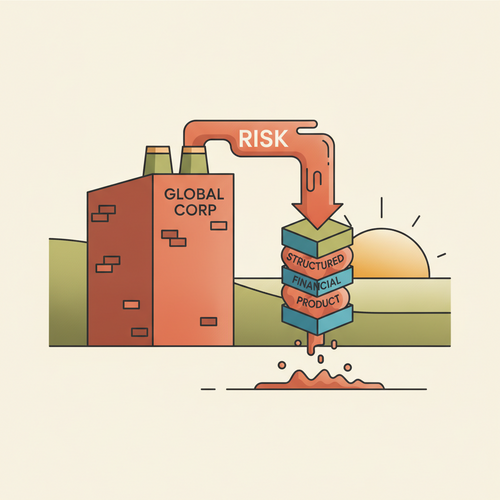
Customized structured products address unique risk profiles. These bespoke solutions combine various financial instruments. They can include options, bonds, and reinsurance. Contingent capital arrangements provide liquidity during stress events. These allow companies to raise capital under pre-agreed terms. This access safeguards solvency when needed most.
Strategic Integration within Enterprise Risk Management (ERM)
Effective risk transfer and hedging are integral to Enterprise Risk Management (ERM). ERM provides a comprehensive framework. It identifies, assesses, and manages all material risks. Integrating actuarial insights optimizes capital allocation. It ensures that risk financing aligns with corporate strategy.
Optimizing economic capital deployment is a key objective. ERM helps allocate capital efficiently across business units. It considers risk-adjusted returns. Enhancing shareholder value remains paramount. Robust risk management reduces earnings volatility. This contributes to a higher valuation multiples and investor confidence.
Regulatory Compliance and Governance
Regulatory frameworks demand stringent risk management. Solvency II for European insurers sets strict capital requirements. NAIC models guide US insurance regulation. Adherence to these standards is critical. Non-compliance incurs substantial penalties and reputational damage.
Strong governance structures are essential. Board oversight of risk management is crucial. Risk committees provide specialized expertise. Transparent financial reporting builds trust. It informs stakeholders about risk exposures and mitigation efforts. A strong governance posture reinforces long-term viability.
Learn more about Enterprise Risk Management on Investopedia.
Navigating Implementation Complexities and Market Dynamics
Implementing advanced risk transfer strategies presents challenges. Data collection and quality often pose hurdles. Incomplete or inconsistent data impairs model accuracy. Model parameter uncertainty requires careful calibration. Expert judgment remains critical in ambiguous areas.
Counterparty credit risk must be meticulously assessed. The financial strength of reinsurers or derivative counterparties matters. Market liquidity can impact hedging effectiveness. Regulatory arbitrage attempts often invite scrutiny. These complexities necessitate a sophisticated and adaptive approach.
Evolving Risk Landscape and Future Considerations
The global risk landscape is in constant flux. Cybersecurity liabilities are growing exponentially. Data breaches now carry immense financial and legal ramifications. Climate-related financial risks demand new modeling paradigms. Physical asset damage and transition risks affect long-term valuations.
Emerging legal precedents introduce novel liabilities. Social inflation impacts litigation costs. Geopolitical instability creates unpredictable market volatility. Actuarial models must continuously evolve. They must incorporate these dynamic factors. Proactive adaptation ensures ongoing relevance and protection.
Case Study: Mitigating Pharmaceutical Product Recall Exposure
Consider a large pharmaceutical corporation. It faces substantial product recall exposure. A single contaminated batch could trigger billions in losses. Traditional insurance provides limited, costly coverage. The firm sought a more integrated solution.
Actuarial analysis quantified the recall frequency and severity. It modeled various contamination scenarios. The firm then established a segregated cell captive. This captive assumed a layer of the recall risk. It pooled exposure from multiple product lines. This approach significantly optimized capital allocation.
Furthermore, the firm integrated predictive analytics. Early warning systems identify potential supply chain issues. This proactive posture reduces recall likelihood. The captive provided a stable funding mechanism. It smoothed earnings volatility caused by infrequent, severe events. This sophisticated strategy enhanced long-term financial resilience.
Explore Actuarial Science deeper on Investopedia.
Conclusion
Actuarial risk transfer and comprehensive liability hedging are indispensable. They form the bedrock of robust corporate financial health. These strategies move beyond basic insurance. They leverage deep statistical insights. Companies achieve superior capital efficiency. They also protect vital balance sheet integrity.
Proactive engagement with these advanced techniques is paramount. It ensures long-term solvency. It also sustains competitive advantage. Are your current risk transfer mechanisms sufficiently sophisticated for today’s complex liabilities?