Introduction
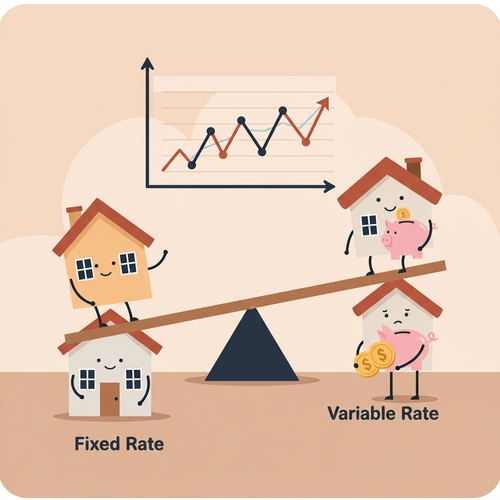
Deciding between a fixed-rate and a variable-rate mortgage stands as one of the most significant financial decisions homeowners face. This choice carries substantial implications for your monthly budget, long-term financial stability, and overall peace of mind. As the housing market continues its dynamic shifts and interest rates fluctuate, understanding the nuances of each option becomes paramount.
A mortgage represents more than just a loan for your home; it’s a multi-year commitment. Therefore, selecting the right type requires careful consideration of current economic conditions, future interest rate outlooks, and your personal financial landscape. This article will delve into the intricacies of both fixed and variable-rate mortgages. We aim to equip you with the knowledge needed to make a well-informed decision tailored to your unique circumstances in today’s evolving market.
Understanding Fixed-Rate Mortgages
What is a Fixed-Rate Mortgage?
A fixed-rate mortgage is characterized by an interest rate that remains constant throughout the entire term of the loan. This means your monthly principal and interest payments stay the same from the day you close on your home until the mortgage is fully paid off. Common terms for fixed-rate mortgages include 15-year, 20-year, and 30-year options, with the 30-year fixed being particularly popular due to lower monthly payments.
The stability offered by a fixed-rate mortgage is its primary appeal. You know exactly what you owe each month, regardless of what happens in the broader economy or with the central bank’s policies. This predictability greatly simplifies personal budgeting and long-term financial planning.
Advantages of Fixed-Rate Mortgages
Choosing a fixed-rate mortgage offers several compelling benefits, especially for homeowners who value security and predictability above all else:
- Budget Stability: Your monthly mortgage payments for principal and interest are set in stone. This eliminates any surprises and makes it easier to manage your household budget.
- Protection Against Rising Rates: If market interest rates increase significantly after you secure your loan, your fixed rate remains unchanged. This shields you from potentially higher payments, offering considerable peace of mind during periods of economic uncertainty.
- Simplicity in Financial Planning: With a consistent payment, you can plan other financial goals more effectively. It helps you accurately project long-term housing costs, assisting with retirement planning or other major investments.
- Peace of Mind: Many homeowners find comfort in knowing their housing costs will not suddenly escalate. This psychological benefit can be invaluable, reducing stress associated with financial uncertainty.
Disadvantages of Fixed-Rate Mortgages
While attractive, fixed-rate mortgages also come with certain drawbacks:
- Miss Out on Falling Rates: If market interest rates decline after you’ve locked in a fixed rate, you won’t automatically benefit from these lower rates. To take advantage, you would typically need to refinance, which incurs additional costs like closing fees.
- Potentially Higher Initial Rates: Fixed rates often start slightly higher than variable rates, particularly in certain market conditions. Lenders price in the risk of future rate increases over the long term, passing some of that cost onto borrowers.
- Less Flexibility (Without Refinancing): Changing your mortgage terms or rate generally requires a formal refinancing process. This can be time-consuming and expensive, making it less appealing for minor rate fluctuations.
Exploring Variable-Rate Mortgages
What is a Variable-Rate Mortgage?
A variable-rate mortgage, often referred to as an adjustable-rate mortgage (ARM), features an interest rate that can change over time. These rates are tied to a specific financial benchmark, such as the prime rate or the Secured Overnight Financing Rate (SOFR). When the benchmark rate moves, your mortgage interest rate adjusts accordingly, leading to fluctuations in your monthly payments.
Variable-rate mortgages usually begin with an introductory fixed-rate period, often for 3, 5, 7, or 10 years (e.g., a 5/1 ARM). After this initial period, the rate adjusts periodically, typically once a year. This type of mortgage introduces a degree of uncertainty regarding future payments.
Advantages of Variable-Rate Mortgages
Despite the inherent variability, these mortgages can offer significant advantages for certain borrowers:
- Potentially Lower Initial Rates: Variable rates often start lower than fixed rates. This can translate into more affordable monthly payments during the initial years of the loan, freeing up cash for other investments or expenses.
- Benefit from Falling Rates: If general interest rates in the market decrease, your variable rate will also fall. This can lead to lower monthly payments without the need to refinance, offering direct savings.
- Flexibility for Short-Term Ownership: If you plan to sell your home within a few years, a variable-rate mortgage might be advantageous. You could benefit from lower introductory rates and avoid the long-term commitment of a fixed rate.
- Opportunity for Faster Equity Build-up: The money saved from lower initial payments can sometimes be used to make extra principal payments. This strategy helps you build equity faster and reduce the overall interest paid over the life of the loan.
Disadvantages of Variable-Rate Mortgages
The flexibility of variable-rate mortgages comes with its own set of risks:
- Payment Uncertainty: Your monthly payments can increase if interest rates rise. This unpredictability makes budgeting more challenging and can strain your finances if you are not prepared for higher payments.
- Exposure to Rising Rates: If the market sees a sharp increase in interest rates, your mortgage payments could become significantly more expensive. This risk is a major concern for many homeowners, especially in volatile economic environments.
- Stress and Anxiety: The uncertainty surrounding future payments can cause stress for some individuals. Constantly monitoring market rates and worrying about potential payment hikes can detract from the peace of mind typically associated with homeownership.
- Caps and Floors: While most variable-rate mortgages have annual and lifetime caps on how much the rate can increase, they still allow for substantial payment changes. Understanding these caps is crucial but does not eliminate the risk entirely.
Key Factors to Consider in the Current Market
The choice between a fixed and variable rate is heavily influenced by the prevailing economic climate. Assessing the current market conditions is a crucial step.
Current Interest Rate Environment
Begin by analyzing the current trajectory of interest rates. Are they generally trending upwards, downwards, or remaining relatively stable? Central bank policies, particularly those of institutions like the Federal Reserve, play a pivotal role here. Their decisions on benchmark rates directly impact mortgage rates. If rates are expected to rise, a fixed-rate might offer more security. Conversely, if a downturn is anticipated, a variable rate could provide an opportunity for savings.
Pay close attention to economic indicators such as inflation, employment rates, and GDP growth. These factors often influence central bank decisions and, consequently, the broader interest rate landscape. Understanding these movements is fundamental to forecasting potential changes in mortgage costs.
Your Financial Situation and Risk Tolerance
Your personal financial health and comfort level with risk are paramount. Consider the following:
- Job Security: How stable is your employment? A steady income stream provides a stronger buffer against potential payment increases.
- Emergency Fund: Do you have a robust emergency fund? A substantial savings cushion can help absorb higher mortgage payments if rates unexpectedly climb.
- Ability to Handle Payment Increases: Stress-test your budget. Can you comfortably afford a 1% or 2% increase in your mortgage interest rate? If not, a fixed rate might be a safer bet.
- Long-term Financial Goals: Are you saving for retirement, your children’s education, or another major investment? The predictability of a fixed rate might align better with these goals.
Your risk tolerance is a deeply personal metric. Some individuals prefer absolute certainty, while others are comfortable with calculated risks for potential financial gains. Align your mortgage choice with your inherent comfort level.
Your Time Horizon
How long do you intend to live in the home? This question significantly impacts your mortgage decision:
- Short-Term Ownership (5-7 years or less): If you plan to move or sell relatively soon, a variable-rate mortgage with a lower introductory rate could be advantageous. You might benefit from these lower rates for the majority of your ownership period, potentially avoiding significant rate adjustments.
- Long-Term Ownership (10+ years): For those planning to stay in their home for an extended period, the stability of a fixed-rate mortgage often becomes more appealing. It removes the uncertainty of future rate hikes over many years, allowing for more consistent budgeting.
Understanding your likely tenure in the home helps align the mortgage term with your personal timeline, optimizing for either short-term savings or long-term predictability.
Market Forecasts and Expert Opinions
While no one can predict the future with 100% accuracy, reviewing market forecasts and expert opinions can provide valuable insights. Reputable financial institutions, economists, and real estate analysts often publish projections on where interest rates and the housing market are headed. Sources like Investopedia frequently offer updated analysis.
Look for consensus among experts, but also understand the underlying assumptions of their predictions. Consider a range of possible scenarios rather than relying on a single forecast. This informed perspective helps you evaluate the potential best-case and worst-case outcomes for both fixed and variable options.
Making Your Decision: A Step-by-Step Approach
Navigating the mortgage landscape requires a structured approach. Follow these steps to refine your decision-making process.
Evaluate Your Personal Financial Health
Before looking at loan products, thoroughly review your own finances. Create a detailed budget to understand your monthly income versus expenses. Calculate your debt-to-income ratio to assess your borrowing capacity. Determine how much flexibility you have in your budget to accommodate potential payment increases. A robust emergency fund, covering at least three to six months of living expenses, is critical, especially if you lean towards a variable-rate mortgage. This self-assessment forms the bedrock of a sound mortgage decision.
Research Current Market Trends
Stay informed about current economic indicators and their potential impact on mortgage rates. Follow news from central banks, observe inflation data, and track housing market reports. Compare mortgage offers from several different lenders, as rates and terms can vary significantly. Some lenders might offer more competitive rates on fixed mortgages, while others specialize in attractive variable-rate products. Utilize online mortgage calculators to model different scenarios and understand how rate changes would affect your monthly payments under both fixed and variable options.
Consider Refinancing Options
It is important to remember that your initial mortgage choice is not necessarily permanent. Should market conditions change dramatically, or your personal financial situation evolve, refinancing can be an option. If you start with a variable-rate mortgage and rates begin to climb, you might choose to refinance into a fixed-rate loan. Conversely, if you have a fixed-rate mortgage and rates drop significantly, refinancing could allow you to secure a lower payment. Be aware, however, that refinancing typically involves closing costs, so weigh the potential savings against these expenses.
Seek Professional Advice
Making such a significant financial commitment often benefits from expert guidance. Consider consulting with a qualified mortgage broker or a financial advisor. These professionals can provide personalized advice based on your unique financial profile, risk tolerance, and long-term goals. They possess in-depth knowledge of current market conditions, various loan products, and potential future trends. Their insights can be invaluable in helping you understand complex terms, compare different offers, and ultimately make the most suitable choice for your specific situation.
Conclusion
The decision between a fixed vs variable rate mortgage is complex, influenced by a multitude of personal and economic factors. There is no universally “right” answer; the optimal choice depends entirely on your individual financial circumstances, your comfort level with risk, and your outlook on future interest rate movements. A fixed-rate mortgage offers unparalleled predictability and protection against rising rates, ideal for those seeking stability and long-term budgeting certainty. Conversely, a variable-rate mortgage provides the potential for lower initial payments and savings if rates decline, suiting those with a higher risk tolerance and a shorter homeownership horizon.
In the current market, careful consideration of the prevailing interest rate environment, your personal financial health, and your long-term goals is essential. Engage in thorough research, utilize available tools, and do not hesitate to seek professional advice. By taking a deliberate and informed approach, you can choose the mortgage that best supports your financial well-being and helps you achieve your homeownership dreams.