Introduction
The financial landscape constantly shifts, presenting both challenges and opportunities for investors. Certificates of Deposit, commonly known as CDs, have long stood as a beacon of safety and predictability in a sometimes volatile market. These low-risk savings vehicles offer a guaranteed return, making them attractive to those prioritizing capital preservation. However, the critical question many investors face today is: should you lock in CD rates now?
Understanding the current and projected interest rate environment is crucial. This decision requires careful consideration of economic forecasts, personal financial goals, and the inherent features of CDs. This article will delve into the intricacies of Certificates of Deposit, analyze today’s interest rate landscape, and explore strategies to help you make an informed choice about your investments.
Understanding Certificates of Deposit (CDs)
Certificates of Deposit are popular savings tools offered by banks and credit unions. They provide a secure way to grow your money with minimal risk. When you invest in a CD, you agree to keep your money deposited for a specific period.
What is a CD?
A CD is essentially a time deposit account. You deposit a sum of money for a fixed term, ranging from a few months to several years. In return, the bank pays you a fixed interest rate for the entire duration. This stability is a key differentiator from standard savings accounts, where rates can fluctuate.
Importantly, CDs are typically insured by the Federal Deposit Insurance Corporation (FDIC) for banks. The National Credit Union Administration (NCUA) provides similar insurance for credit unions. This coverage protects your principal up to the legal limit, offering an exceptional layer of security.
Key Features and Benefits
CDs come with several attractive benefits, especially for risk-averse investors:
- Guaranteed Returns: Once you open a CD, your interest rate is fixed. This means you know exactly how much you will earn by the maturity date.
- Safety and Security: With FDIC or NCUA insurance, your investment is protected. This makes CDs one of the safest places for your cash.
- Predictability: CDs offer a clear timeline for your investment. You can align the maturity date with future financial needs, such as a down payment or college tuition.
- Higher Rates Than Savings Accounts: Generally, CDs offer better interest rates than traditional savings accounts. This is especially true for longer-term CDs.
They provide a straightforward way to earn interest without exposing your capital to market volatility. This makes them a cornerstone for a balanced financial plan.
Potential Drawbacks
While CDs offer significant advantages, they also have some limitations:
- Illiquidity: Your money is tied up until the maturity date. Accessing funds before then can incur penalties.
- Early Withdrawal Penalties: Banks typically charge a penalty for early withdrawals. This penalty often involves forfeiting a portion of the interest earned or even some principal.
- Inflation Risk: If inflation rises significantly during your CD term, the fixed interest rate might not keep pace. This can erode the purchasing power of your returns over time.
- Opportunity Cost: Locking in a rate means you might miss out if market interest rates increase substantially. You cannot take advantage of higher rates without breaking your existing CD.
Understanding these trade-offs is essential before committing your funds to a Certificate of Deposit.
Analyzing Today’s Interest Rate Environment
The decision to lock in CD rates now heavily depends on the current and anticipated interest rate climate. Various macroeconomic factors influence these rates.
Current Economic Factors Influencing Rates
Several key indicators drive the direction of interest rates:
- Inflation: High inflation often prompts central banks to raise interest rates. This is done to cool down the economy and bring prices under control.
- Federal Reserve Policy: The U.S. Federal Reserve plays a pivotal role. Its monetary policy decisions, especially adjustments to the federal funds rate, directly impact CD rates. When the Fed raises rates, banks typically follow suit.
- Economic Growth: A strong economy with robust job growth can lead to higher rates. Conversely, fears of a recession might lead to rate cuts to stimulate borrowing and spending.
- Global Economic Conditions: International events and global market trends can also influence domestic interest rates. These factors create a complex web of influences.
Currently, many economies are navigating periods of inflation and central bank efforts to achieve price stability. This creates a dynamic environment for savers and investors alike.
Expert Interest Rate Forecasts
Financial experts closely monitor economic data to predict future interest rate movements. Their forecasts are invaluable for CD investors.
Many analysts anticipate a period of rate stability or even potential rate cuts in the near future. This consensus is often based on moderating inflation and a desire to avoid an economic slowdown. For example, you can often find insights from the Federal Reserve itself, which provides economic projections and statements on monetary policy.
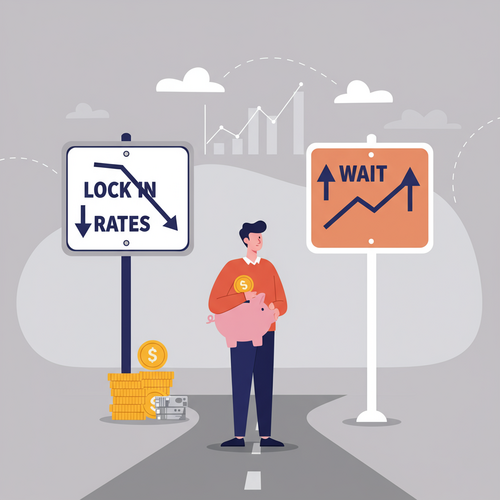
If interest rates are projected to fall, locking in a higher rate now can be highly advantageous. It secures your earnings before rates decline. Conversely, if forecasts suggest rates will continue to climb, a short-term CD or a CD ladder might be more suitable. This allows you to reinvest at potentially higher rates later. Staying informed through reputable financial news outlets, such as The Wall Street Journal, can provide valuable perspectives.
Should You Lock in a CD Rate Now?
Making the decision to lock in CD rates now requires a personalized approach. It hinges on your unique financial situation and outlook.
Scenarios When Locking in Makes Sense
Consider securing a CD rate today under these circumstances:
- Anticipated Rate Declines: If economic indicators and expert forecasts suggest interest rates are likely to fall, locking in a current higher rate preserves your earning potential.
- Desire for Guaranteed Returns: For investors who prioritize capital preservation and predictable income, a CD offers peace of mind. It removes market volatility from the equation.
- Part of a Diversified Portfolio: CDs can serve as a stable component within a broader investment strategy. They offset the risk of more volatile assets.
- Specific Future Financial Needs: If you have a known expense in the near future, such as a home down payment in three years, a CD timed to mature then can be ideal.
These situations highlight the value of certainty that CDs provide. They allow you to plan your finances with greater precision.
Scenarios When Waiting Might Be Better
Conversely, there are times when delaying your CD investment could be more beneficial:
- Expected Rate Increases: If the consensus points to rising interest rates, waiting to invest means you could secure an even higher rate in the future.
- Need for Liquidity: If you anticipate needing access to your funds before the CD matures, the early withdrawal penalties can negate your interest earnings. A high-yield savings account might be a better option.
- Uncertain Financial Future: For those whose financial needs might change unexpectedly, committing to a long-term CD can be restrictive. Flexibility is key in such situations.
Always weigh the potential benefits of higher future rates against the security of current rates. Your personal liquidity needs are a significant factor.
Considering Your Financial Goals
Ultimately, the choice comes down to aligning the CD investment with your broader financial objectives. Ask yourself:
- What is my time horizon? Short-term CDs are suitable for funds needed soon. Longer-term CDs offer higher rates but less liquidity.
- What is my risk tolerance? CDs are ideal for those with a low-risk appetite.
- How does this fit into my overall portfolio? CDs can provide stability, complementing more growth-oriented investments.
- Do I have an emergency fund? Always ensure you have sufficient liquid funds before locking money into a CD.
A well-thought-out financial plan guides these decisions. It helps ensure your investments serve your specific aspirations.
Strategies for Maximizing CD Returns
Even if you decide to lock in CD rates now, there are smart strategies to optimize your returns and flexibility.
CD Laddering
A CD ladder is a popular strategy designed to combine the benefits of higher long-term CD rates with the liquidity of short-term CDs. Here’s how it works:
- You divide your total CD investment into several smaller CDs.
- Each CD has a different maturity date (e.g., 1-year, 2-year, 3-year, 4-year, 5-year).
- As each shorter-term CD matures, you reinvest the principal and interest into a new, longer-term CD at the end of your ladder (e.g., a new 5-year CD).
This strategy offers several advantages:
- Improved Liquidity: A portion of your funds becomes available regularly.
- Flexibility: You can take advantage of rising interest rates as each rung matures.
- Higher Overall Returns: You benefit from the generally higher rates of longer-term CDs.
CD laddering is an excellent way to balance security, access to funds, and earning potential in a fluctuating rate environment. It is a prudent approach for many investors.
High-Yield CDs and Online Banks
Not all banks offer the same CD rates. It pays to shop around, especially with online institutions.
- Online Banks: These banks often have lower overhead costs. They pass these savings on to consumers in the form of higher interest rates on CDs and savings accounts.
- Credit Unions: Many credit unions offer competitive CD rates to their members.
- Comparing Offers: Always compare annual percentage yields (APYs) across different institutions. Focus on terms that align with your financial goals.
Using comparison websites can help you find the best high-yield CD rates available. This diligent research can significantly boost your overall earnings.
Diversification Beyond CDs
While CDs are safe, they are just one piece of a comprehensive financial puzzle. Diversifying your investments is crucial for long-term success.
- Money Market Accounts: These offer more liquidity than CDs while often providing higher interest rates than traditional savings accounts.
- Short-Term Bonds: Government or corporate bonds with short maturities can offer slightly higher returns than CDs, though with slightly more risk.
- Other Investment Vehicles: Depending on your risk tolerance and goals, consider a diversified portfolio of stocks, mutual funds, or exchange-traded funds (ETFs) for growth potential.
A balanced portfolio includes a mix of assets. This approach helps you mitigate risks and achieve various financial objectives. For more detailed information on diversification, resources like Investopedia can be very helpful.
Conclusion
The decision to lock in CD rates now is a strategic one, deeply influenced by the prevailing economic climate and your individual financial situation. Certificates of Deposit offer unparalleled safety and predictable returns, making them an attractive option for conservative investors. However, the current interest rate forecast, marked by ongoing economic adjustments, demands a thoughtful evaluation.
If interest rates are expected to decline, securing a CD rate today can be a smart move. Conversely, if rates are poised to rise, short-term CDs or a laddering strategy might offer greater flexibility. Always consider your liquidity needs and long-term financial objectives. By staying informed about economic trends and exploring strategies like CD laddering, you can optimize your investment choices. This ensures your money works effectively for you, regardless of market fluctuations.