Introduction
Few financial tools are as influential and widely used as the credit card. Since its widespread adoption in the mid-20th century, credit cards have reshaped how individuals spend, save, borrow, and even build wealth. For some, credit cards symbolize convenience and opportunity; for others, they represent the dangers of overspending and debt. The truth lies somewhere in between—credit cards can be either a stepping stone to financial independence or a slippery slope toward financial ruin, depending on how they are used.
In today’s digital economy, where e-commerce, subscription services, and international travel dominate consumer behavior, credit cards remain indispensable. From offering rewards and building credit history to enabling global payments and providing security, they are a critical part of modern financial management. But not all credit cards are created equal, and understanding their structures, networks, benefits, and risks is essential for making informed choices.
This article takes a deep dive into the world of credit cards: their history, types, global networks, rewards, pitfalls, and how to use them strategically to improve personal finance.
A Brief History of Credit Cards
The idea of borrowing money for purchases is ancient, but the modern credit card began in the 1950s with the Diners Club Card, a charge card that allowed customers to pay at restaurants and settle the bill monthly. Soon after, banks like Bank of America launched revolving credit cards, giving users the ability to carry balances over time.
By the 1970s and 80s, credit card giants like Visa, Mastercard, and American Express dominated the market, expanding internationally. Today, credit cards are an essential part of consumer banking, with billions of cards in circulation worldwide.
Understanding How Credit Cards Work
At their core, credit cards provide a revolving line of credit. The issuer (usually a bank) sets a limit, and the cardholder can borrow up to that amount. Each month, the borrower must make at least a minimum payment, with interest charged on any unpaid balance.
Key features include:
-
Credit Limit: Maximum borrowing capacity.
-
Interest Rate (APR): The annualized cost of carrying debt.
-
Billing Cycle: The period during which transactions are tracked.
-
Minimum Payment: The lowest amount required monthly to keep the account in good standing.
Understanding these mechanics is crucial for avoiding unnecessary debt and maximizing benefits.
Major Credit Card Networks Around the World
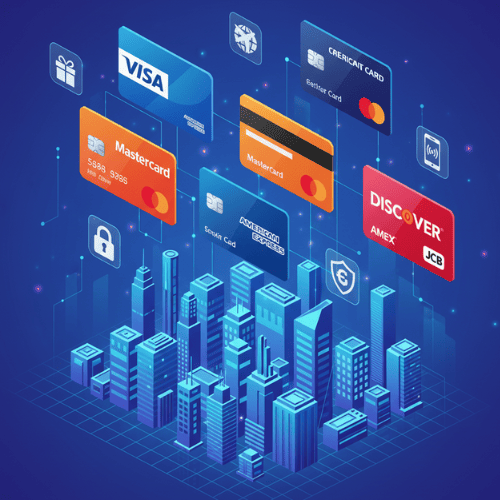
Credit card networks act as the backbone, processing payments between merchants and banks. The main players globally are:
-
Visa – The largest network worldwide, accepted in over 200 countries. Known for reliability, wide acceptance, and strong security features.
-
Mastercard – Similar reach to Visa, with innovative technology and diverse partnerships.
-
American Express (Amex) – Focuses on premium clients, offering rich rewards and travel perks but with slightly lower global acceptance.
-
Discover – Strong in the U.S., offering cashback and no annual fees, though with less international reach.
-
UnionPay – Dominant in China and expanding globally, with one of the largest transaction volumes worldwide.
-
JCB (Japan Credit Bureau) – Popular in Japan and Asia, with growing international partnerships.
Each network has unique strengths, and choosing the right one depends on where you spend and what benefits you value most.
Types of Credit Cards
Credit cards come in many forms, each designed to meet different financial needs:
-
Standard Credit Cards: Basic cards with no rewards, ideal for building credit.
-
Rewards Credit Cards: Offer cashback, points, or miles for purchases.
-
Travel Credit Cards: Provide perks like airline miles, hotel points, and airport lounge access.
-
Secured Credit Cards: Require a deposit, perfect for those rebuilding or establishing credit.
-
Business Credit Cards: Tailored for companies, offering higher limits and business rewards.
-
Premium Credit Cards: High annual fees but exclusive benefits, like concierge services and luxury travel perks.
Benefits of Using Credit Cards
When used wisely, credit cards can be a powerful financial tool. Benefits include:
-
Building Credit History: Responsible use improves credit scores.
-
Convenience: Accepted worldwide, eliminating the need for large amounts of cash.
-
Rewards and Cashback: Earn points, miles, or money back on everyday spending.
-
Fraud Protection: Strong security features protect against unauthorized transactions.
-
Emergency Access to Credit: A safety net for unexpected expenses.
-
Travel Perks: From insurance coverage to priority boarding, travel cards offer significant benefits.
Risks and Pitfalls of Credit Cards
Despite their advantages, credit cards can also lead to financial difficulties:
-
High-Interest Debt: Carrying a balance often leads to compounding interest.
-
Overspending: Easy access to credit encourages unnecessary purchases.
-
Fees: Late fees, annual fees, and foreign transaction charges can add up.
-
Impact on Credit Score: Late payments or high utilization hurt creditworthiness.
The key is self-discipline—using credit as a tool, not as an excuse to spend beyond your means.
Credit Cards and Personal Finance Strategy
Credit cards should not be viewed in isolation but as part of an overall personal finance plan. Strategic usage includes:
-
Paying balances in full monthly to avoid interest.
-
Leveraging rewards for travel, cashback, or everyday savings.
-
Using cards to track expenses and improve budgeting.
-
Choosing cards that align with lifestyle (e.g., frequent traveler vs. cashback seeker).
By integrating credit card use into broader financial planning, individuals can enjoy benefits while minimizing risks.
The Future of Credit Cards: Digital Payments and Innovation
The credit card industry is evolving rapidly. Digital wallets, mobile payments, and contactless technology are transforming how consumers use cards. At the same time, fintech companies are introducing virtual cards, subscription management tools, and even cryptocurrency-linked cards.
Looking ahead, we can expect greater personalization, stronger security through biometrics, and integration with blockchain technologies. The line between traditional credit cards and digital finance will continue to blur.
Conclusion
Credit cards are more than just plastic—they are a symbol of modern financial life. They offer convenience, rewards, and opportunities, but also carry risks if misused. Understanding how credit cards work, choosing the right type, and using them strategically is key to unlocking their full potential.
For individuals, credit cards can build credit history, provide financial flexibility, and open doors to travel and lifestyle perks. For businesses, they enable efficient transactions and financial control. Globally, credit cards remain essential to commerce and consumer behavior.
In an increasingly digital world, the future of credit cards promises innovation and integration with emerging financial technologies. By using them responsibly, individuals can transform a simple piece of plastic into a powerful tool for financial growth and freedom.