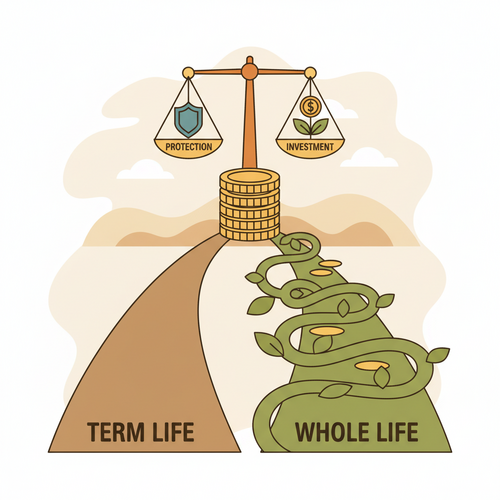
Understanding the fundamental differences between Term Life vs Whole Life Insurance is crucial for anyone aiming to build substantial wealth and secure their financial future. These two primary types of life insurance policies offer distinct approaches to protection and savings, often leading to a complex debate among financial planners and individuals alike. Therefore, discerning which policy aligns better with your wealth-building objectives requires a comprehensive look at their structures, costs, and long-term benefits.
Ultimately, life insurance serves as a cornerstone of financial planning, providing a safety net for your loved ones. However, beyond mere protection, certain policies present opportunities for accumulating wealth over time. This article meticulously breaks down each option, helping you make an informed decision that supports both your immediate and long-term financial aspirations.
Understanding Term Life Insurance: The Pure Protection Model
Term life insurance is often described as the most straightforward form of life coverage available. Essentially, it provides coverage for a specific period, or “term,” typically ranging from 10 to 30 years. Consequently, if the insured person passes away within this designated term, the policy pays a death benefit to their beneficiaries. Conversely, if the term expires and the insured is still alive, the policy simply ends, and no payout occurs.
Key Characteristics of Term Life Insurance
- Fixed Duration: As its name suggests, term life offers coverage for a predetermined period. This makes it ideal for covering specific financial obligations that will eventually end, such as a mortgage or the years during which children are dependents.
- Affordable Premiums: Generally, term life insurance boasts significantly lower premiums compared to whole life policies, especially for younger, healthier individuals. This cost-effectiveness is a major appeal.
- Pure Protection: Notably, term life insurance is purely a death benefit product. It does not accumulate cash value or offer any investment component. Therefore, its simplicity is often seen as a virtue.
- No Cash Value: Since there is no savings or investment component, term life policies do not build cash value over time. Upon expiration, the policy holds no value.
How Term Life Supports Wealth Building
The primary way term life insurance supports wealth building is indirectly, by freeing up capital. Because its premiums are considerably lower, policyholders have more disposable income available. This surplus capital can then be strategically invested in other avenues, such as stocks, bonds, real estate, or retirement accounts. For instance, an individual might choose to “buy term and invest the difference.” This strategy involves purchasing an affordable term policy for essential protection and then investing the money saved on premiums in assets with higher potential returns.
Furthermore, term life provides crucial peace of mind, allowing investors to take calculated risks in their investment portfolios. Knowing that their family is financially protected, even if an untimely event occurs, can reduce anxiety. This psychological benefit can indirectly foster more confident and potentially more profitable investment decisions. Ultimately, term life insurance acts as a robust financial safety net, enabling aggressive wealth accumulation through external investments.
Exploring Whole Life Insurance: Protection with a Savings Component
Whole life insurance stands in stark contrast to term life, offering permanent coverage that lasts for the insured’s entire life, provided premiums are paid. Beyond its lifelong death benefit, whole life policies feature a unique savings component known as “cash value.” This cash value grows over time on a tax-deferred basis, adding a layer of complexity and potential financial utility to the policy.
Key Characteristics of Whole Life Insurance
- Permanent Coverage: A defining feature is its lifelong protection. The policy remains in force for as long as premiums are paid, ensuring a death benefit for beneficiaries regardless of when the insured passes away.
- Level Premiums: Premiums for whole life policies typically remain level for the entire duration of the policy. While initially higher than term life, they do not increase with age, offering predictability.
- Guaranteed Cash Value Growth: A significant advantage is the guaranteed growth of the cash value. This portion of the policy earns interest at a specified rate, providing a predictable return. Over time, it can grow into a substantial sum.
- Access to Cash Value: Policyholders can access their accumulated cash value through loans or withdrawals. Policy loans are generally tax-free, but they do accrue interest and can reduce the death benefit if not repaid. Withdrawals directly reduce the death benefit and can be taxable if they exceed the premiums paid.
- Potential for Dividends: Some whole life policies, especially those from mutual insurance companies, may pay dividends. These are not guaranteed but can enhance returns, be used to reduce premiums, or purchase additional coverage.
How Whole Life Supports Wealth Building
Whole life insurance directly contributes to wealth building through its guaranteed cash value component. This feature provides a stable, conservative savings vehicle that grows steadily over decades. Notably, the cash value accumulation is tax-deferred, meaning you don’t pay taxes on the growth until you access the money. This tax advantage can significantly boost long-term returns.
Furthermore, the ability to borrow against the cash value offers a unique form of liquidity. Policyholders can take loans for various purposes, such as funding education, covering emergency expenses, or even supplementing retirement income, without selling off other assets. This provides a flexible source of capital that bypasses traditional lenders and their potentially higher interest rates. The guaranteed nature of cash value growth also acts as a forced savings mechanism, appealing to individuals who struggle with consistent self-directed investing. For more details on accessing policy value, Investopedia provides an excellent resource on how to borrow against your life insurance policy.
The Wealth-Building Debate: Term Life & Invest the Difference vs. Whole Life’s Cash Value
The core of the debate between term life and whole life for wealth building revolves around the concept of “opportunity cost.” Which policy structure provides a better platform for long-term financial growth? Each offers a distinct pathway, catering to different financial philosophies and risk tolerances.
Term Life’s Advantage: Flexibility and Higher Growth Potential
Advocates of term life often emphasize the “buy term and invest the difference” strategy. The rationale is simple: term life premiums are significantly lower than whole life premiums, especially for younger individuals. This substantial difference in cost creates a larger pool of funds that can be invested independently. For instance, if a whole life policy costs $3,000 annually and a comparable term policy costs $500, an investor can potentially invest the remaining $2,500 each year.
Historically, diversified investment portfolios in assets like stocks, mutual funds, or real estate have demonstrated the potential for higher returns over the long run compared to the guaranteed growth rate of a whole life cash value. This strategy offers greater control and flexibility over investments, allowing individuals to tailor their portfolio to their specific risk tolerance and financial goals. Consequently, for those disciplined enough to consistently invest the savings, term life can be a powerful accelerator for wealth accumulation. Notably, this approach requires self-discipline and an understanding of market investments. For insights into long-term investing, reputable sources like Reuters often offer market outlooks that can guide investment decisions.
Whole Life’s Advantage: Guaranteed Growth and Financial Discipline
Conversely, whole life insurance champions highlight its guaranteed cash value growth and inherent financial discipline. While the growth rate might be lower than potential market returns, it is stable and predictable, unaffected by market volatility. This offers a level of security that traditional investments cannot always match. For individuals who struggle with consistent saving and investing, the fixed premium schedule of a whole life policy acts as a forced savings mechanism. Each premium payment contributes to both the death benefit and the growing cash value, ensuring a portion of income is always put towards long-term financial security.
Moreover, the tax-deferred growth of the cash value and the ability to take tax-free policy loans provide unique financial planning tools. These features can be particularly valuable in retirement planning, offering a supplemental income stream without triggering immediate taxable events. For example, some high-net-worth individuals use whole life policies as a component of their estate planning, ensuring liquidity for heirs or creating a tax-advantaged legacy. While perhaps not offering the highest speculative returns, whole life provides a bedrock of financial stability and a disciplined approach to wealth preservation and moderate growth.
Key Considerations for Your Financial Strategy
Deciding between term life and whole life insurance for wealth building is not a one-size-fits-all situation. Several personal financial factors must be carefully weighed to determine which policy best suits your individual circumstances.
Financial Goals
Consider your immediate and long-term financial objectives. Do you primarily need protection for a specific period, such as covering a mortgage or raising young children? Term life excels in these scenarios, offering robust coverage at an affordable price point. Conversely, if your goal is lifelong protection, guaranteed cash value accumulation, and a structured savings vehicle, whole life might be more appealing. Long-term wealth transfer and estate planning often benefit from the permanent nature of whole life.
Risk Tolerance
Your comfort level with investment risk plays a significant role. If you are comfortable with market fluctuations and actively managing an investment portfolio for potentially higher returns, the “buy term and invest the difference” strategy aligns well. However, if you prefer guaranteed returns, predictability, and a more hands-off approach to a portion of your savings, the stable growth of whole life’s cash value may be more suitable. Remember, guaranteed returns come with lower potential upside.
Budget and Premium Affordability
Premiums are a critical factor. Whole life policies are inherently more expensive than term life policies for the same death benefit, particularly in the earlier years. Therefore, assess your current budget and long-term financial capacity to commit to premium payments. Over-extending yourself for a whole life policy could hinder other essential financial goals. A term policy, being more budget-friendly, ensures critical protection without straining your finances, thus leaving room for other investments.
Flexibility and Liquidity
Evaluate the flexibility each policy offers. Term life offers flexibility in that it doesn’t tie up large sums of capital in the policy itself, allowing for greater freedom in external investments. Whole life, conversely, provides liquidity through policy loans and withdrawals from its cash value. This access to funds, while not without its own considerations (e.g., interest on loans, reduced death benefit), can be a valuable resource for emergencies or opportunities, often without the strict qualification processes of traditional loans. For understanding various investment vehicles, the U.S. Securities and Exchange Commission offers valuable insights into life insurance and annuities as investment products.
Making an Informed Decision: Tailoring to Your Needs
Ultimately, the choice between term life and whole life insurance is a deeply personal financial decision. It hinges on a careful evaluation of your current life stage, future aspirations, and financial discipline.
When Term Life Might Be Better:
- You need significant coverage for a limited period (e.g., while raising a family, paying a mortgage).
- You prioritize lower premiums to free up capital for aggressive investment in other assets with higher growth potential.
- You are disciplined and knowledgeable enough to manage an independent investment portfolio.
- You prefer simplicity and transparency in your insurance products.
When Whole Life Might Be Suitable:
- You desire lifelong coverage and a guaranteed death benefit.
- You value a structured, forced savings mechanism with guaranteed, tax-deferred growth.
- You appreciate the liquidity offered by policy loans for future financial needs.
- You are looking for a conservative component in your overall wealth strategy, providing stability and predictable returns.
- You have high net worth and are engaged in complex estate planning or wealth transfer strategies.
Many financial advisors suggest a hybrid approach for some individuals, combining an affordable term policy for maximum protection during critical years with a separate, diversified investment portfolio. Others might find that a well-structured whole life policy perfectly complements their conservative investment style or long-term estate goals. The key is to analyze your situation thoroughly and consult with a qualified financial advisor. A professional can provide tailored advice, helping you navigate the intricacies of these policies and integrate them effectively into your overarching wealth-building strategy.
Conclusion
The debate over whether Term Life vs Whole Life Insurance better supports wealth building is not about one being inherently superior, but rather about which one aligns more closely with an individual’s specific financial philosophy and objectives. Term life, with its lower premiums and pure protection focus, empowers individuals to invest aggressively in other asset classes, potentially achieving higher market-driven returns. Conversely, whole life offers guaranteed, tax-deferred cash value growth and lifelong coverage, acting as a disciplined savings tool and a source of accessible capital. Ultimately, both policies are valuable financial instruments. Your decision should stem from a clear understanding of your personal financial goals, risk tolerance, budget, and commitment to active investment management. By carefully considering these factors, you can select the policy—or combination of policies—that most effectively contributes to your long-term wealth accumulation and provides enduring financial security for you and your loved ones.