Introduction
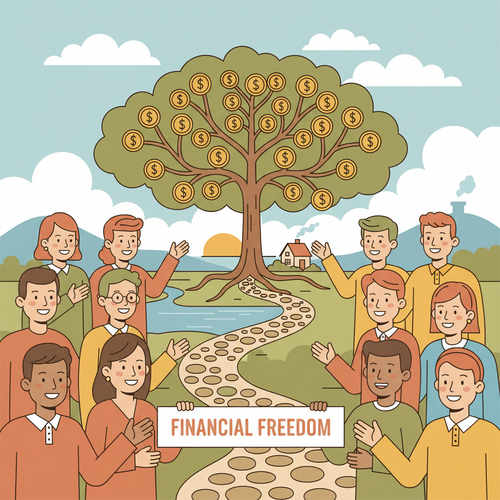
Have you ever dreamt of saying goodbye to the daily grind long before the traditional retirement age? The allure of financial freedom, the ability to control your time, and the pursuit of passions beyond work are powerful motivators. This aspiration is at the heart of the FIRE Movement, an acronym for Financial Independence, Retire Early.
The FIRE movement is more than just a savings strategy. It’s a lifestyle philosophy that empowers individuals to gain control over their finances. People learn to accumulate enough wealth to live off their investments. This allows them to “retire” from mandatory work decades earlier than most. It’s about intentional living and making conscious choices with your money.
Many people find the idea of early retirement appealing. Imagine having the freedom to travel, pursue a hobby, or spend more time with family. This article will explain the core tenets of FIRE. We will explore its different approaches and provide practical steps to begin your own journey towards early retirement.
Understanding the Core Principles of FIRE
The FIRE movement is built on two fundamental concepts: achieving financial independence and retiring early. Both are deeply intertwined and require a clear understanding of your financial landscape.
Financial Independence: More Than Just Money
Financial independence means having enough passive income to cover your living expenses without needing to work a traditional job. It’s not about being incredibly rich, but rather about having your money work for you. This freedom allows you to make life choices based on passion, not paychecks. It’s a shift in mindset, from consumer to investor.
This state provides incredible flexibility. You can choose to work part-time, pursue volunteer opportunities, or simply enjoy your time. The core idea is that your expenses are covered. Therefore, your time is truly your own.
Retire Early: Setting Your Target
The “Retire Early” part of FIRE is subjective. For some, it might mean retiring in their 50s. For others, it could be as early as their 30s or 40s. The common thread is leaving the conventional workforce significantly sooner than the typical age of 65. This goal is achieved by aggressively saving and investing a large portion of your income.
A crucial step in the FIRE journey is calculating your “FIRE number.” This is the total amount of money you need invested to support your desired lifestyle without working. A widely accepted rule of thumb is the 25x Rule. This suggests you need 25 times your annual living expenses. For example, if you spend $40,000 per year, your FIRE number would be $1,000,000 (25 x $40,000).
This calculation is based on the 4% Rule, which posits you can safely withdraw 4% of your investment portfolio each year. This withdrawal rate is historically sustainable over long periods. It also accounts for inflation and market fluctuations. However, it’s important to understand that no investment strategy is without risk. For more detailed information on safe withdrawal rates, you can consult studies and analyses by financial institutions. Learn more about the 4% Rule here.
Key Pillars of the FIRE Strategy
Achieving FIRE is not by chance. It requires a disciplined approach to managing your money. There are three main pillars that support a successful FIRE strategy: aggressive savings, strategic investing, and optimizing income.
Aggressive Savings Rate
The cornerstone of the FIRE movement is an exceptionally high savings rate. While traditional financial advice suggests saving 10-15% of your income, FIRE adherents often aim for 50-70% or even higher. This dramatically reduces the time it takes to reach your FIRE number. Every dollar saved and invested reduces your reliance on future earnings.
To achieve such high savings rates, two main strategies are employed:
- Budgeting and Tracking Expenses: Understanding where your money goes is the first step. Creating a detailed budget helps identify areas to cut unnecessary spending. Popular methods include the 50/30/20 Rule (50% needs, 30% wants, 20% savings) or zero-based budgeting.
- Reducing Major Expenses: Housing, transportation, and food are often the largest expenditures. Downsizing your home, optimizing car usage, or cooking at home more often can free up significant funds.
Before aggressive investing, building a robust Emergency Fund is critical. This fund typically covers 3-6 months of living expenses. It provides a safety net against unexpected events like job loss or medical emergencies. This prevents you from having to dip into your investments.
Strategic Investing and Wealth Accumulation
Saving money is only half the battle. To truly accelerate your path to FIRE, you must put your savings to work through strategic investing. The incredible power of compound interest is your greatest ally here. This is when your investments earn returns, and those returns then earn their own returns. Over time, this creates exponential growth.
Common investment vehicles favored by the FIRE community include:
- Low-Cost Index Funds: These funds track a specific market index, like the S&P 500. They offer broad diversification and typically have very low fees. This makes them an efficient way to capture market returns.
- Exchange-Traded Funds (ETFs): Similar to mutual funds, ETFs hold a basket of assets. They trade like individual stocks on exchanges. Many ETFs are also passively managed and offer low costs.
- Real Estate: Investing in rental properties can provide passive income and long-term appreciation. However, it often requires more active management than index funds.
Diversification is paramount to mitigate risk. Spreading your investments across different asset classes reduces the impact of any single investment performing poorly. Always align your investment strategy with your risk tolerance and time horizon.
Income Generation and Optimization
While cutting expenses is vital, increasing your income can significantly accelerate your FIRE journey. More income means more money available for saving and investing, boosting your savings rate without drastic lifestyle cuts. Explore ways to earn more, beyond your primary job.
- Side Hustles: Freelancing, consulting, teaching, or creating online content can generate extra income. This additional money can be directly channeled into your investment portfolio.
- Career Advancement: Focus on skill development, seek promotions, and negotiate salary increases in your primary job. Higher earnings directly translate to a faster path to financial independence. Discover useful tools for managing your finances.
- Passive Income Streams: Beyond traditional investments, consider sources like royalties, dividends from stocks, or profits from a small business you own but don’t actively manage.
Different Flavors of FIRE
The FIRE movement is not one-size-fits-all. It has evolved into several distinct sub-movements, each catering to different preferences and financial situations. Understanding these variations can help you find the path that best suits your goals.
Lean FIRE
This approach involves living on a significantly reduced budget during retirement. Adherents of Lean FIRE prioritize extreme frugality and minimalism. Their FIRE number is lower, allowing them to retire with fewer assets. They often live a very modest lifestyle, focusing on experiences rather than material possessions. This path suits those comfortable with a simpler, lower-cost existence.
Fat FIRE
In contrast to Lean FIRE, Fat FIRE aims to accumulate a larger nest egg. This allows for a more comfortable, even luxurious, retirement. Those pursuing Fat FIRE want to maintain a higher standard of living without financial compromise. Their FIRE number will be substantially higher, requiring more aggressive savings and potentially a longer working career. They typically want to enjoy amenities like frequent travel or dining out regularly.
Barista FIRE
Barista FIRE is a hybrid approach. It involves retiring from a high-stress, full-time career but continuing to work part-time in a less demanding role. This part-time work helps cover living expenses or healthcare costs. It also provides a sense of purpose and social interaction. This strategy allows individuals to “retire” from demanding work while still generating some income. The “barista” part comes from the idea of working a relaxed job like a coffee shop barista.
Coast FIRE
Coast FIRE focuses on investing heavily early in your career. The goal is to accumulate enough in your retirement accounts so that, with compound interest, it will grow to your full FIRE number by traditional retirement age, without any further contributions. After reaching your “coast” number, you can then choose to work less, pursue passion projects, or take lower-paying but more fulfilling jobs. You simply let your investments “coast” to their target.
Challenges and Considerations for Early Retirement
While the prospect of early retirement is exciting, it’s essential to address potential challenges. Thoughtful planning can help navigate these hurdles.
Healthcare Costs
One of the most significant concerns for early retirees, especially in countries without universal healthcare, is insurance. You will likely not be eligible for Medicare (in the U.S.) until age 65. This means you will need to plan for private health insurance. Costs can be substantial. Exploring options like the Affordable Care Act (ACA) marketplace or considering working part-time for benefits (Barista FIRE) can be crucial.
Unexpected Life Events
Life is unpredictable. Economic downturns, unexpected medical issues, or family emergencies can strain your finances. Building an even larger emergency fund than usual can provide a stronger buffer. Maintaining flexibility in your spending and having a contingency plan for a return to part-time work are also wise strategies. Your financial plan should be robust enough to withstand unforeseen circumstances.
Purpose and Fulfillment
Leaving a demanding career can sometimes lead to a loss of identity or boredom. Before retiring, consider what you will do with your newfound freedom. Many early retirees dedicate themselves to hobbies, volunteer work, or starting passion projects. Having a clear vision for your post-work life is just as important as having a financial plan. It ensures a fulfilling and meaningful early retirement.
Getting Started with Your FIRE Journey
Ready to embark on your path to financial independence and early retirement? Here are some actionable steps to get you started:
- Assess Your Current Financial Situation:
- Calculate your net worth (assets minus liabilities).
- Track your income and monthly expenses meticulously.
- Understand your debt situation and create a repayment plan.
- Set Clear Goals and a Timeline:
- Determine your desired FIRE number.
- Set a realistic target retirement age.
- Break down your big goal into smaller, achievable milestones.
- Educate Yourself Continuously:
- Read books, blogs, and listen to podcasts on personal finance and investing.
- Learn about different investment strategies and risk management.
- Stay updated on economic trends and financial news.
- Automate Your Savings and Investments:
- Set up automatic transfers to your savings and investment accounts.
- “Pay yourself first” before you have a chance to spend the money.
- Consistency is key to long-term wealth accumulation.
Conclusion
The FIRE Movement offers a powerful framework for taking control of your financial future and achieving early retirement. It’s a journey that demands discipline, intentionality, and a long-term perspective. By embracing aggressive savings, strategic investing, and optimizing your income, you can significantly accelerate your path to financial independence. While challenges like healthcare and unforeseen events exist, careful planning and adaptability can help you overcome them. Remember, FIRE is not just about accumulating money; it’s about gaining the freedom to live life on your own terms. Start planning today, and you could be well on your way to a future defined by choice, not obligation.