Introduction
In today’s economic climate, inflation presents a significant challenge to savers. The purchasing power of money can erode quickly. Traditional savings accounts often offer minimal interest, failing to keep pace. This means your hard-earned money might be losing value over time. Understanding strategies to protect your savings is crucial.
High-yield savings accounts (HYSAs) emerge as a vital tool in this environment. They offer significantly higher interest rates than conventional accounts. This can help individuals preserve and even grow their wealth. This article will explore how HYSAs work. It will also show how they can be a key component of a sound financial plan. We will delve into their benefits and features.
Moreover, we will discuss how to choose the right account. We will integrate HYSAs effectively into your broader financial strategy. This includes building an emergency fund. It also covers optimizing your investment portfolio. By the end, you will have a clear understanding of these powerful financial products. You will be better equipped to make informed decisions.
Understanding High-Yield Savings Accounts
What is a High-Yield Savings Account?
A high-yield savings account (HYSA) is a deposit account. It typically offers an annual percentage yield (APY) much higher than traditional savings accounts. These accounts are usually offered by online banks. They have lower overhead costs. This allows them to pass on greater interest earnings to their customers. HYSAs are designed for saving money.
Unlike checking accounts, HYSAs are not primarily for daily transactions. They focus on growing your savings. They also differ from money market accounts. Money market accounts may offer check-writing privileges. However, HYSAs prioritize higher returns on your deposited funds. Crucially, HYSAs offered by legitimate banks are FDIC-insured. This protects your money up to $250,000 per depositor.
How HYSAs Help Combat Inflation
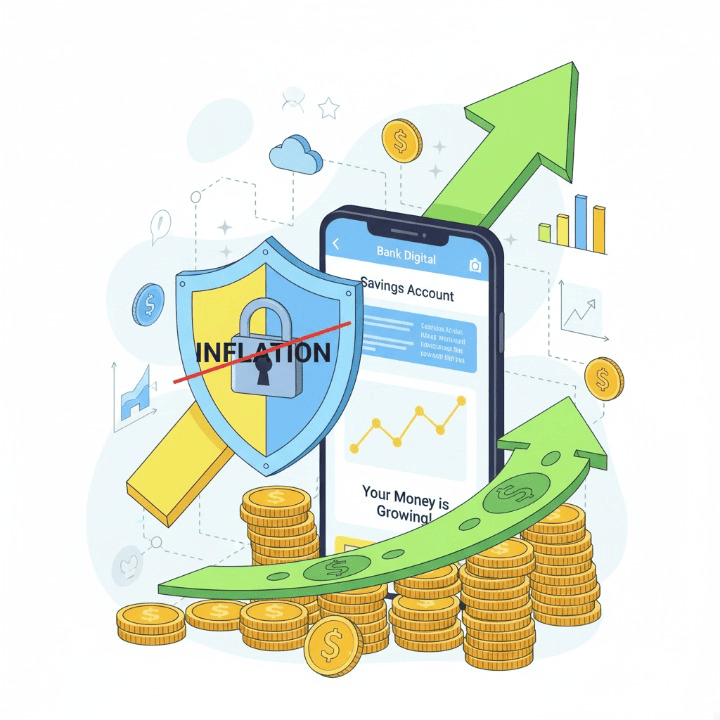
Inflation reduces the purchasing power of your money over time. If your savings earn less interest than the inflation rate, you are effectively losing money. High-yield savings accounts aim to counteract this. They do so by providing a competitive annual percentage yield (APY). This APY can sometimes match or even exceed the current inflation rate.
For example, if inflation is 3% and your savings account yields 0.5%, your money is losing value. However, if your HYSA offers a 4% APY, your money is growing. It is growing faster than the rate of inflation. This means your purchasing power is maintained or enhanced. HYSAs are an effective defensive strategy against inflation. They safeguard your cash reserves.
Key Features to Look For
When selecting a high-yield savings account, several features are paramount. Prioritizing these elements ensures you choose an account that meets your financial needs. These features also help maximize your earnings.
- High APY: The most critical factor is the Annual Percentage Yield. Always compare rates across different institutions. Look for accounts that consistently offer competitive rates. Remember, rates can fluctuate.
- No Monthly Fees: Monthly maintenance fees can quickly erode your interest earnings. Opt for accounts that do not charge any fees. Many online HYSAs proudly advertise fee-free banking.
- Minimum Balance Requirements: Some accounts require a minimum deposit to open. Others require a specific balance to earn the advertised APY. Choose an account that aligns with your deposit capabilities.
- Ease of Access and Transfers: Ensure the bank offers convenient ways to deposit and withdraw funds. This includes electronic transfers (ACH), mobile check deposit, and linking external accounts.
- FDIC Insurance: Confirm the bank is FDIC-insured. This guarantees your deposits up to the legal limit. It provides peace of mind regarding the safety of your funds.
Top Contenders for High-Yield Savings Accounts
Online Banks vs. Traditional Banks
The landscape of high-yield savings accounts is diverse. It is primarily dominated by two types of institutions. These are online-only banks and traditional brick-and-mortar banks. Each offers distinct advantages and disadvantages. Understanding these differences is key to making an informed choice for your financial planning.
Online Banks typically offer the most competitive APYs. Their operational costs are lower. They do not maintain physical branches. This efficiency allows them to pass greater savings to customers. Online banks often boast user-friendly digital platforms. They provide robust mobile apps for managing your money. Their convenience and higher rates make them popular choices.
Traditional Banks, while having a physical presence, often offer lower interest rates on their savings products. This is due to their higher overhead. However, they can provide a sense of security for some customers. They also offer in-person customer service. Some traditional banks have started to offer competitive HYSAs. Often these come with specific requirements.
Credit Unions and Community Banks
Beyond large banks, credit unions and smaller community banks also offer savings options. Credit unions are member-owned. They often return profits to their members through better rates. This can include competitive HYSAs. Deposits at federal credit unions are insured by the National Credit Union Administration (NCUA). This is similar to FDIC insurance.
Community banks, though smaller, might also offer attractive rates. They often focus on personalized service. Exploring these local options can sometimes uncover hidden gems. Always verify their insurance status. Ensure their offerings align with your financial goals. These institutions can be a good alternative.
Factors Influencing APY
The Annual Percentage Yield (APY) on savings accounts is not static. It is influenced by several macroeconomic and market factors. Understanding these can help you anticipate changes. It also helps you make timely adjustments to your savings strategy.
- Federal Reserve Rates: The Federal Reserve’s monetary policy significantly impacts interest rates. When the Fed raises its benchmark interest rate, banks tend to follow suit. They increase their savings rates. Conversely, a decrease in Fed rates often leads to lower HYSAs APYs.
- Market Competition: Banks constantly compete for deposits. If one bank offers a higher APY, others may follow to attract customers. This competition can be beneficial for savers. It drives rates upward.
- Bank’s Business Model: As mentioned, online banks usually have lower operating costs. This enables them to offer higher rates. Banks with extensive branch networks have higher overhead. This typically results in lower APYs.
- Economic Outlook: Broader economic conditions also play a role. During periods of economic growth, demand for loans may increase. This can lead to banks offering higher deposit rates to fund those loans.
Integrating HYSAs into Your Financial Strategy
Building an Emergency Fund
One of the most critical uses for a high-yield savings account is establishing an emergency fund. An emergency fund is a pool of readily accessible cash. It covers unexpected expenses. These can include job loss, medical emergencies, or significant home repairs. Experts generally recommend saving three to six months’ worth of living expenses.
HYSAs are ideal for this purpose due to their liquidity and interest earnings. Unlike investments that might fluctuate in value, your principal in an HYSA is stable. It is also easily accessible. This provides peace of mind. It ensures you have funds available when you need them most. Without an emergency fund, unexpected costs could force you into debt.
Short-Term Savings Goals
Beyond emergencies, HYSAs are excellent vehicles for achieving short-term savings goals. These goals might include a down payment for a house or car. They could also be for a dream vacation. Or even a substantial purchase like a new appliance. Any goal you plan to achieve within the next one to five years is suitable.
The higher APY helps your money grow faster. It brings you closer to your goal. At the same time, the low risk profile ensures your principal is safe. This makes HYSAs a superior choice compared to traditional savings accounts. It is also generally better than short-term investments. Short-term investments might expose your funds to market volatility.
Complementing Your Investment Portfolio
While HYSAs are not investment vehicles in the traditional sense, they play a crucial role. They complement a well-diversified investment portfolio. Every comprehensive financial plan includes a cash component. This cash component should earn a reasonable return. HYSAs provide this essential element.
They can serve as a safe harbor for funds. These funds might be earmarked for future investments. They could also be for rebalancing your portfolio. This is especially true during market downturns. HYSAs contribute to your overall asset allocation strategy. They provide stability and liquidity. This balances out the higher-risk, higher-reward components. These include stocks, bonds, or even cryptocurrencies.
Understanding Tax Implications
It is important to remember that interest earned on your high-yield savings account is generally considered taxable income. This applies at both federal and state levels. The bank will typically send you a Form 1099-INT. This form details the interest earned if it exceeds a certain threshold (usually $10).
The amount of tax you pay depends on your individual income tax bracket. Higher earners may see a larger portion of their interest income go to taxes. It is always wise to consult with a qualified tax professional. They can provide personalized advice. This advice helps you understand the specific tax implications for your situation. Proper tax planning is an integral part of financial planning.
Advanced Considerations and Common Misconceptions
The Difference Between APY and APR
When discussing interest rates, two terms frequently arise: APY and APR. While often used interchangeably, they represent distinct concepts. Understanding their differences is crucial for informed financial decisions.
Annual Percentage Yield (APY) reflects the total amount of interest earned on a deposit. This includes the effect of compounding interest over one year. Compounding means earning interest on your initial principal plus accumulated interest. This makes APY a more accurate representation of your actual earnings. It shows the true growth rate of your savings.
Annual Percentage Rate (APR), on the other hand, represents the simple interest rate. It does not account for compounding. APR is more commonly used for loans and credit cards. It shows the cost of borrowing. For savings accounts, always focus on the APY. It provides a clearer picture of your returns.
Beyond HYSAs: Other Inflation-Beating Options
While high-yield savings accounts are excellent for cash reserves, other financial instruments exist. They are designed to combat inflation more aggressively or in different contexts. It is important to understand their roles.
- Certificates of Deposit (CDs): These offer fixed interest rates for a set period. They generally offer higher rates than HYSAs. However, they come with penalties for early withdrawal. They are less liquid.
- Treasury Inflation-Protected Securities (TIPS): These are government bonds. Their principal value adjusts with inflation. They are a direct hedge against rising prices. They offer a real return.
- Stocks and Exchange-Traded Funds (ETFs): Over the long term, equities have historically outpaced inflation. They offer potential for significant growth. However, they come with higher risk and market volatility. This is where prudent investment strategies and asset allocation become critical.
- Real Estate: Property can act as an inflation hedge. Its value and rental income often increase with inflation. However, real estate is illiquid. It requires substantial capital and ongoing maintenance.
These options serve different purposes within a comprehensive financial plan. HYSAs remain the best choice for safe, liquid, short-term savings. They are not primary long-term investments.
Misconceptions About HYSAs
Several myths surrounding high-yield savings accounts can deter potential users. Addressing these misconceptions is essential. It helps ensure individuals make informed decisions about their money.
- Myth: “High-yield savings accounts are too risky.” This is false. Legitimate HYSAs are offered by FDIC-insured banks. Your deposits are protected up to the legal limit. This makes them one of the safest places to store your money.
- Myth: “Money in HYSAs is locked up and not accessible.” This is also incorrect. HYSAs offer good liquidity. You can transfer funds in and out with relative ease. Transfers typically take one to three business days. This allows access when needed.
- Myth: “All high-yield savings accounts offer the same rates and features.” This is a common misunderstanding. APYs, fees, and minimum requirements vary significantly between providers. Thorough research is vital to find the best account for your needs.
- Myth: “HYSAs are only for large sums of money.” While some accounts might have minimums, many HYSAs are accessible with small initial deposits. They allow everyone to benefit from higher interest rates.
Conclusion
In an economic landscape challenged by inflation, high-yield savings accounts offer a practical solution. They help protect and grow your cash reserves. By providing significantly higher interest rates than traditional accounts, HYSAs empower savers. They preserve their purchasing power. They also work towards various financial goals. These accounts are a cornerstone of effective financial management.
Choosing the right HYSA involves considering crucial factors. These include the Annual Percentage Yield (APY), fees, and accessibility. Online banks often lead the way with competitive rates and user-friendly platforms. Integrating an HYSA into your financial strategy is vital. This includes building a robust emergency fund. It also helps in saving for short-term objectives.
Remember, HYSAs are not a substitute for long-term investments. They are a critical component of a balanced asset allocation. They provide stability and liquidity. Regularly reviewing your account’s APY is also important. This ensures it remains competitive. By understanding and utilizing high-yield savings accounts, you can confidently navigate economic fluctuations. You can also move closer to achieving your financial aspirations.