Introduction
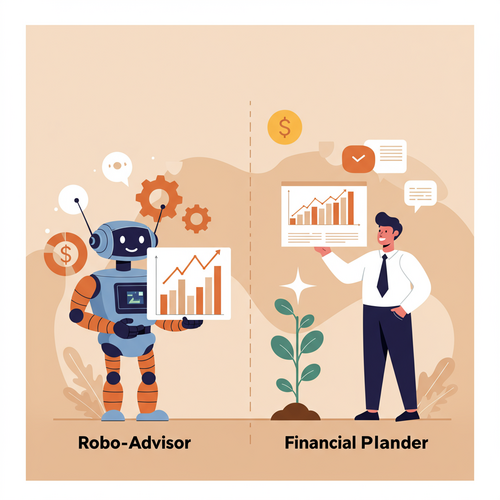
Deciding how to manage your investments is a significant step towards securing your financial future. In today’s evolving landscape, a primary debate is Robo-Advisors vs. Human Financial Planners. Both offer unique approaches to portfolio management and wealth creation. Therefore, understanding their differences in the Robo-Advisors vs. Human Financial Planners discussion is crucial for making an informed choice.
This article will delve into the core functionalities, benefits, and drawbacks of each option. Additionally, we will explore who typically benefits most from an automated service versus a personalized human touch. By the end, you will have a clearer picture of which path aligns best with your individual financial goals and preferences.
Understanding Robo-Advisors: The Automated Approach
Robo-advisors are digital platforms that provide automated, algorithm-driven financial planning services with little to no human supervision. They leverage sophisticated software to manage your investments. Consequently, this automation often makes them highly accessible and cost-effective for a broad range of investors.
When you sign up, a robo-advisor typically asks you a series of questions. These questions cover your financial goals, risk tolerance, and investment timeline. Based on your answers, the algorithm *then* recommends a diversified portfolio. Most portfolios consist of low-cost exchange-traded funds (ETFs) and mutual funds. In turn, these diversified funds track various market indices.
How Robo-Advisors Work
- Automated Portfolio Creation: After assessing your profile, the platform builds a portfolio. This portfolio aligns with your risk appetite and objectives.
- Rebalancing: Robo-advisors automatically rebalance your portfolio. This means they adjust your asset allocation back to its target weights. Essentially, this process ensures your portfolio stays aligned with your initial strategy.
- Tax-Loss Harvesting: Some advanced robo-advisors offer tax-loss harvesting. This strategy involves selling investments at a loss to offset capital gains and reduce your tax liability. It can be a significant benefit for taxable accounts.
- Diversification: They typically invest across various asset classes. This helps to spread risk and reduce volatility in your portfolio.
Robo-advisors are excellent for investors seeking simplicity and efficiency. They are particularly appealing to those who are comfortable with digital interactions. Furthermore, they suit individuals who prefer a “set it and forget it” approach to investing.
Advantages of Robo-Advisors
- Lower Fees: Generally, robo-advisors charge significantly lower fees than human advisors. Their fees are often a small percentage of assets under management (AUM), typically ranging from 0.15% to 0.50% annually.
- Accessibility: Furthermore, most platforms have low minimum investment requirements. This makes professional investment management accessible to a wider audience, including new investors.
- Automation and Convenience: Portfolio management is automated. This saves time and removes the emotional component from investment decisions. You can access your account anytime, anywhere.
- Diversification: Robo-advisors excel at creating well-diversified portfolios. They use modern portfolio theory to spread risk efficiently across global markets.
Limitations of Robo-Advisors
- Limited Personalization: While they tailor portfolios based on your input, the advice is standardized. They may not handle highly complex or unique financial situations effectively.
- No Emotional Coaching: During market downturns, human advisors offer behavioral coaching. Robo-advisors lack this human element. They cannot calm fears or prevent panic selling.
- Complex Planning Gaps: For advanced financial planning needs, such as estate planning, intricate tax strategies, or business succession, robo-advisors fall short.
The Role of Human Financial Planners: The Personal Touch
A human financial planner is a professional who offers personalized financial advice. They work with clients to help them achieve various financial goals. These goals can include retirement planning, wealth management, college savings, and debt reduction. In short, they provide a comprehensive, holistic view of your financial life.
Unlike algorithms, human planners bring empathy, experience, and nuanced understanding to the table. For instance, they can adapt strategies as your life circumstances change. This personalized approach is particularly valuable for complex financial scenarios.
What Human Financial Planners Do
- Comprehensive Financial Planning: They develop tailored financial plans that consider all aspects of your financial life. Specifically, this process includes budgeting, saving, investing, insurance, and estate planning.
- Personalized Advice: Planners offer advice specific to your unique situation. They consider family dynamics, career changes, and personal values.
- Behavioral Coaching: They act as a trusted guide, helping clients stay disciplined during market volatility. They prevent emotional decisions that could harm long-term returns.
- Complex Situations: Human planners can navigate intricate tax issues, advanced estate planning, and business owner specific financial strategies. They understand the nuances that algorithms cannot.
- Fiduciary Duty: Many human financial planners operate under a fiduciary duty. This means they are legally obligated to act in your best financial interest at all times. Always verify if your advisor is a fiduciary. For more information on choosing a financial professional, you can visit FINRA’s investor education resources.
Human financial planners are ideal for individuals or families with significant wealth, complex financial needs, or those who value a personal relationship. They offer peace of mind through direct interaction and customized support.
Advantages of Human Financial Planners
- Tailored Strategies: They create truly bespoke plans. These plans adapt to life changes like marriage, children, divorce, or career shifts.
- Emotional Support and Coaching: Moreover, a human touch is invaluable during market fluctuations. Planners can help you stick to your long-term plan, preventing costly emotional reactions.
- Holistic Planning: They integrate all parts of your financial life. This includes investments, taxes, insurance, and legacy planning. They provide a cohesive strategy for your entire financial picture.
- Handling Complexities: Human advisors excel at intricate scenarios. Examples include managing stock options, planning for a business sale, or navigating international tax laws.
Limitations of Human Financial Planners
- Higher Fees: Unquestionably, their services come with higher costs. Fees can be a percentage of AUM, an hourly rate, or a flat project fee. These costs can be considerably higher than robo-advisor fees.
- Minimums: Many experienced financial planners require a substantial minimum asset level. This can make them inaccessible to newer investors with smaller portfolios.
- Potential for Bias: While fiduciaries are legally bound to act in your best interest, not all advisors are fiduciaries. Always inquire about their compensation structure and potential conflicts of interest.
Robo-Advisors vs. Human Financial Planners: Key Factors to Consider
The choice between a robo-advisor and a human financial planner is not one-size-fits-all. Several factors should influence your decision. Therefore, carefully consider your individual circumstances, financial goals, and personal preferences.
Cost
Robo-advisors are generally more affordable. Their fee structures are simple and transparent, based on a percentage of your assets under management. This makes them ideal for cost-conscious investors or those with smaller portfolios. For instance, an account with $10,000 managed by a robo-advisor charging 0.25% would incur only $25 in annual fees.
In contrast, human financial planners typically charge higher fees. These can range from 0.5% to 2% of AUM, or they may charge hourly rates ($150-$300+) or flat fees for specific services. While higher, these fees often reflect the personalized and comprehensive nature of their services.
Complexity of Your Financial Situation
If your financial needs are straightforward, a robo-advisor might suffice. This applies if you have simple savings goals and a stable income. However, as your financial life becomes more complex, the need for human expertise grows.
Consider a human planner if you:
- Own a business with complex equity structures.
- Need intricate estate planning, including trusts or charitable giving.
- Have significant tax considerations, such as inherited wealth or multiple properties.
- Are undergoing major life transitions, like divorce or a large inheritance.
Consequently, for individuals facing such scenarios, a human advisor provides invaluable guidance and strategic planning. They can help navigate the complexities that algorithms cannot fully comprehend.
Level of Personalization and Interaction
Do you prefer a hands-off approach, or do you value direct interaction and tailored advice? Robo-advisors offer convenience and efficiency without the need for meetings. They are best if you are comfortable with an online-only experience.
Conversely, if you prefer building a long-term relationship with an advisor, a human planner is better. They provide regular check-ins, discussions about market conditions, and adjustments based on your evolving life. This personal connection can be reassuring, particularly during uncertain economic times.
Technology and User Experience
Robo-advisors, by their nature, are built on technology. Their platforms are often sleek, intuitive, and accessible via mobile apps, appealing to a tech-savvy generation. They provide 24/7 access to your portfolio, performance charts, and automated updates. This convenience is a major draw. In contrast, the technology offered by human financial planners can vary wildly. Some traditional advisors may use clunky, outdated portals, while more modern planners have adopted sophisticated financial planning software to rival robo-platforms. When choosing a human planner, therefore, it’s wise to ask for a demo of their client portal and technology stack. You want to ensure their user experience matches your expectations for transparency and accessibility.
Investment Goals and Risk Tolerance
Both options can help define investment goals and assess risk tolerance. Robo-advisors use questionnaires to build a risk profile. They then allocate assets accordingly. This works well for standard goals like retirement or a down payment.
A human planner, however, can delve deeper. They can help you articulate nuanced goals. They might uncover underlying emotional factors affecting your risk perception. They can also craft highly customized strategies for unique objectives, like funding a specific legacy project or managing a concentrated stock position. For more insights on investment strategies, articles from trusted financial news sources like Investopedia can be very helpful.
Behavioral Coaching and Emotional Support
Market volatility is a given in investing. During downturns, panic can lead to poor decisions, such as selling investments at a loss. This is where the human element shines. A financial planner can provide crucial behavioral coaching. They help you avoid emotional pitfalls and stick to your long-term strategy. This guidance is a key differentiator. Above all, it helps prevent impulsive actions that could derail your financial progress. A human advisor acts as a steady hand when the market feels turbulent.
Hybrid Models: The Best of Both Worlds?
As the financial technology landscape evolves, hybrid models are emerging. Such solutions combine the best features of robo-advisors and human financial planners. For example, they offer automated portfolio management but still provide access to human advisors when needed. This combination provides a balance of cost-efficiency and personalized support.
Hybrid models are an attractive option for many investors. On one hand, they offer the low fees and efficiency of a robo-advisor for everyday portfolio management. At the same time, they provide the ability to consult with a human expert for complex questions or significant life events. This blend offers a compelling middle ground. Ultimately, it addresses both the need for automation and the desire for human insight.
Making the Right Choice: Robo-Advisors vs. Human Financial Planners
The “better” choice truly depends on your individual needs and circumstances. There is no universally correct answer. Your decision should align with your financial complexity, budget, and preference for interaction.
- For the Cost-Conscious Beginner: If you are just starting, have a smaller portfolio, and prefer a hands-off approach, a robo-advisor is likely an excellent fit. You benefit from professional management at a fraction of the cost.
- For Complex Financial Needs: If you have substantial assets, intricate tax situations, unique family dynamics, or simply desire comprehensive, personalized advice, a human financial planner is probably more suitable. Their expertise can provide immense value.
- For a Balanced Approach: A hybrid model might be perfect if you want the efficiency of automation but also appreciate the option to speak with a human advisor for guidance.
Before making a decision, take time to assess your current financial situation. First, consider your short-term and long-term goals. Then, reflect on your comfort level with technology versus human interaction. Remember, your financial journey is unique. The right partner for your portfolio will empower you to reach your aspirations.
Conclusion
The debate of Robo-Advisors vs. Human Financial Planners isn’t about one being definitively better; both serve vital roles in helping individuals manage their wealth. Robo-advisors offer an accessible, low-cost, and efficient solution. As such, they are ideal for straightforward investment needs and those comfortable with automation. Human financial planners, on the other hand, provide deep personalization, comprehensive planning, and invaluable behavioral coaching. They are best suited for complex financial situations and clients seeking a long-term, trusted relationship.
Ultimately, the best choice for your portfolio hinges on your specific circumstances. Therefore, evaluate your financial goals, the complexity of your situation, your budget, and your desire for personal interaction. By carefully considering these factors, you can select the advisory service that best supports your path to financial success. Making an informed decision today is a crucial step towards building a secure and prosperous financial future.