Introduction
After months of careful planning and saving, you’ve finally embarked on your well-deserved vacation. The excitement of exploring a new destination is a feeling like no other. While the heavy lifting of budgeting is behind you, smart financial management is a crucial part of the travel experience that continues until the moment you return home. How you handle your money on the road—from the type of card you use at a local cafe to how you respond to an unexpected event—can make the difference between a truly relaxing trip and one that ends with financial stress. This guide will serve as your on-the-ground financial companion, offering practical advice on managing your credit card, staying on budget, using your health insurance in an emergency, and protecting your accounts while you travel.
The Wallet Strategy: Choosing Your Payment Methods
When you’re in a foreign country, paying for things isn’t always as simple as using your local debit card. Having a mix of payment methods is the smartest and safest approach.
1. The Credit Card: Your Primary Tool
For most purchases, a credit card is your best and safest option. It offers robust fraud protection, meaning if your card is stolen or skimmed, you are not held liable for fraudulent charges. This is a crucial layer of security when you’re far from home. However, there are two key things to watch out for:
- Foreign Transaction Fees: Many credit cards charge a fee, typically around 3%, on every purchase made in a foreign currency. Before you travel, check if your card has this fee. If so, consider using a card that advertises “no foreign transaction fees,” as this can save you a significant amount of money.
- Dynamic Currency Conversion (DCC): At a foreign shop or restaurant, you may be asked if you want to pay in your home currency or the local currency. Always choose the local currency. If you choose your home currency, the merchant uses a less favorable exchange rate, and you’ll end up paying more.
2. The Debit Card: For Cash Withdrawals
A debit card is best used for one primary purpose: withdrawing local cash from an ATM. It’s wise to take out larger sums of cash less frequently to minimize ATM fees. Before you leave, check with your bank about their international ATM fees and whether they have partner banks in your destination that offer lower-cost withdrawals. Avoid using your debit card for everyday purchases, as it links directly to your bank account and offers less fraud protection than a credit card.
3. Cash: For Small and Local Purchases
Having some local currency on hand is essential for small purchases like a bottle of water, a taxi ride, or tips, especially in places where card acceptance is not universal.
Staying on Budget While You’re Away
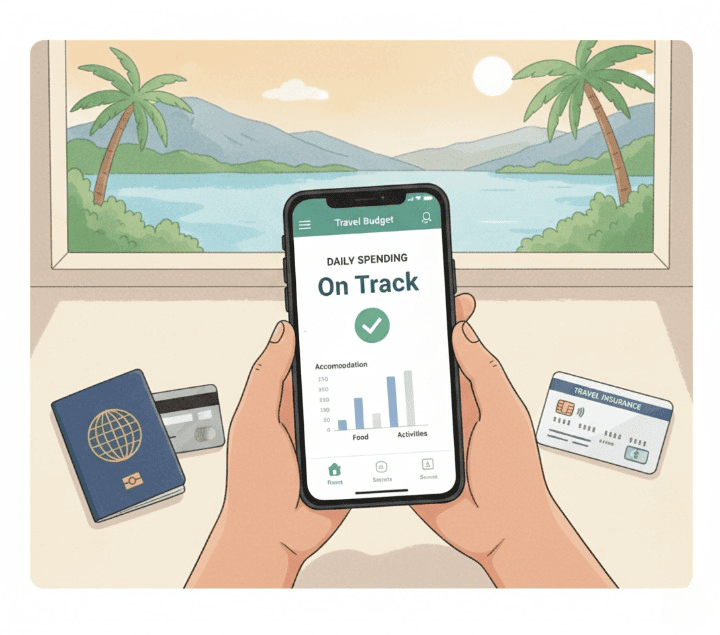
You created a travel budget for a reason—to guide your spending. The key to not overspending is to track your expenses in real time. This doesn’t have to be a chore. You can use a simple notes app on your phone or a dedicated travel budgeting app to log your purchases throughout the day.
Take five minutes each evening to tally up your spending and compare it to your daily budget. This quick check-in allows you to see if you are on track, overspending, or if you have extra funds for a special treat. This simple habit prevents you from returning home to a massive credit card bill and the dreadful feeling of “How did I spend that much?” It ensures that your trip doesn’t lead to a financial hangover that requires months of high-interest rate payments to cure.
The Unexpected Happens: Using Your Travel Insurance
No one wants to think about things going wrong on vacation, but being prepared is a core part of smart travel. Your travel insurance is your most important safety net.
Before you leave, save your insurance policy number and the 24/7 emergency assistance phone number in your phone contacts. It’s also wise to have a digital copy of the policy in your email or cloud storage. If an emergency occurs, especially a health-related one, your first call should be to the insurance provider’s assistance line. They are equipped to handle crises and can provide critical information, such as directing you to an approved hospital or clinic, arranging for payment, and explaining your coverage. This prevents you from paying enormous medical bills out-of-pocket and navigating a complex claims process later. Having this information ready is crucial for your financial and physical health while abroad.
Protecting Your Credit and Identity on the Road
Traveling can make you more vulnerable to theft and fraud. Protecting your financial information is essential to protecting your long-term credit health.
- Inform Your Bank: Before your trip, let your bank and credit card issuers know your travel dates and destinations. This prevents their fraud detection systems from flagging your legitimate foreign transactions as suspicious and freezing your account.
- Be Wary of Public Wi-Fi: Avoid logging into your bank or other sensitive accounts while using unsecured public Wi-Fi networks.
- Guard Your Cards: Keep your cards secure and be mindful when using ATMs. If a card is lost or stolen, contact the issuer immediately to freeze or cancel the account.
These steps ensure that a stolen wallet doesn’t turn into a long-term credit nightmare that requires stressful recovery efforts and potentially costly financing to resolve.
The Post-Trip Financial Landing
Your financial responsibilities don’t end the moment you step off the plane. When you get home, take the following steps:
- Review All Statements: Carefully go through every transaction on your credit card and bank statements. Compare them with your own records to ensure everything is accurate and there are no fraudulent charges.
- Pay the Bill in Full: Pay off your entire travel-related credit card balance immediately using the funds you saved for the trip. This is the final, satisfying step of a debt-free vacation.
- Start Dreaming of the Next Trip: With no new debt to worry about, you are free to start saving for your next adventure.
Conclusion
A truly successful trip is one that enriches your life without detracting from your financial stability. By being a mindful manager of your money while you’re on the road, you can fully immerse yourself in the experience with peace of mind. A smart wallet strategy, daily budget tracking, and knowing how to use your health insurance and protect your credit are the keys to a smooth journey. By handling your finances with care during your travels, you ensure that your vacation remains a purely positive experience, free from the long-lasting stress of debt and financial regret.