Executive Summary
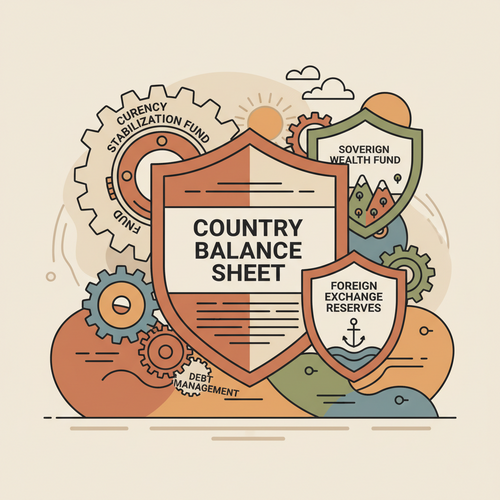
- Macroeconomic hedge architectures are critical for insulating sovereign balance sheets from systemic shocks.
- Strategic integration of currency, interest rate, and commodity hedges mitigates external vulnerabilities and fiscal pressures.
- Proactive liability management and robust risk frameworks enhance national economic resilience and investor confidence.
Understanding Sovereign Exposure to Macroeconomic Volatility
Sovereign entities face multifaceted macroeconomic risks. Public debt portfolios are highly susceptible to global economic shifts. External debt denominated in foreign currencies introduces significant exchange rate risk. Interest rate fluctuations can drastically alter debt servicing costs.
Commodity price swings severely impact resource-dependent economies. Global downturns often trigger capital flight. This exacerbates domestic financial stress. Contagion risk from international markets further complicates fiscal stability. Managing these exposures is a continuous challenge for national treasuries.
Nations must assess their intrinsic vulnerabilities. This involves deep analysis of trade balances and capital flows. A clear understanding of sovereign risk is the first step. It underpins any effective hedging strategy. Identifying these core exposures prevents unforeseen fiscal pressures.
Foundational Principles of Sovereign Hedge Design
Effective sovereign hedge design begins with clear policy objectives. Governments define their risk appetite. This dictates the acceptable level of market exposure. An asset-liability matching framework is often employed. It aligns future revenues with future obligations.
Intergenerational equity considerations are paramount. Hedging decisions impact future fiscal space. Cost-benefit analysis guides instrument selection. The administrative burden of complex derivatives must be weighed. Dynamic hedging strategies adjust to evolving market conditions. Passive strategies offer simpler, set-and-forget approaches. Each has distinct implications for national balance sheets.
Expert Insight: “From an operational standpoint, a robust governance framework is non-negotiable for sovereign hedging programs. Transparency and accountability are crucial for long-term sustainability and public trust.”
Currency Hedging Frameworks for National Liabilities
Currency mismatches pose substantial risks to sovereign balance sheets. Foreign exchange reserves serve as a primary buffer. However, active hedging can provide superior protection. FX swaps and forwards lock in future exchange rates. This mitigates volatility for external debt payments.
Currency options offer downside protection with capped upside. Cross-currency basis swaps can transform debt from one currency to another. Emerging market currencies face heightened volatility. Basket hedging strategies diversify currency risk across multiple exposures. Some nations utilize Special Drawing Rights (SDRs) for reserve diversification. These sophisticated instruments require careful implementation. They protect against adverse currency movements.
The choice of currency hedging instrument depends on specific liability profiles. It also reflects the government’s outlook on global FX markets. Hedging these exposures enhances debt sustainability. It stabilizes the national fiscal position. This reduces the impact of external shocks.
For more detailed information on sovereign wealth management, consider exploring a resource like Investopedia’s Sovereign Wealth Fund definition.
Interest Rate Risk Management in Sovereign Debt Portfolios
Interest rate fluctuations significantly impact sovereign debt servicing costs. A primary objective is managing interest rate risk. Duration matching aligns the sensitivity of assets and liabilities. This minimizes the impact of rate changes. Interest rate swaps (IRS) convert fixed-rate debt to floating, or vice-versa.
This allows active management of interest rate exposure. Inflation-indexed bonds protect investors and governments from inflation risk. These instruments adjust principal or interest payments. Debt management offices balance fixed versus floating rate debt. They aim for an optimal mix. Yield curve management strategies also play a vital role. These involve adjusting new debt issuance across different maturities. Maintaining sovereign bond market liquidity is crucial. It ensures efficient financing conditions.
Effective interest rate hedging stabilizes fiscal outlays. It reduces uncertainty for budget planning. This contributes to overall macroeconomic stability. Governments can then focus on long-term growth initiatives.
Commodity Price Volatility and Fiscal Buffers
Resource-rich nations are particularly vulnerable to commodity price volatility. Sharp price declines can devastate national revenues. Commodity stabilization funds act as fiscal buffers. They save during boom times and spend during busts. Derivatives such as futures and options provide direct price hedging.
These instruments lock in future selling prices for exports. They also secure purchase prices for essential imports. Managing commodity price shocks is critical. It prevents severe revenue volatility. Excessive export dependence heightens this risk. Sovereign wealth funds often invest commodity surpluses. This diversifies national wealth. It also provides an additional layer of insulation. Implementing these strategies requires sophisticated market access. It demands robust risk management capabilities. Protecting against these shocks is vital for fiscal resilience.
Addressing Contingent Liabilities and Implicit Guarantees
Contingent liabilities represent potential future obligations. They are not recorded on the balance sheet. State-owned enterprises (SOEs) often carry implicit guarantees. Public-private partnerships (PPPs) can create similar exposures. Banking sector bailouts are a common source of large contingent liabilities. Natural disaster risks also fall into this category. Climate change liabilities are emerging as significant long-term threats.
Governments must conduct thorough stress testing. This quantifies potential fiscal impacts. Fiscal responsibility laws can limit these exposures. Transparent reporting of contingent liabilities is essential. It informs public and investor perceptions. Proactive management mitigates future fiscal shocks. These hidden risks require careful monitoring. They can quickly materialize and strain public finances.
For a deeper dive into these obligations, reference Investopedia’s explanation of Contingent Liabilities.
Advanced Strategies for Adaptive Hedge Architectures
Modern macroeconomic hedging demands adaptive frameworks. Static strategies often prove insufficient. Machine learning algorithms enhance risk analytics. They identify complex correlations and predictive patterns. Dynamic rebalancing ensures hedges remain optimal. This adjusts to changing market conditions. Scenario analysis evaluates portfolio performance under various stress events.
Monte Carlo simulations provide probabilistic outcomes. They model the potential range of losses or gains. Integrated risk management systems unify all hedging activities. This provides a holistic view of national exposures. Cross-asset hedging looks for correlations across different asset classes. It seeks more efficient risk transfer. These advanced techniques improve decision-making accuracy. They build more robust sovereign balance sheets. Implementing them requires significant technological investment.
The Nexus of Fiscal Policy and Sovereign Liability Insulation
Sovereign liability insulation is inextricably linked with fiscal policy. Debt management offices are central to this nexus. They coordinate closely with central banks. This ensures monetary and fiscal policy alignment. Robust fiscal rules enforce budgetary discipline. They prevent excessive debt accumulation. Prudential regulation strengthens the financial sector. This reduces the likelihood of future bailouts.
Sound credit ratings reflect a nation’s fiscal health. They lower borrowing costs. Effective investor relations maintain market confidence. Long-term fiscal sustainability is the ultimate goal. Hedging architectures support this objective. They provide a protective layer against external shocks. This allows governments greater policy flexibility. It fosters economic stability for all stakeholders.
Conclusion
Macroeconomic hedge architectures are indispensable. They safeguard national balance sheets. Proactive management of sovereign liabilities is paramount. It builds resilience against global volatility. Strategic hedging enhances fiscal stability. It strengthens investor confidence. Nations must continuously refine these frameworks. This ensures long-term economic prosperity.
How will your nation’s treasury adapt its hedging strategies to navigate the next wave of global economic uncertainty?