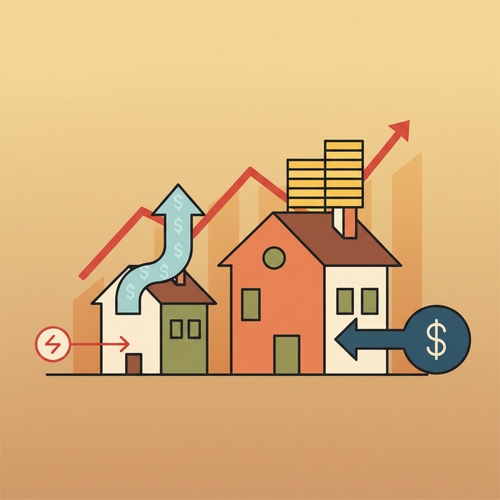
Understanding the differences between a HELOC vs. Home Equity Loan becomes paramount in a high-rate environment. Many homeowners consider tapping into their home equity. This equity represents a significant asset. However, choosing the right borrowing method requires careful thought. Specifically, rising interest rates heavily influence these decisions. Therefore, grasping each option’s mechanics is essential. This guide helps beginner investors navigate these complex financial products. Furthermore, it aims to clarify which option might suit your needs best.
Understanding Home Equity
Home equity is simply your home’s current market value minus your outstanding mortgage balance. For instance, if your home is worth $400,000 and you owe $200,000, you have $200,000 in equity. This equity can be a powerful financial tool. Indeed, it offers a way to fund various needs. People often use it for home improvements, debt consolidation, or other large expenses. Moreover, accessing this equity responsibly is key. Subsequently, your financial health improves. Maximizing this asset prudently helps your long-term goals. Therefore, knowing your equity position is a critical first step. Begin by checking your home’s current market value.
What is a Home Equity Line of Credit (HELOC)?
How a HELOC Works
A Home Equity Line of Credit (HELOC) operates much like a credit card. It provides a revolving line of credit. You can borrow money as needed, up to a set limit. Furthermore, you only pay interest on the amount you actually use. This flexibility is a primary appeal. A HELOC typically has two distinct phases. The first is the “draw period.” During this time, you can borrow funds, repay amounts, and borrow again. The second is the “repayment period.” Here, you repay the principal and any remaining interest. Often, the draw period lasts 5 to 10 years. Conversely, the repayment period can extend for 10 to 20 years. Specifically, minimum payments are usually interest-only during the draw period. This can seem attractive initially. However, the principal balance remains untouched. Consequently, payments increase significantly in the repayment phase. Understanding this structure is crucial for managing your finances.
HELOCs in a High-Rate Environment
HELOCs commonly feature variable interest rates. Consequently, your monthly payments can fluctuate dramatically. In a high-rate environment, these rates can increase significantly. This directly impacts your budget. Therefore, your payments might rise unexpectedly. This adds financial uncertainty. Indeed, a sudden jump in rates could make your HELOC unaffordable. For instance, a small increase in the prime rate translates directly to your HELOC rate. However, if rates drop, your payments would also decrease. This offers potential savings over time. Furthermore, HELOCs might include a “cap.” This limits how high the interest rate can go over the life of the loan. Nevertheless, understanding this potential volatility is crucial. Consider your risk tolerance carefully. Specifically, plan for potential payment increases. More information on economic factors influencing rates can be found at Reuters. Always review your lender’s terms thoroughly. This prevents unforeseen financial stress.
What is a Home Equity Loan?
How a Home Equity Loan Works
A Home Equity Loan is different. It provides a lump sum of money upfront. You receive the entire loan amount at closing. Then, you repay it over a fixed term. This usually involves equal monthly installments. Furthermore, these payments include both principal and interest. The loan typically has a fixed interest rate. Consequently, your payments remain consistent throughout the loan term. This provides predictability. Indeed, you know exactly what to expect each month. The repayment terms often range from 5 to 30 years. Subsequently, budget planning becomes simpler. This makes it a popular choice for many. Bloomberg provides further financial insights. This structured repayment plan helps individuals manage their cash flow effectively. Moreover, it eliminates the worry of future rate hikes.
Home Equity Loans in a High-Rate Environment
Home Equity Loans offer stability with their fixed interest rates. In a high-rate environment, this stability is a significant advantage. Once your rate is set, it will not change. Therefore, your monthly payments are predictable. This protects you from future rate increases. You lock in a rate that might seem high initially. However, it will not climb higher. This provides peace of mind. Conversely, if overall market rates decrease later, you will not benefit from those lower rates. You are committed to the original rate. Nevertheless, for those seeking certainty, this is ideal. Specifically, it simplifies long-term financial planning. This approach reduces interest rate risk considerably. Indeed, budgeting becomes straightforward. This certainty is highly valued by many homeowners.
Key Differences Summarized
- Access to Funds: A HELOC offers a revolving credit line, allowing flexible borrowing as needed. Conversely, a Home Equity Loan provides a single lump sum disbursement upfront.
- Interest Rate Type: HELOCs typically have variable interest rates, which can change over time. Home Equity Loans feature fixed interest rates, ensuring consistent payments.
- Payment Structure: HELOC payments fluctuate with interest rate changes, potentially increasing. Home Equity Loan payments are fixed and predictable each month.
- Flexibility: HELOCs offer more flexibility to borrow varying amounts over the draw period. Home Equity Loans are a one-time disbursement, requiring no further borrowing unless a new loan is taken.
- Risk Profile: HELOCs carry significant interest rate risk due to variable payments. Home Equity Loans offer payment certainty, protecting against rate hikes.
- Best Use Case: HELOCs suit ongoing, uncertain expenses. Home Equity Loans are ideal for specific, well-defined projects.
Choosing in a High-Rate Environment
When a Home Equity Loan Might Be Better
A Home Equity Loan is generally better when you need a specific, fixed amount of money. For instance, consider a large home renovation project with a clear budget. The fixed rate protects you from rising rates. Consequently, your project costs remain predictable. Even if interest rates are currently high, a fixed-rate loan offers stability. You lock in that rate for the entire term. If rates are high but expected to fall, a fixed-rate loan still provides certainty. You can always refinance later if rates drop significantly. However, this incurs additional closing costs and fees. Specifically, it suits those who prioritize budget certainty. Furthermore, if you dislike financial uncertainty, this option is appealing. Many appreciate the peace of mind. The Wall Street Journal offers current market analysis. This clear repayment schedule helps manage large expenditures without surprises.
When a HELOC Might Be Considered
A HELOC can still have its place, even in a high-rate environment. Perhaps you need funds for ongoing, unpredictable expenses. For example, medical bills or tuition fees over several years. You only borrow what you need when you need it. Consequently, you only pay interest on the drawn amount. This capitalizes on the flexibility of the product. If rates are high but expected to fall, a HELOC’s variable rate could eventually work in your favor. However, this is a speculative move, carrying inherent risk. You must be comfortable with the risk of rising payments in the short term. Furthermore, a strong emergency fund is crucial. Indeed, it acts as a buffer against payment shocks. Specifically, financial discipline is paramount with a HELOC. Otherwise, it could lead to increased debt and financial strain. Weigh potential benefits against considerable risks carefully. Understand the full implications of variable rates.
Important Considerations
Your Financial Goals
Your specific financial goals must guide your decision. Are you consolidating high-interest credit card debt? Perhaps a fixed-rate loan offers better predictability and a clear repayment path. Are you funding multiple small home projects over an extended period? A HELOC might provide more flexibility. Indeed, aligning the loan product with your objective is key. Consider the long-term implications of each choice. Subsequently, your financial strategy strengthens. This prevents future regrets and optimizes your borrowing. Carefully define your purpose for the funds. This clarifies the best approach.
Risk Tolerance
Assess your comfort level with financial risk. A HELOC involves variable payments, meaning your monthly obligation could increase. This introduces interest rate risk. Conversely, a Home Equity Loan provides payment stability. Therefore, those averse to risk might prefer the latter’s predictability. Understand your personal financial comfort zone. Specifically, do not overextend yourself with a variable-rate product if you cannot absorb payment increases. Furthermore, review all loan terms carefully, including interest rate caps and floors. Knowledge empowers better choices. Protecting your financial stability is paramount.
Credit Score
Your credit score significantly impacts loan approval and the interest rates you qualify for. A higher score typically secures better terms. This applies to both HELOCs and Home Equity Loans. Therefore, review your credit report before applying. Address any discrepancies or errors promptly. Indeed, improving your score can save you thousands of dollars over the loan term. Consequently, you gain access to more favorable offers and better rates. Investopedia provides educational resources to help improve your financial literacy. A strong credit profile is a powerful asset when borrowing.
Closing Costs
Both options involve closing costs. These are fees associated with setting up the loan. They can include appraisal fees, origination fees, and title insurance. Compare these costs carefully across different lenders. Some lenders might waive certain fees as an incentive. However, they might charge a higher interest rate in return. Therefore, look at the overall cost of the loan, not just individual fees. Specifically, consider the annual percentage rate (APR). This provides a true cost comparison, incorporating all fees and interest. Understanding these upfront expenses helps you budget accurately. Do not overlook these important details.
Market Outlook and Economic Conditions
Consider the broader economic landscape. If economists predict further rate hikes, a fixed-rate loan offers protection. Conversely, if rates are expected to decline, a variable-rate HELOC could become more affordable later. However, forecasting interest rates is challenging. Therefore, rely on credible financial news sources for guidance. Furthermore, consult with a financial advisor. Their expertise can provide valuable perspective. Specifically, a cautious approach is best for beginner investors. Economic trends significantly influence borrowing costs. Stay informed about market conditions.
Conclusion
Deciding between a HELOC vs. Home Equity Loan in a high-rate environment requires careful analysis. Home Equity Loans offer predictable, fixed payments. This makes them attractive for specific large expenses, providing stability. Conversely, HELOCs provide flexible, revolving credit. However, their variable rates introduce payment uncertainty and potential risk. Therefore, consider your financial goals first and foremost. Furthermore, assess your personal risk tolerance honestly. Your credit score also plays a vital role in securing favorable terms. Specifically, always compare offers from multiple lenders to find the best fit. Make an informed decision based on your unique circumstances. This secures your financial future. Thus, you navigate the lending landscape wisely and responsibly. Choose the option that best aligns with your long-term financial strategy.