Introduction
Unlocking the value tied up in your home can be a powerful financial move. Many homeowners consider tapping into their home equity for various needs, from home improvements to debt consolidation. Two popular avenues for doing this are a Home Equity Line of Credit (HELOC) and a Home Equity Loan. While both allow you to borrow against your home’s value, their interest rate structures present fundamental differences. Therefore, understanding the nuances of HELOC vs Home Equity Loan interest rates is critical.
Understanding whether a fixed or variable interest rate structure best suits your financial situation is absolutely crucial. Your choice will directly impact your monthly payments, your budget predictability, and ultimately, the overall cost of borrowing. This article will thoroughly explore the nuances of each option, helping you make an informed decision for your financial future.
Understanding Home Equity: Your Financial Foundation
Before diving into borrowing options, it is essential to grasp what home equity truly means. Simply put, home equity is the portion of your home that you actually own outright. It is the difference between your home’s current market value and the outstanding balance of your mortgage.
For example, if your home is valued at $400,000 and you owe $250,000 on your mortgage, your home equity is $150,000. Lenders typically allow you to borrow against a percentage of your equity, often up to 80% or 90%. Accessing your home equity can provide significant funds for home renovations, debt consolidation, or major purchases. However, it is vital to remember that your home serves as collateral. Failing to repay the loan could put your home at risk of foreclosure.
Home Equity Loan Interest Rates: The Predictable Path
A Home Equity Loan is often referred to as a “second mortgage.” It provides you with a lump sum of money upfront, which you then repay over a fixed period. This structure is very similar to your primary mortgage.
Fixed Interest Rate Structure
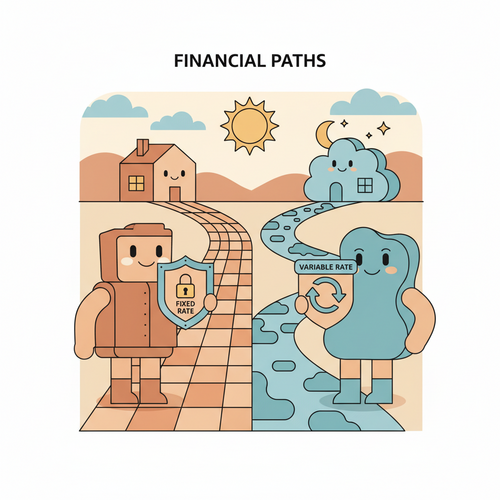
The defining characteristic of a Home Equity Loan is its fixed interest rate. This means the interest rate on your loan remains constant for the entire duration of the repayment period. Your monthly payments will stay exactly the same from the first payment to the last.
Advantages of Fixed Interest Rates
- Predictable Payments: Your monthly payment amount never changes. This makes budgeting incredibly easy and provides peace of mind.
- Stability: You are protected from rising interest rates. If market rates go up, your payment stays the same.
- Clear Repayment Schedule: You know precisely when your loan will be fully paid off.
Disadvantages of Fixed Interest Rates
- Miss Out on Falling Rates: If market interest rates decrease, you will not benefit from lower payments unless you refinance.
- Potentially Higher Initial Rate: Fixed rates can sometimes be slightly higher than the initial rates offered on variable-rate products.
For more insights into fixed-rate options, you might find valuable information from resources like the Consumer Financial Protection Bureau (CFPB).
HELOC Interest Rates: The Flexible Approach
A HELOC, or Home Equity Line of Credit, functions much like a credit card, but it uses your home as collateral. Instead of a lump sum, you get access to a revolving line of credit. You can borrow, repay, and re-borrow funds as needed during a specified “draw period.”
Variable Interest Rate Structure
HELOCs are predominantly characterized by a variable interest rate. Consequently, the interest rate on your outstanding balance can change over time. It is typically tied to an external market index, such as the Prime Rate, plus a margin determined by your lender. When the Prime Rate goes up or down, your HELOC interest rate adjusts accordingly.
Advantages of Variable Interest Rates
- Potential for Lower Payments: If market interest rates fall, your monthly payments will decrease, saving you money.
- Lower Initial Rate: Variable rates often start lower than fixed rates, making the initial borrowing cost potentially more attractive.
- Interest Only on What You Use: You only pay interest on the amount you have currently borrowed, not the full limit.
Disadvantages of Variable Interest Rates
- Rate Volatility: Your interest rate can increase significantly if the market index rises. This introduces payment uncertainty.
- Budgeting Challenges: Fluctuating payments can make budgeting more difficult, especially during the repayment period.
To understand the current Prime Rate and its historical trends, you can refer to information from the Federal Reserve.
HELOC vs Home Equity Loan Interest Rates: A Direct Comparison
When comparing these two options, their differing interest rate structures are at the heart of the decision. Let’s summarize the key distinctions regarding HELOC vs Home Equity Loan interest rates:
Interest Rate Type
Home Equity Loan: Almost always features a fixed interest rate. Your rate is set at the time of closing and remains constant.
HELOC: Typically has a variable interest rate. This rate fluctuates based on a benchmark index.
Payment Structure and Predictability
Home Equity Loan: Offers consistent, predictable monthly payments. This makes long-term financial planning straightforward.
HELOC: Payments can vary significantly. During the draw period, payments might be interest-only. In the repayment period, payments will fluctuate with the rate.
Overall Cost and Risk
Home Equity Loan: The total cost of interest is known from the start. The risk is missing out on lower market rates.
HELOC: The total cost of interest can be higher or lower depending on market rate movements. The primary risk is that rising rates could make your payments unaffordable.
Choosing the Right Option for Your Financial Goals
Deciding between a HELOC and a Home Equity Loan ultimately boils down to your personal financial situation. There is no universally “better” option; rather, it is about finding the best fit for you.
Factors to Consider
- Risk Tolerance: Are you comfortable with the uncertainty of variable interest rates? If not, a fixed-rate Home Equity Loan offers greater security.
- Current Interest Rate Environment: If interest rates are currently very low and expected to rise, a fixed-rate loan locks in that low rate. If rates are high and expected to fall, a variable-rate HELOC might offer future savings.
- Financial Needs: Do you need a lump sum for a one-time expense, or do you require flexible access to funds over time for ongoing projects?
Scenarios and Recommendations
For a large, one-time expense: A Home Equity Loan is often the preferred choice due to its fixed payments and predictable repayment schedule.
For ongoing, phased projects: A HELOC provides the flexibility to draw funds as needed, minimizing interest payments on money you haven’t used yet.
Always speak with multiple lenders to compare rates, fees, and terms for both HELOCs and Home Equity Loans. Furthermore, seeking advice from a qualified financial advisor can provide personalized guidance tailored to your unique circumstances.
Conclusion
Both HELOCs and Home Equity Loans offer valuable ways to leverage the equity in your home. However, their fundamental differences regarding HELOC vs Home Equity Loan interest rates make them suitable for distinct financial needs. A Home Equity Loan provides the certainty of fixed payments, ideal for budget predictability. In contrast, a HELOC offers the flexibility of a revolving line of credit with variable rates, which can be advantageous for ongoing projects.
Your decision should align with your financial goals, your comfort with interest rate risk, and your capacity for repayment. Carefully weigh the advantages and disadvantages of fixed versus variable rates. Ultimately, making an informed choice will ensure that you utilize your home equity wisely, supporting your financial well-being without undue stress.