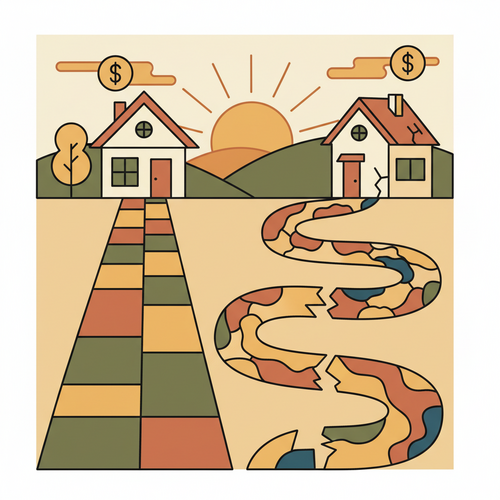
Quick Summary: Fixed vs. Variable Mortgages in 2026
- 🚀 Fixed-rate offers stability: Your monthly payments stay the same, protecting you from interest rate hikes.
- 📈 Variable-rate offers potential savings: Payments can decrease if rates drop, but they rise if rates increase.
- ⚖️ Your best choice depends on your risk tolerance: And the predicted interest rate environment for 2026.
Choosing between a fixed-rate and a variable-rate mortgage is one of the biggest financial decisions you’ll make when buying a home. It’s not just about today’s rates, but about what you expect the market to do over the next few years. In 2026, understanding this choice is more critical than ever.
Many first-time homebuyers often feel overwhelmed by the jargon and options available. This guide will break down everything you need to know in simple terms, helping you confidently make the right choice for your financial future. We’ll explore each type, look at market conditions, and discuss how your personal situation plays a role.
Understanding Fixed-Rate Mortgages
A fixed-rate mortgage means your interest rate, and thus your monthly principal and interest payments, will stay exactly the same for the entire loan term. This provides incredible predictability for your budget. You’ll know precisely what to pay every single month.
In my experience, this stability is a huge comfort for many homeowners, especially those on a tight budget or who prefer not to worry about market fluctuations. It takes the guesswork out of your largest monthly expense. This consistency allows for easier long-term financial planning.
- 🔒 Predictable Payments: Your monthly mortgage payment never changes.
- 🛡️ Protection from Rate Hikes: If interest rates rise, yours stays locked in.
- 📝 Easier Budgeting: Simplifies your financial planning for the long term.
- ❌ Miss Out on Rate Drops: You won’t benefit if market rates fall significantly.
- 💰 Often Higher Initial Rates: Fixed rates can sometimes start higher than variable rates.
Exploring Variable-Rate Mortgages
With a variable-rate mortgage, also known as an adjustable-rate mortgage (ARM), your interest rate can change periodically based on a benchmark index. This means your monthly payments could go up or down. Your payments are tied to market performance.
Many people choose variable rates hoping to benefit from falling interest rates. If rates drop, your payments decrease, saving you money each month. However, the reverse is also true; if rates climb, your payments will increase. This introduces an element of risk.
In 2026, understanding the potential for rate changes is crucial when considering a variable mortgage. Some variable loans have caps on how much the rate can change in a given period or over the life of the loan. Always check these details carefully to avoid surprises.
- 📉 Potential for Lower Payments: If market interest rates decrease.
- 💸 Can Save Money Over Time: Especially in a declining rate environment.
- ⬆️ Risk of Higher Payments: If interest rates rise, your payments will too.
- ❓ Budgeting Uncertainty: Makes long-term financial planning more challenging.
- 🕰️ Often Lower Initial Rates: Can offer a more affordable start to homeownership.
Key Differences: Fixed vs. Variable in 2026
Understanding the core distinctions between these two mortgage types is essential. It’s not just about the numbers, but about your comfort level with financial risk. Let’s look at the main points of comparison.
In my experience, weighing these factors against your personal financial goals helps clarify the decision. Consider what matters most to you: stability or potential savings. This table offers a quick overview.
| Feature | Fixed-Rate Mortgage | Variable-Rate Mortgage |
|---|---|---|
| Interest Rate | Stays the same for the entire loan term. | Fluctuates based on a market index. |
| Monthly Payment | Predictable and constant. Easy to budget for. | Changes periodically. Can increase or decrease. |
| Risk Level | Lower risk. Protected from rising rates. | Higher risk. Exposed to market rate fluctuations. |
| Initial Rate | Often slightly higher than initial variable rates. | Typically starts lower, appealing for short-term savings. |
| Benefit from Falling Rates | No, unless you refinance. | Yes, payments decrease automatically. |
| Suitability (2026) | For buyers seeking security and stable budgeting, especially if rates are low or expected to rise. | For buyers comfortable with risk, who believe rates will fall or will only own for a short period. |
Market Conditions and Interest Rates in 2026
The economic landscape in 2026 will heavily influence which mortgage type is more advantageous. Experts predict various scenarios for interest rates, making your timing and understanding crucial. Keep an eye on economic forecasts.
If interest rates are generally expected to rise throughout 2026, a fixed-rate mortgage could offer significant protection. You’d lock in a lower rate before it climbs higher, saving you money in the long run. Many financial institutions provide forecasts to help you gauge the market.
Conversely, if predictions suggest rates might stabilize or even decrease, a variable-rate mortgage could potentially lead to lower overall costs. However, this comes with the inherent risk that predictions could be wrong, or unforeseen economic shifts could occur. Always consult multiple sources.
💡 Pro Tip for 2026:
Before committing, research credible economic forecasts from institutions like Bloomberg or the Federal Reserve. Understanding the general consensus on future interest rate movements is paramount. Never rely on a single opinion. Bloomberg is a great resource for financial news.
Your Personal Financial Situation Matters
Beyond market predictions, your own financial health and risk tolerance are paramount. What feels right for one person might be disastrous for another. Assess your comfort level with uncertainty.
Consider your job stability, emergency savings, and future income expectations. If you have a rock-solid income and substantial savings, you might tolerate more risk with a variable rate. Conversely, if your budget is tight, stability is key.
My experience shows that many first-time homeowners underestimate the stress of fluctuating payments. Don’t let the allure of a lower initial variable rate overshadow your need for peace of mind. Your long-term financial comfort should be a priority.
- 📊 Risk Tolerance: How comfortable are you with your payments potentially changing?
- 💰 Emergency Fund: Do you have enough savings to cover higher payments if rates rise?
- ⏳ Planned Ownership Period: Do you plan to sell the home in a few years or stay long-term? Shorter terms might favor variable rates.
- 📈 Income Stability: Is your job secure and your income predictable enough to handle potential payment increases?
- 🧠 Peace of Mind: Is the certainty of fixed payments worth potentially missing out on future savings?
Making Your Final Decision in 2026
The “right” choice isn’t universal; it’s deeply personal and depends on your unique circumstances and market outlook. In 2026, a thoughtful approach is more important than ever, given potential economic shifts. Don’t rush this critical step.
Talk to multiple mortgage lenders and a trusted financial advisor. They can offer personalized insights based on your credit score, income, and down payment. Remember, their advice should supplement your own research. Always seek professional guidance.
Consider refinancing options down the line if market conditions change significantly. A fixed-rate mortgage can be refinanced into another fixed or variable rate, and vice-versa, though fees will apply. This offers some flexibility, but it’s not a free pass.
⚠️ Warning for 2026:
Never base your decision solely on the lowest initial interest rate offered. Always look at the bigger picture, including potential rate changes, your financial stability, and the overall loan terms. A slightly higher initial fixed rate might save you significant stress and money in the long run. Always read the fine print. You can find more useful financial information on Investopedia.
Factors Beyond Just the Interest Rate
While the interest rate is a major component, it’s not the only factor that influences your mortgage decision. You need to consider the bigger picture, including closing costs and repayment terms. A comprehensive view prevents future surprises.
Look closely at origination fees, appraisal costs, and title insurance. These closing costs can add thousands to your upfront expenses, regardless of your chosen interest rate type. Always ask for a detailed breakdown from your lender.
Also, consider the loan term itself – 15-year versus 30-year mortgages. A shorter term usually means higher monthly payments but less interest paid over the life of the loan. This can significantly impact your total cost of ownership. Forbes offers excellent articles on various mortgage options.
- 💲 Closing Costs: Factor in all fees beyond the principal, like origination and appraisal fees.
- 🗓️ Loan Term: A 15-year mortgage builds equity faster but has higher monthly payments. A 30-year loan has lower payments but costs more in total interest.
- 📝 Prepayment Penalties: Check if your mortgage has penalties for paying off your loan early or making extra payments.
- 🚪 Escrow Account: Understand how property taxes and homeowner’s insurance are handled; usually through an escrow account.
- 🔄 Refinancing Potential: Think about your likelihood to refinance in the future, and what costs might be involved.
Conclusion
Choosing between a fixed and variable rate mortgage in 2026 is a significant decision that impacts your financial stability for years. There’s no single “best” answer, only the best choice for you. Your risk tolerance, financial situation, and market outlook are all key.
In my experience, the most prepared homebuyers are those who do their homework, consult professionals, and understand their own comfort levels. Don’t be swayed by short-term promises without considering the long-term implications. Make an informed decision.
Which mortgage type aligns best with your financial goals and risk tolerance in 2026?