Introduction
For many people, the term “open enrollment” brings on a feeling of dread. You are presented with a list of health insurance plans, each with its own confusing acronyms, different costs, and complicated tables of benefits. It can feel like you need to be an expert to make the right choice. How do you decide between an HMO and a PPO? Is a lower monthly payment always better? Choosing a health plan is one of the most significant financial decisions you will make all year. It directly impacts both your physical health and your financial well-being. The wrong choice could leave you with unexpected bills or prevent you from seeing the doctors you trust. This guide is designed to cut through the confusion. We will break down the decision into simple, manageable steps, so you can decode your options and confidently choose the health insurance plan that is truly right for you.
The Four Key Costs of Health Insurance
Before comparing plans, it’s essential to understand the four main ways you pay for your healthcare. It’s not just about the monthly bill.
- Premium: This is your fixed, recurring cost, usually paid monthly. You pay this amount whether you use your insurance or not, simply to keep your plan active.
- Deductible: This is the amount of money you must pay out-of-pocket for covered health care services before your insurance plan starts to pay. For example, if your deductible is $1,000, you pay the first $1,000 of covered services yourself.
- Copayment (Copay): This is a fixed amount you pay for a specific covered service after your deductible has been met. For instance, you might have a $30 copay for every doctor’s visit.
- Coinsurance: This is the percentage of costs of a covered health care service you pay after you’ve met your deductible. If your coinsurance is 20%, you pay 20% of the bill, and your insurance company pays the other 80%.
A plan with a low premium might have a high deductible, so it’s crucial to look at all four costs together to understand the full financial picture.
Understanding the “Alphabet Soup”: Common Plan Types
One of the most confusing parts of choosing a plan is understanding the different types, often referred to by acronyms. Here are the most common ones.
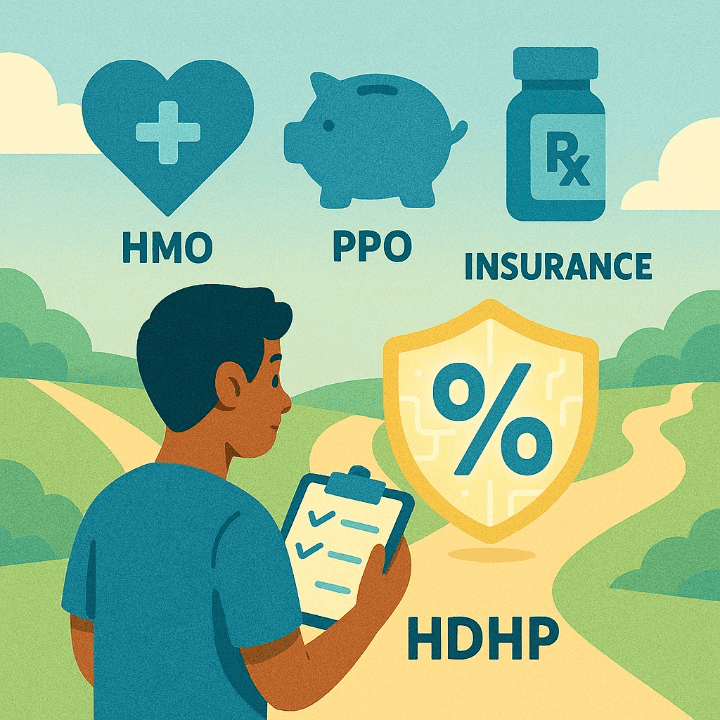
HMO: Health Maintenance Organization
Think of an HMO as a more structured, coordinated plan.
- Key Feature: You are typically required to use doctors, hospitals, and specialists that are within the plan’s network.
- Primary Care Physician (PCP): You usually need to choose a PCP who will be your main point of contact for your health care.
- Referrals: To see a specialist (like a dermatologist or a cardiologist), you will almost always need a referral from your PCP.
- Bottom Line: HMOs often have lower monthly premiums, but they offer less flexibility.
PPO: Preferred Provider Organization
Think of a PPO as the more flexible, less restrictive option.
- Key Feature: You have a network of “preferred” providers, but you have the freedom to see doctors and specialists both in- and out-of-network.
- Out-of-Network Costs: Seeing an out-of-network provider is possible, but your out-of-pocket costs will be significantly higher.
- No Referrals: You generally do not need a referral from a PCP to see a specialist.
- Bottom Line: PPOs offer more flexibility and choice, but this freedom usually comes with higher monthly premiums.
HDHP: High-Deductible Health Plan
This isn’t a separate type of plan, but rather a category that can include both HMOs and PPOs.
- Key Feature: As the name implies, these plans have a higher deductible than traditional plans. This means you pay more out-of-pocket before your insurance starts to contribute.
- Lower Premiums: In exchange for the high deductible, your monthly premium is usually much lower.
- Health Savings Account (HSA): HDHPs are often paired with an HSA, a powerful, tax-advantaged savings account that you can use to pay for medical expenses. Contributions are tax-deductible, the money grows tax-free, and withdrawals for qualified medical expenses are also tax-free.
It’s Personal: How to Assess Your Own Health Needs
There is no single “best” plan. The right health insurance plan for you depends entirely on your individual circumstances. Before you can choose, you need to conduct a personal health assessment.
- Consider Your Current Health Status: Are you generally healthy and rarely visit a doctor, or do you have a chronic condition like asthma or diabetes that requires regular monitoring and treatment? Someone who needs frequent care may benefit from a plan with a lower deductible.
- Review Your Doctors: Do you have a long-standing relationship with specific doctors or specialists you want to continue seeing? If so, you must check if they are “in-network” for any plan you are considering.
- Anticipate Your Future Needs: Think about the year ahead. Are you planning on starting a family? Do you anticipate needing a specific surgery?
- Factor in Prescription Drugs: If you take any regular medications, you need to check the plan’s “formulary,” which is the list of prescription drugs it covers. Ensure your medications are on the list and check what your copay will be.
A Practical Scenario: Chloe and Ben Choose Their Plans
Let’s look at two different people with different health needs.
- Chloe is a healthy 28-year-old freelance writer. She visits the doctor maybe once a year for a check-up and has no ongoing health concerns or prescriptions. For her, an HDHP is an excellent option. Her low monthly premium helps her manage her variable income, and since she is healthy, the risk of having to pay the high deductible is low. She can contribute the money she saves on premiums to an HSA, building a tax-free fund for any future health needs.
- Ben is a 35-year-old teacher who has a chronic condition that requires him to see a cardiologist twice a year and take a daily prescription medication. For him, a traditional PPO plan makes more sense. Although his monthly premium is higher than Chloe’s, his costs for specialist visits and prescriptions are much lower and more predictable. The flexibility of seeing his preferred specialist without a referral is also a major benefit. For Ben, paying a higher premium for more robust coverage is the more cost-effective and stress-free choice.
Your Pre-Decision Checklist
Before you make your final selection, run through this checklist:
- Review Your Budget: How much can you comfortably afford for your monthly premium?
- Check the Provider Network: Are your trusted doctors, hospitals, and pharmacies in the plan’s network?
- Do the “Total Cost” Math: Don’t be swayed by just a low premium. Consider the plan’s deductible and out-of-pocket maximum to understand your potential worst-case financial exposure.
- Confirm Prescription Coverage: If you rely on specific medications, make sure they are covered by the plan’s formulary.
Conclusion
Choosing a health insurance plan is one of the most important decisions you can make for your physical and financial well-being. It’s a personal balancing act between the predictable cost of your monthly premium and the potential out-of-pocket costs you might face when you need care. By taking the time to understand the key terms, evaluate the different types of plans, and honestly assess your unique health needs, you can transform a confusing process into an empowered decision. The right plan is the one that gives you access to the care you need while providing the financial peace of mind you deserve.