Executive Summary
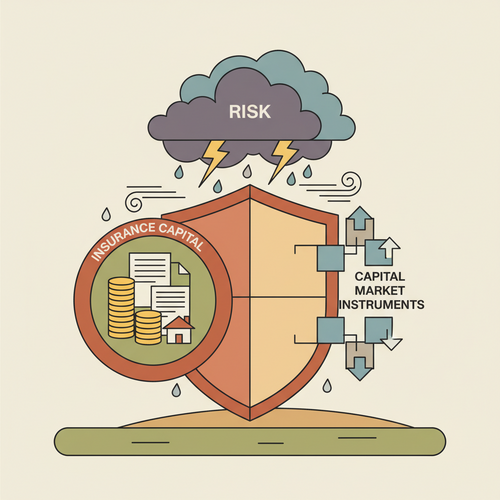
- Catastrophe bonds offer sophisticated mechanisms for transferring peak natural peril exposures to the capital markets.
- Dynamic reinsurance protocols provide adaptive, data-driven strategies for optimizing risk capacity deployment.
- Integrating these approaches enhances an insurer’s financial resilience and capital efficiency against evolving global risks.
The Evolving Landscape of Catastrophe Risk Financing
Global climate patterns are shifting rapidly. This intensifies the frequency and severity of catastrophic events. Insurers and reinsurers face unprecedented volatility across their portfolios.
Traditional reinsurance markets often strain under extreme event scenarios. This capacity constraint necessitates innovative solutions. Capital markets have emerged as critical providers of supplementary risk-bearing capacity.
Insurance-Linked Securities (ILS) represent a sophisticated answer. These financial instruments transform actuarial risk into investable assets. They bridge the gap between insurance needs and capital market liquidity.
Investors actively seek uncorrelated returns. ILS products, including catastrophe bonds, fulfill this demand effectively. They offer portfolio diversification benefits, distinct from traditional asset classes.
Fundamental Principles of Catastrophe Bond Structuring
Catastrophe bonds, or Cat Bonds, are fully collateralized debt instruments. Their principal repayment is contingent upon specific trigger events. Sponsors, typically insurers, issue these through a Special Purpose Vehicle (SPV).
The selection of trigger mechanisms is paramount. Indemnity triggers base payouts on the sponsor’s actual incurred losses. These offer precise coverage but carry basis risk for investors.
Parametric triggers use defined physical parameters. Examples include earthquake magnitude or wind speed thresholds. They reduce moral hazard but introduce basis risk for the sponsor.
Industry loss triggers reference aggregate market losses. These are published by independent third parties. They balance transparency with a broader market view of the event impact.
Modeled loss triggers activate based on predefined risk models. These estimate losses within a specific geographic area. Each trigger type possesses distinct advantages and disadvantages for both parties.
Investors receive attractive coupon payments. These premiums compensate them for assuming catastrophic risk exposure. Principal loss occurs only if the agreed trigger event is met or exceeded.
Key Structuring Elements and Risk Transfer Mechanics
The legal framework is foundational for cat bond issuance. Jurisdictions like Bermuda and the Cayman Islands are preferred domiciles. Their robust legal systems facilitate SPV formation and oversight.
Special Purpose Vehicles (SPVs) are central to the structure. They act as bankruptcy-remote entities. This segregates the collateral from the sponsor’s operational risks, protecting investors.
Collateralization guarantees investor security. The bond proceeds are typically invested in highly rated, liquid assets. These assets are held in a segregated trust account until maturity or trigger activation.
Rating agencies provide independent assessments. Fitch, S&P, and Moody’s evaluate the probability of principal loss. Their ratings significantly influence investor confidence and bond pricing.
Investor profiles for cat bonds are diverse. They include institutional funds, pension funds, and dedicated ILS funds. These entities value the low correlation to traditional financial markets. This characteristic enhances overall portfolio resilience.
Expert Insight: The intricate balance between trigger design, collateral management, and regulatory compliance dictates a cat bond’s market acceptance. Precision in documentation mitigates potential disputes and fosters investor trust.
Integrating Dynamic Reinsurance Protocols
Dynamic reinsurance protocols represent a paradigm shift. They move beyond static, annual reinsurance renewals. These protocols leverage real-time data and advanced analytics for adaptive coverage.
Advanced data analytics are central to these systems. Predictive modeling forecasts potential loss events with greater accuracy. Machine learning algorithms continuously refine risk assessments and pricing models.
This enables event-driven adjustments to coverage. Reinsurance capacity can scale up or down swiftly. Such flexibility optimizes capital deployment and minimizes idle capital charges.
Algorithmic triggers can automate specific actions. They facilitate proactive risk mitigation strategies. Response times to emerging threats or escalating perils drastically improve.
These protocols allow for more granular risk management. Insurers can adjust retentions and attachment points dynamically. This provides a fluid approach to capital allocation and solvency management.
Synergy: Cat Bonds as a Dynamic Reinsurance Lever
Catastrophe bonds serve as a powerful complement to traditional reinsurance. They inject substantial capital market capacity into the risk transfer ecosystem. This creates an efficient, diversified risk management framework.
Managing basis risk is crucial in this integration. Basis risk refers to the mismatch between actual losses and cat bond trigger payouts. Meticulous structuring and model validation minimize this discrepancy.
For insurers, cat bonds enhance portfolio diversification. They provide coverage for peak perils that are challenging to place in traditional markets. This alleviates concentration risk on their balance sheets.
Cost optimization is a significant operational driver. Capital market pricing can often be more competitive for specific risks. This offers a transparent, alternative source of protection.
Cat bonds allow for multi-year coverage. This offers stability beyond the typical annual reinsurance cycle. It provides budget certainty and reduces renewal volatility for sponsors.
They also provide access to a broader investor base. This broadens the risk pool, improving market liquidity. The result is a more robust and resilient risk transfer mechanism.
Advanced Implementation: Hybrid Structures and AI Integration
Hybrid structures are increasingly prevalent. These combine cat bonds with other Insurance-Linked Securities. Collateralized reinsurance merges capital market efficiency with traditional treaty forms.
Sidecar vehicles offer another flexible mechanism. These allow investors to take a share of a reinsurer’s underwriting portfolio. They often focus on specific lines of business or perils.
Machine learning significantly enhances predictive capabilities. AI models analyze vast, unstructured datasets for subtle risk patterns. This refines trigger design and improves pricing accuracy for future issuances.
Blockchain technology holds transformative potential. It promises increased transparency and immutability in claims processing. Smart contracts could automate trigger execution, reducing settlement times.
These technological integrations drive market efficiency. They can reduce transaction costs and operational overheads. The ILS market continues its rapid technological and structural evolution. For more details on reinsurance fundamentals, refer to Investopedia’s Reinsurance definition.
Regulatory Complexities and Market Adoption Challenges
Regulatory frameworks profoundly impact cat bond adoption. Solvency II regulations, for instance, affect European insurers’ capital requirements. These rules influence the attractiveness of securitized risk transfer.
Regulatory arbitrage is a continuous consideration. Different jurisdictions offer varying legal and tax protections. This influences the strategic choice of SPV domiciliation.
Liquidity concerns can pose challenges for certain investors. Cat bonds are generally less liquid than other fixed-income assets. This primarily affects secondary market trading volumes.
Investor education remains paramount. Understanding complex trigger mechanisms and basis risk is crucial. Perception of risk directly influences investor appetite and bond pricing dynamics.
The specialized nature of the asset class requires expertise. Due diligence processes are exhaustive for all market participants. This contributes to high entry barriers for new investors.
Market Warning: While offering diversification, the unique risk profiles of cat bonds demand sophisticated analytical capabilities from both issuers and investors to avoid unforeseen liabilities.
Strategic Advantages for Risk Managers and Investors
For risk managers, cat bonds provide robust capital protection. They significantly reduce exposure to extreme, low-frequency events. This stabilizes earnings and fortifies balance sheets against volatility.
Enhanced capital efficiency is a primary organizational benefit. Capital is freed up from reserving against peak perils. This optimizes the return on equity for the sponsoring insurer.
Investors gain access to a unique and diversifying asset class. They achieve significant portfolio diversification benefits. Returns are largely independent of broader economic cycles or financial market performance. Consult Investopedia’s Catastrophe Bond for further reading.
Tailored risk transfer solutions are readily available. Cat bond structures can be customized for specific perils, geographies, and attachment points. This provides granular control over retained risk exposure.
The transparent pricing mechanism appeals to sophisticated investors. It offers clear risk-return profiles. This contrasts with less transparent over-the-counter reinsurance transactions.
Conclusion
Catastrophe bond structuring represents financial engineering at its apex. Dynamic reinsurance protocols define the future of agile risk management. Their deliberate integration offers unparalleled resilience.
This combined approach strengthens financial stability across sectors. It provides robust protection against increasingly volatile global perils. Organizations must embrace these advanced strategies.
How will your organization adapt to these evolving paradigms?