Introduction
The burden of high-interest debt can feel overwhelming. Many individuals find themselves trapped in a cycle of minimum payments, watching their balances grow due to exorbitant interest rates. Credit card debt, in particular, often carries annual percentage rates (APRs) that make significant progress nearly impossible for many.
Fortunately, strategic financial tools can provide a pathway to relief. One of the most effective methods for tackling this challenge is through a personal loan designed for debt consolidation. By combining multiple high-interest debts into a single, lower-interest loan, you can simplify your payments and potentially save a substantial amount on interest over time.
As we look towards 2026, understanding the landscape of personal loans for debt consolidation is crucial. The financial market continually evolves, but the core principles of smart borrowing remain constant. This article will guide you through selecting the best personal loan options to streamline your finances and regain control.
Understanding High-Interest Debt and Consolidation
What is High-Interest Debt?
High-interest debt refers to loans or credit lines that come with a significantly elevated APR. Common examples include credit card debt, some personal lines of credit, and payday loans. These types of debt can quickly become unmanageable because a large portion of your monthly payment goes directly towards interest, not the principal balance.
The compounding effect of high interest means that even small balances can grow substantially over time. Imagine a credit card with a 20% APR; if you only make minimum payments, your debt can linger for years, costing you far more than the original amount borrowed. Recognizing and addressing these debts is the first step towards financial freedom.
How Debt Consolidation Works with Personal Loans
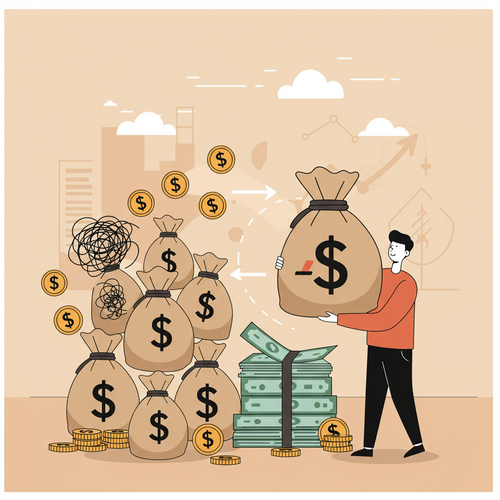
Debt consolidation is the process of combining several debts into a single, new loan. When you use a personal loan for this purpose, you borrow a lump sum and use it to pay off all your existing high-interest debts. This leaves you with just one monthly payment to a single lender, often at a much lower interest rate.
This strategy offers several benefits. Firstly, it simplifies your financial life by reducing multiple due dates to just one. Secondly, and most importantly, it can significantly reduce the total interest you pay, accelerating your path to becoming debt-free. It provides a clear repayment schedule, helping you budget more effectively and track your progress.
Key Factors to Consider When Choosing a Personal Loan in 2026
Choosing the right personal loan for debt consolidation requires careful consideration. The market in 2026 will continue to offer a variety of options, but focusing on specific criteria will help you make an informed decision that aligns with your financial goals.
Interest Rates (APR)
The Annual Percentage Rate (APR) is arguably the most critical factor. It represents the total cost of borrowing, including interest and certain fees, expressed as a yearly percentage. A lower APR directly translates to less money paid over the life of the loan. Always compare APRs from different lenders to find the most competitive offer.
Consider whether the loan offers a fixed or variable APR. A fixed-rate loan means your interest rate, and thus your monthly payment, will remain constant throughout the loan term, providing predictability. A variable rate, however, can fluctuate with market conditions, potentially leading to higher payments in the future. For debt consolidation, a fixed rate is generally preferred for stability.
Loan Terms and Repayment Schedules
The loan term refers to the length of time you have to repay the loan. Personal loans typically range from 2 to 7 years. A shorter loan term generally means higher monthly payments but less interest paid overall. Conversely, a longer term offers lower monthly payments but results in more total interest paid.
Align the repayment schedule with your monthly budget. It is essential to choose a term length and payment amount that you can comfortably afford without straining your finances. Avoid extending the loan term simply to reduce payments if it means paying significantly more interest than necessary. Balance affordability with the total cost.
Fees and Penalties
While a low APR is crucial, always scrutinize any associated fees. Some lenders charge an origination fee, which is a percentage of the loan amount deducted from the disbursed funds. Other potential fees include late payment penalties or, less commonly, prepayment penalties for paying off your loan early.
Ideally, look for personal loans with no origination fees and no prepayment penalties. Transparency in fees is a hallmark of a reputable lender. Understanding all costs upfront prevents unwelcome surprises and helps you accurately compare the true cost of different loan offers.
Lender Reputation and Customer Service
The reliability and support offered by your lender are incredibly important. Research their reputation by reading customer reviews and checking ratings with independent financial consumer protection agencies. A lender with a strong track record of positive customer service and transparent practices is always preferable.
Consider how accessible their customer support is. Do they offer phone, email, or chat support? A responsive and helpful customer service team can be invaluable if you encounter any issues or have questions during your repayment period. Trust and clear communication build a solid borrower-lender relationship.
Credit Score Requirements
Your credit score plays a significant role in determining your eligibility for a personal loan and the interest rate you’ll receive. Lenders typically offer the best rates to borrowers with excellent credit scores (generally FICO scores of 720+). However, many lenders cater to a range of credit profiles.
Even if your credit score is fair or average, there are still options available, though the interest rates might be higher. Before applying, it’s wise to check your credit score and report. Understanding your credit health allows you to target lenders most likely to approve your application and offer competitive terms. You can get free credit reports annually from AnnualCreditReport.com.
Top Lenders for Debt Consolidation Personal Loans in 2026 (General Categories)
While specific product offerings evolve, the types of lenders providing excellent debt consolidation loans tend to fall into consistent categories. In 2026, you can expect these main avenues to remain robust.
Online Lenders
Online lenders have revolutionized the personal loan market. They often provide streamlined application processes, quick funding, and highly competitive interest rates due to lower overhead costs. Many online lenders specialize in debt consolidation and offer personalized rate quotes with a soft credit inquiry, which does not impact your credit score.
- Pros: Fast application and approval, potentially lower rates, convenience, wide range of loan amounts.
- Cons: Less personalized interaction, may require good credit for the best rates.
Traditional Banks and Credit Unions
Traditional banks and credit unions remain strong contenders. If you have an existing banking relationship, your current institution might offer preferential rates or a more flexible approach to underwriting. Credit unions, in particular, are known for their member-focused approach and often provide competitive rates, especially for those with fair credit.
- Pros: Established relationships, in-person support, potentially better rates for existing customers, credit unions often have lower rates.
- Cons: Slower application process, stricter eligibility requirements for some, fewer options than online lenders.
Lenders for Borrowers with Fair/Average Credit
For individuals with a fair or average credit score (typically FICO scores between 580 and 669), finding a suitable personal loan can be more challenging but is by no means impossible. Several lenders specialize in working with these credit profiles. These loans might come with slightly higher interest rates compared to those offered to prime borrowers, but they can still be significantly lower than high-interest credit card APRs.
- Pros: Accessibility for a wider range of credit scores, opportunity to improve credit with responsible repayment.
- Cons: Higher interest rates, potentially more fees, smaller loan amounts offered.
Steps to Apply for a Personal Loan for Debt Consolidation
Navigating the application process can be straightforward if you approach it systematically. Follow these steps to maximize your chances of approval and secure the best terms for your debt consolidation loan.
Assess Your Current Debt Situation
Before you begin, gather all the details of your existing debts. Make a list including the lender, current balance, interest rate, and minimum monthly payment for each account. This clear overview will help you determine the total amount you need to borrow and calculate your potential savings.
Understanding your total debt picture is crucial for requesting an appropriate loan amount. You want to consolidate all high-interest debts, not just a portion, to gain the full benefit of simplified payments and reduced interest.
Check Your Credit Score
Your credit score is a primary factor lenders use to assess risk. Obtain a copy of your credit report from all three major bureaus (Equifax, Experian, TransUnion) and your FICO score. Review the reports for any errors that could negatively impact your score. Correcting inaccuracies can sometimes boost your score quickly.
A higher credit score generally leads to more favorable loan offers, including lower interest rates. If your score is on the lower side, consider taking steps to improve it before applying, such as paying down small balances or addressing any past due accounts.
Compare Loan Offers
Do not settle for the first offer you receive. Prequalify with several different lenders, including online lenders, banks, and credit unions. Prequalification typically involves a soft credit check and provides you with an idea of the rates and terms you might qualify for, without affecting your credit score.
Create a spreadsheet to compare the APRs, loan terms, fees, and monthly payments from each offer. This side-by-side comparison will help you identify the loan that offers the most savings and the best fit for your budget. Remember to consider the total cost of the loan over its entire term.
Gather Necessary Documentation
Once you have chosen a lender, you will need to provide various documents to complete the application. This typically includes proof of identity (driver’s license, passport), proof of income (pay stubs, tax returns), and bank statements. Some lenders may also request details of the debts you intend to consolidate.
Having these documents ready in advance will significantly speed up the application process. Being organized demonstrates your readiness and can help avoid delays in receiving your funds.
Apply and Finalize
Submit your formal application to the chosen lender. At this stage, the lender will perform a hard credit inquiry, which may temporarily ding your credit score by a few points. If approved, carefully review the final loan agreement before signing.
Ensure you understand all the terms, conditions, and repayment obligations. Once the loan is funded, promptly use the funds to pay off your high-interest debts. Confirm that these accounts are closed or reflect a zero balance to avoid accruing new charges or interest. This crucial step solidifies your debt consolidation strategy.
Pros and Cons of Debt Consolidation with Personal Loans
While debt consolidation can be a powerful financial tool, it’s important to understand both its advantages and potential drawbacks. A balanced perspective allows for a more effective strategy.
Advantages
- Simplified Payments: Managing one monthly payment instead of several streamlines your finances and reduces the risk of missing a payment.
- Potential Interest Savings: A lower APR on your personal loan can significantly reduce the total amount of interest you pay over the life of the loan, saving you money.
- Clear Repayment Schedule: Personal loans come with a fixed term, providing a clear end date for your debt, which can be highly motivating.
- Improved Credit Score (Potentially): As you consistently make on-time payments, your credit score can improve. Reducing your credit utilization ratio by paying off credit cards can also boost your score.
- Fixed Payments: Most personal loans have fixed interest rates, meaning your monthly payment amount will not change, offering predictable budgeting.
Disadvantages
- Risk of New Debt: If you do not address the spending habits that led to debt in the first place, you might be tempted to run up balances on your newly paid-off credit cards, leading to more debt.
- Longer Repayment Period: While monthly payments might be lower, extending the loan term can sometimes result in paying more interest overall, even with a lower APR.
- No Underlying Problem Solved: Debt consolidation is a tool, not a cure for poor financial habits. It requires discipline and a commitment to managing your spending.
- Impact on Credit: The initial hard inquiry for the loan and closing credit card accounts could temporarily affect your credit score, though the long-term benefits typically outweigh this.
Alternative Debt Relief Strategies (Briefly Mention)
While personal loans for debt consolidation are effective for many, they are not the only option. Other strategies might be suitable depending on your financial situation:
- Balance Transfer Credit Cards: These cards offer an introductory 0% APR period, allowing you to transfer existing credit card balances and pay them off without accruing interest for a specific timeframe. However, watch out for balance transfer fees and ensure you can pay off the balance before the promotional period ends. Learn more about managing debt from reputable sources like the Consumer Financial Protection Bureau (CFPB).
- Debt Management Plans (DMPs): Offered by non-profit credit counseling agencies, DMPs involve the agency negotiating with your creditors to reduce interest rates and fees. You make one monthly payment to the agency, which then distributes the funds to your creditors.
- Debt Settlement: This involves negotiating with creditors to pay a lump sum that is less than the full amount owed. This option can severely damage your credit score and often comes with significant risks.
Conclusion
High-interest debt can feel like an insurmountable obstacle, but effective strategies like using a personal loan for debt consolidation offer a powerful path forward. By combining multiple high-interest obligations into a single, more manageable loan, you can simplify your payments, potentially save a significant amount on interest, and establish a clear roadmap to financial freedom.
As we look towards 2026, the fundamental principles of smart borrowing remain timeless. Diligently compare interest rates, understand all fees, choose a repayment term that fits your budget, and select a reputable lender. Taking these steps demonstrates financial responsibility and commitment.
Ultimately, debt consolidation is a strategic decision that empowers you to take control of your financial destiny. It requires discipline and a commitment to new, healthier financial habits. With careful planning and the right personal loan, you can transform your debt burden into a stepping stone towards a more secure and prosperous future.