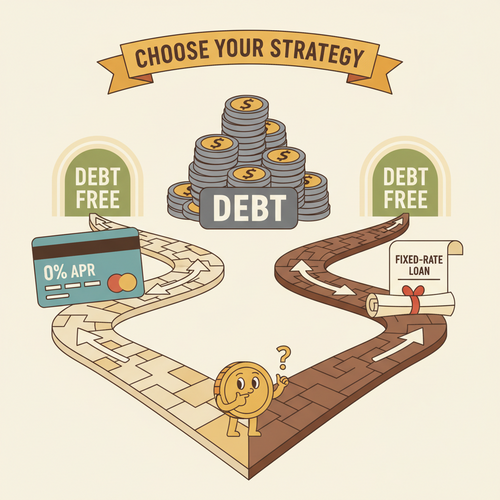
Navigating the world of debt payoff can feel overwhelming, particularly when deciding between a balance transfer vs. personal loan. Many people seek efficient ways to eliminate high-interest debt, aiming for financial freedom. Indeed, understanding these two popular strategies is crucial for making an informed decision. This guide will explore both options in detail, helping you determine which path might lead to faster debt repayment.
Understanding Balance Transfers
A balance transfer involves moving debt from one or more high-interest credit cards to a new credit card, often one offering a 0% introductory Annual Percentage Rate (APR). Consequently, this allows you to pay down your principal balance without accruing additional interest for a specific period. For instance, many introductory periods last from 6 to 21 months. Furthermore, this window provides a significant opportunity to accelerate your debt repayment.
Pros of a Balance Transfer
- Reduced Interest Costs: Primarily, the biggest advantage is the potential to pay zero interest for the introductory period. Therefore, every payment goes directly towards reducing your principal.
- Consolidation: In addition, you can combine multiple credit card balances into a single payment. Consequently, this simplifies your finances and makes managing debt easier.
- Clear End Goal: Specifically, with a fixed introductory period, you have a clear deadline to pay off the debt. Indeed, this can motivate faster repayment.
Cons of a Balance Transfer
- Balance Transfer Fees: Typically, credit card companies charge a fee for transferring a balance. Usually, this ranges from 3% to 5% of the transferred amount.
- Introductory Period Expiration: Subsequently, after the 0% APR period ends, the interest rate can revert to a much higher standard rate. Therefore, failure to pay off the debt quickly can lead to renewed high-interest charges.
- Potential for New Debt: Furthermore, some individuals may be tempted to use their old, newly freed-up credit cards. Consequently, this can lead to accumulating even more debt.
- Credit Score Requirement: Most noteworthy, qualifying for the best 0% APR offers generally requires a good to excellent credit score.
Understanding Personal Loans
Conversely, a personal loan is an unsecured loan provided by a bank, credit union, or online lender. Specifically, you receive a lump sum of money, which you then repay in fixed monthly installments over a set period. Moreover, these loans typically come with a fixed interest rate, meaning your payment remains consistent throughout the loan term. Indeed, personal loans offer predictability.
Pros of a Personal Loan
- Predictable Payments: Specifically, fixed interest rates and consistent monthly payments make budgeting easier. Thus, you always know exactly how much you owe each month.
- Consolidation of Various Debts: Furthermore, personal loans can consolidate not only credit card debt but also other types of debt, such as medical bills or small loans. In addition, this provides a single, manageable payment.
- Fixed Interest Rate: Moreover, your interest rate is locked in for the entire loan term. Therefore, you are protected from potential rate increases.
- Clear Payoff Date: Indeed, a personal loan has a definite end date. Consequently, you know exactly when you will be debt-free.
Cons of a Personal Loan
- Origination Fees: Some lenders charge an origination fee, which is a percentage of the loan amount deducted from the payout. Therefore, you might receive less than you applied for.
- Interest Accrual: Unlike a 0% APR balance transfer, interest starts accruing immediately on a personal loan. Conversely, even with a competitive rate, you will still pay interest.
- Strict Eligibility: Generally, lenders require a decent credit score and stable income for approval. Subsequently, those with poor credit may face higher rates or denial.
- No Grace Period: Immediately, your repayment schedule begins. Thus, there is no interest-free period.
Key Differences: Balance Transfer vs. Personal Loan
When comparing a balance transfer versus a personal loan, several distinct differences emerge. Understanding these nuances is essential for choosing the optimal debt payoff strategy. Each option caters to different financial situations and objectives. Therefore, careful consideration of your specific circumstances is paramount.
Interest Rates and Fees
A balance transfer often features an introductory 0% APR, followed by a variable rate. However, balance transfer fees are common. Conversely, personal loans typically have fixed interest rates from the outset. Furthermore, they may include origination fees, which are deducted from the loan principal. Therefore, comparing the total cost, including all fees and potential interest, is vital.
Loan Term and Flexibility
Balance transfer promotional periods are usually shorter, ranging from 6 to 21 months. This demands a rapid payoff plan. In contrast, personal loan terms are generally longer, extending from 12 months to 7 years. Consequently, this offers more flexibility in monthly payments, albeit often with more total interest paid over time. Indeed, the term length significantly impacts your monthly budget.
Debt Types Covered
Balance transfers are specifically for credit card debt. They cannot be used to consolidate other types of loans. However, personal loans are much more versatile. Specifically, they can consolidate various debts, including credit card balances, medical bills, and other unsecured loans. Furthermore, this broad utility makes personal loans a flexible option for diverse debt portfolios.
Credit Score Impact
Both options require a good credit score for the most favorable terms. However, applying for either can temporarily lower your score due to a hard inquiry. Furthermore, a balance transfer increases your credit utilization on the new card, initially. Conversely, a personal loan is an installment loan. Consequently, it can positively impact your credit mix over time, if managed responsibly. For more insights on credit, visit Reuters.com.
Which Pays Off Debt Faster?
Determining which option pays off debt faster largely depends on your specific financial situation, the amount of debt, and your repayment discipline. There isn’t a single universal answer. However, certain scenarios favor one over the other. Therefore, analyzing your circumstances thoroughly is critical.
When a Balance Transfer Might Be Faster:
If you have a manageable amount of high-interest credit card debt (typically under $10,000 to $15,000) and an excellent credit score, a balance transfer could be the fastest route. Specifically, the 0% APR period allows every dollar to attack the principal directly. Furthermore, if you are disciplined and can pay off the entire balance before the introductory period ends, you could save hundreds or even thousands in interest. For instance, paying $5,000 on a 0% APR card over 18 months requires about $278 per month. However, failing to meet this deadline will negate much of the benefit.
When a Personal Loan Might Be Faster:
A personal loan often proves more effective for larger debt amounts or when you need to consolidate various types of debt beyond just credit cards. Consequently, if your debt exceeds what you can realistically pay off during a balance transfer’s introductory period, a personal loan with a fixed, lower interest rate could be better. Furthermore, the longer repayment terms of personal loans can make monthly payments more affordable. This can reduce the stress of a tight deadline. Indeed, for comprehensive financial guidance, Bloomberg.com offers valuable resources.
Factors to Consider Before Choosing
Before committing to either a balance transfer or a personal loan, evaluate these critical factors. Your personal financial health and debt profile should guide your decision. Therefore, take your time to assess each point carefully.
Your Credit Score
A higher credit score generally unlocks the best offers for both options. Specifically, excellent credit (720+) is often required for the longest 0% APR balance transfer periods. Conversely, a good credit score (670+) will likely secure a competitive interest rate on a personal loan. Indeed, a lower score might lead to less favorable terms or even rejection.
Total Debt Amount
For smaller credit card balances (e.g., $3,000-$10,000), a balance transfer is often ideal. You can realistically pay this off within the 0% APR window. However, for larger consolidated debts (e.g., $15,000+), a personal loan typically provides a more sustainable repayment structure. Furthermore, personal loans have higher maximum limits. Forbes.com provides extensive coverage on various financial products.
Types of Debt
Remember, balance transfers are exclusively for credit card debt. If you have a mix of credit card debt, medical bills, or other personal loans, a personal loan offers a better consolidation solution. In addition, it simplifies your financial obligations into one manageable payment. Therefore, assess all your outstanding debts.
Your Financial Discipline
A balance transfer demands significant discipline. You must avoid new spending on the old credit cards and adhere strictly to your accelerated payment plan. Subsequently, a personal loan, with its fixed schedule, requires less daily management. However, consistent on-time payments are still crucial. Indeed, understanding your own habits is vital.
All Associated Fees
Always calculate the total cost. Balance transfer fees can add up. Conversely, personal loan origination fees, though one-time, reduce your initial payout. Furthermore, compare the effective APR (including fees) for both options. This allows for an ‘apples-to-apples’ comparison. Therefore, read the fine print carefully before committing.
Tips for Faster Debt Payoff, Regardless of Choice
Regardless of whether you choose a balance transfer or a personal loan, adopting smart financial habits will always accelerate your debt payoff journey. Implementing these strategies can make a significant difference. Consequently, you can achieve financial freedom sooner.
- Create a Detailed Budget: First and foremost, understand where your money goes. Specifically, a budget helps identify areas to cut expenses and free up funds for debt payments. Indeed, this is the foundation of effective debt management.
- Make Extra Payments: Whenever possible, pay more than the minimum required. Furthermore, even small additional payments can significantly reduce your principal and the total interest paid. Consequently, this shortens your repayment timeline.
- Avoid New Debt: During your debt payoff journey, resist the urge to take on new debt. This includes using old credit cards again. Specifically, focus entirely on eliminating existing obligations.
- Consider the Debt Avalanche or Snowball Method: The avalanche method prioritizes debts with the highest interest rates first. Conversely, the snowball method focuses on paying off the smallest balance first. Both are effective, depending on your motivation style. Many financial experts, including those at Investopedia.com, advocate for these methods.
- Boost Your Income: Explore opportunities to earn extra money. This could involve freelancing, a side hustle, or asking for a raise. Consequently, additional income can be directly applied to your debt.
Conclusion
Ultimately, the choice between a balance transfer vs. personal loan hinges on your unique financial situation. A balance transfer is often ideal for individuals with excellent credit and a manageable amount of high-interest credit card debt, provided they can pay it off within the 0% APR period. Conversely, a personal loan offers greater flexibility for consolidating various debt types and larger sums, with predictable, fixed payments. Both strategies offer pathways to faster debt repayment. The key, however, lies in thorough research, understanding all terms and fees, and maintaining unwavering financial discipline. By carefully evaluating your options and committing to a solid repayment plan, you can indeed pay off your debt faster and achieve your financial goals. For further information and financial news, check out WSJ.com.