Introduction
Many individuals seek to build financial security. They often explore various products. Among these, whole life insurance frequently emerges. It promises both a death benefit and a savings component. This dual nature often causes confusion. Is it a viable investment strategy or a complex financial trap? Understanding this product is crucial for sound financial planning.
The concept of combining insurance with investment seems appealing. However, it presents unique considerations. Investors must weigh guaranteed returns against potential market growth. They must also consider fees and flexibility. This article will delve into the intricacies of whole life insurance. We will examine its structure, benefits, and drawbacks. Our goal is to provide a balanced perspective. This will help you determine its place in your overall retirement planning and investment portfolio.
Understanding Whole Life Insurance
Whole life insurance is a form of permanent life insurance. It provides coverage for your entire life. This contrasts with term life insurance, which has a set duration. A key feature is its cash value component. This cash value grows over time. It accumulates on a tax-deferred basis.
The policyholder pays a fixed premium. Part of this premium covers the cost of insurance. Another portion funds the growing cash value. This cash value can be accessed later. You can do this through loans or withdrawals. The death benefit is guaranteed. It will be paid to your beneficiaries upon your passing.
Core Components of Whole Life
Whole life policies have two main parts:
- Death Benefit: This is a guaranteed payout. It goes to your beneficiaries. This amount remains constant throughout the policy’s life. It offers essential financial protection.
- Cash Value: This is a savings component. It grows at a guaranteed rate. This rate is set when you purchase the policy. The cash value can serve as a source of funds. It offers financial flexibility during your lifetime.
The “Investment” Aspect: Cash Value Growth
The cash value in a whole life policy grows predictably. This growth is often guaranteed. It accumulates slowly during the early years. Over time, it can become substantial. Policyholders can borrow against this cash value. Loans are typically tax-free. They also continue to earn interest.
Some policies may also pay dividends. These are not guaranteed. Dividends depend on the insurer’s performance. They can increase your cash value. Alternatively, they can reduce your premiums. This feature makes whole life insurance an investment consideration for some. It offers a degree of stability not found in volatile markets.
How Cash Value Accumulates
Cash value accumulation follows a set schedule. This schedule is outlined in the policy. It usually grows slowly at first. As the policy matures, the growth rate can increase. The guaranteed interest rate ensures consistent growth.
Here are ways cash value grows:
- Guaranteed Interest: A fixed rate ensures predictable growth. This provides a safe savings vehicle.
- Dividends (if applicable): Participating policies may pay dividends. These can boost cash value or reduce premiums. Dividends are not guaranteed.
- Tax-Deferred Growth: The cash value grows without annual taxes. Taxes are only due upon withdrawal or surrender. This is a significant tax advantage.
Pros of Whole Life Insurance
Whole life insurance offers several distinct advantages. These benefits appeal to specific financial goals. They cater to those prioritizing stability and guarantees.
Key benefits include:
- Guaranteed Growth: The cash value grows at a fixed rate. This offers predictability. It provides a stable financial foundation.
- Lifetime Coverage: The policy remains active indefinitely. You never outlive your coverage. This ensures lifelong financial protection.
- Tax Advantages: Cash value growth is tax-deferred. Loans against the cash value are generally tax-free. Death benefits are also usually tax-free.
- Predictable Premiums: Premiums remain constant for life. This simplifies long-term budgeting. It provides financial certainty.
- Access to Cash Value: You can borrow against your cash value. This provides a source of funds. It can be used for emergencies or opportunities. This is a key feature of whole life insurance as an investment.
- Estate Planning Tool: Whole life can fund estate taxes. It can also create an inheritance. It ensures wealth transfer.
These advantages highlight its role in a conservative portfolio. It can complement other more volatile investments. It helps ensure long-term financial stability.
Cons and Common Criticisms
Despite its benefits, whole life insurance faces significant criticism. Many financial advisors suggest exploring alternatives. These alternatives often offer greater returns or flexibility. Understanding the downsides is crucial.
Major drawbacks include:
- High Fees and Commissions: Whole life policies have substantial costs. These fees can erode early cash value growth. They reduce the effective rate of return.
- Lower Returns: The guaranteed growth rate is often modest. It typically lags behind market-based investments. Think of ETFs or mutual funds. This can mean missed opportunity.
- Lack of Flexibility: Premiums are fixed. Skipping payments can lead to policy lapse. Accessing cash value can reduce the death benefit.
- Complexity: Whole life policies can be intricate. Understanding all terms and conditions is challenging. This makes comparison difficult.
- Surrender Charges: Canceling a policy early incurs penalties. These charges can be substantial. They reduce the amount you receive back.
- Opportunity Cost: Funds tied up in whole life could be invested elsewhere. Higher returns might be achievable in other assets. This is a crucial aspect when evaluating whole life insurance as an investment.
These criticisms emphasize the need for careful evaluation. Investors should compare whole life with other financial products. This ensures alignment with individual financial goals.
Whole Life vs. Term Life: A Comparison
The choice between whole life insurance and term life insurance is fundamental. Both provide financial protection. However, they serve different purposes. They also have distinct cost structures.
Term life insurance provides coverage for a specific period. This could be 10, 20, or 30 years. It is generally more affordable. It offers a death benefit only. There is no cash value component. Term life is ideal for covering specific liabilities. These include mortgages or childcare expenses.
Whole life insurance, conversely, offers lifelong coverage. It includes the aforementioned cash value. Premiums are significantly higher. It caters to long-term financial objectives. These may include estate planning. It also provides a guaranteed savings component.
Key Differences at a Glance
Let’s compare these two insurance types:
- Duration of Coverage:
- Term Life: Covers a specific period (e.g., 20 years).
- Whole Life: Covers your entire life.
- Cash Value:
- Term Life: No cash value component.
- Whole Life: Builds cash value over time.
- Premiums:
- Term Life: Generally lower and can increase upon renewal.
- Whole Life: Higher, fixed premiums for life.
- Purpose:
- Term Life: Pure protection for a defined period.
- Whole Life: Protection plus a savings/investment component.
- Flexibility:
- Term Life: Simple, easy to understand.
- Whole Life: More complex, less flexible due to fixed premiums and surrender charges.
Understanding these differences is key. It helps you choose the right product. The choice depends on your specific needs. It also depends on your financial planning goals.
When Might Whole Life Be Suitable?
While often criticized, whole life insurance can be appropriate for specific situations. It is not a one-size-fits-all solution. However, it offers unique benefits for certain financial profiles.
Consider whole life if you:
- Desire Guaranteed Returns: You prioritize safety over aggressive growth. You seek predictable cash value accumulation.
- Seek Estate Planning Solutions: You want to ensure wealth transfer. You aim to cover potential estate taxes. The death benefit provides a guaranteed payout.
- Require Long-Term Care: You need permanent insurance coverage. This might be for specific dependents or business needs.
- Maxed Out Other Retirement Accounts: You have already contributed fully to 401(k)s and IRAs. You are looking for additional tax-advantaged savings. This is where whole life insurance as an investment can be considered.
- Are a High Net Worth Individual: You seek to diversify your assets. You want to reduce estate taxes. You also desire tax-preferred access to funds.
- Value Discipline in Savings: The fixed premium structure enforces forced savings. This can be beneficial for those who struggle to save independently.
For these specific scenarios, whole life can play a strategic role. It contributes to a well-rounded financial planning strategy. However, it should always be part of a broader, diversified approach.
Exploring Investment Alternatives
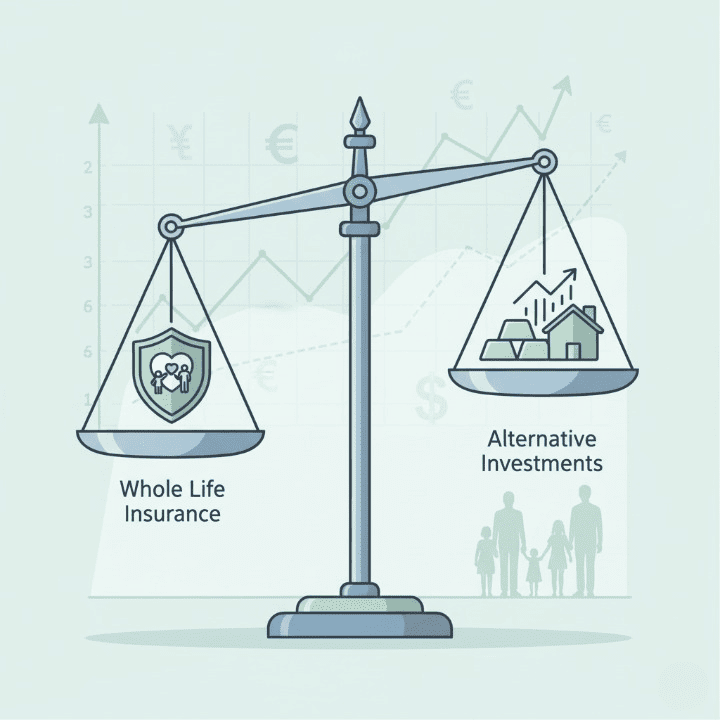
For many, investing separately from insurance is more efficient. Various investment vehicles offer different risk and return profiles. These can often outperform the cash value growth of whole life. This is a critical consideration when evaluating whole life insurance as an investment.
Here are some common alternatives:
- ETFs (Exchange-Traded Funds): Offer diversification across various assets. They often have low fees. They are traded like stocks.
- Mutual Funds: Professionally managed portfolios. They invest in stocks, bonds, or other securities. They provide diversification and expertise.
- Bonds: Debt instruments offering fixed income. They are generally less volatile than stocks. They can provide stability.
- Real Estate: Can offer capital appreciation and rental income. It requires significant capital and management.
- Cryptocurrency: A high-risk, high-reward asset class. Offers potential for significant growth. However, it comes with extreme volatility. This makes it unsuitable for conservative investors.
- Retirement Accounts (401k, IRA): Tax-advantaged accounts for long-term savings. They offer employer matches in some cases. They are essential for retirement planning.
Choosing the right alternatives depends on your risk tolerance. It also depends on your time horizon. A diversified portfolio often includes a mix of these options. This approach separates protection from investment.
Making an Informed Decision
Deciding whether whole life insurance fits your plan requires careful thought. It is not a simple choice. There are many factors to consider. Your individual financial situation is paramount.
Consider these points:
- Your Financial Goals: What are you trying to achieve? Is it pure protection, wealth accumulation, or estate planning?
- Your Risk Tolerance: Are you comfortable with market fluctuations? Or do you prefer guaranteed, but lower, returns?
- Your Budget: Can you comfortably afford the fixed premiums? Will it impact other essential savings?
- Time Horizon: How long do you need the coverage? What is your timeline for investment growth?
- Professional Advice: Consult with a qualified, fee-only financial advisor. They can provide unbiased guidance. They will help you integrate insurance into your overall financial planning.
Remember, no single financial product is perfect for everyone. A comprehensive strategy often involves multiple tools. This ensures all your needs are met. This includes both protection and investment goals.
Conclusion
The debate surrounding whole life insurance as an investment is ongoing. It is clear that this product is complex. It offers a blend of lifelong coverage and a savings component. Its guaranteed cash value growth and tax advantages are appealing. They provide a sense of security and predictability. This can be valuable for specific financial situations.
However, it also comes with notable drawbacks. High fees, lower potential returns, and reduced flexibility are common criticisms. These factors can make it less attractive compared to investing in market-based alternatives. For many, a “buy term and invest the difference” strategy might offer greater wealth accumulation. Ultimately, the decision hinges on individual circumstances. It depends on your unique financial planning objectives. Always seek personalized advice from a qualified financial professional. This ensures your choices align with your long-term goals.