Introduction
Navigating the costs of healthcare can be one of the most stressful parts of personal finance. We often face confusing bills, complex insurance terms, and the fear of a large, unexpected expense. This can feel overwhelming. However, a unique and powerful financial tool exists that can transform how you manage these costs. This tool is the Health Savings Account, or HSA. As many people are currently reviewing their benefits during the open enrollment season, now is the perfect time to understand this account.
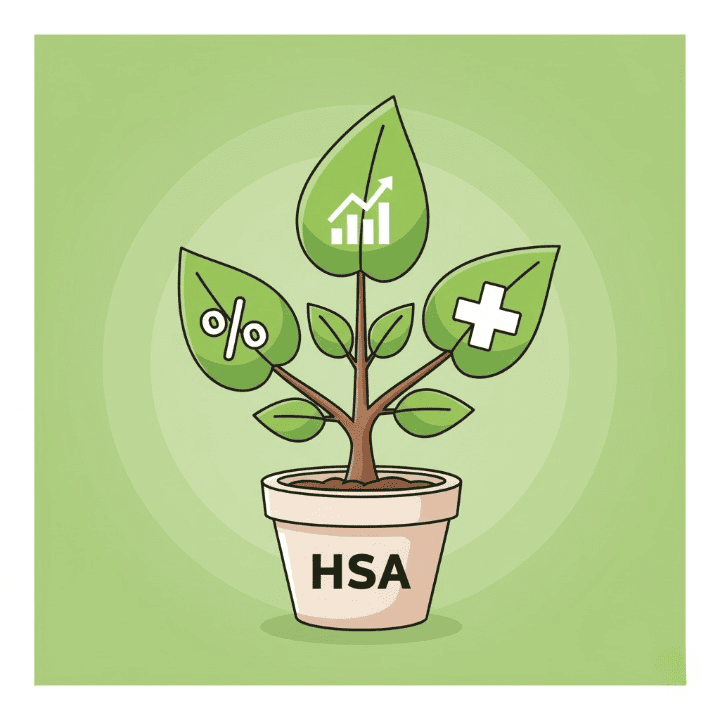
An HSA is far more than just a simple savings fund. In fact, it is a triple-threat financial weapon. It allows you to save for your health, reduce your taxes, and build for the future. Furthermore, it achieves all this while protecting your credit from the dangers of medical debt.
What is a Health Savings Account (HSA)?
A Health Savings Account is a special savings account with tax advantages. You can use the funds to pay for qualified medical expenses. This powerful account, however, is exclusively available to individuals and families enrolled in a specific type of health insurance plan. This plan is known as a High-Deductible Health Plan (HDHP).
An HDHP, as the name suggests, is an insurance plan with a higher deductible than a traditional plan. In exchange for you taking on more of the initial healthcare costs, these plans typically have much lower monthly premiums. Financial planners designed the HSA to work in tandem with the HDHP. For instance, the money you save on lower premiums can be deposited into your HSA. This creates a dedicated fund to cover your deductible and other out-of-pocket medical costs with tax-advantaged dollars. You cannot have an HSA without being enrolled in a qualifying HDHP.
The Triple Tax Advantage: The Superpower of the HSA
Financial experts are so enthusiastic about HSAs because of their unique and powerful “triple tax advantage.” Remarkably, no other savings or retirement account in the United States offers all three of these benefits.
- Contributions are Tax-Deductible: When you contribute to your HSA, you do so with pre-tax dollars if it’s through an employer. If you contribute on your own, your contributions are tax-deductible. This action directly lowers your taxable income for the year, saving you money immediately.
- The Funds Grow Tax-Free: Unlike a regular savings or brokerage account, the money in your HSA can grow without being taxed. Many HSA providers allow you to invest your funds in mutual funds or ETFs. As a result, your money can earn a rate of return and compound over time, completely free from capital gains or dividend taxes.
- Withdrawals are Tax-Free: You can withdraw money at any time for qualified medical expenses. These withdrawals are completely tax-free. This includes thousands of items, from doctor visit co-pays and prescriptions to dental work and eyeglasses.
This combination makes the HSA an incredibly efficient way to pay for healthcare.
HSA vs. Credit Card: A Tale of Two Medical Bills
To see the practical power of an HSA, let’s consider a scenario. Imagine two individuals, Maya and Ben, who both receive an unexpected $1,000 medical bill.
Maya pays with her HSA: Maya has been contributing to her HSA. She simply uses her HSA debit card to pay the $1,000 bill. The money she used was put into the account pre-tax. If Maya is in the 22% tax bracket, she essentially used only about $780 of her take-home pay to cover the $1,000 expense. Consequently, she incurs no debt, no interest, and no stress.
Ben pays with his Credit Card: Ben does not have an HSA, so he must use his credit card. He pays the $1,000 bill with his post-tax money. Unfortunately, he is unable to pay the balance in full at the end of the month. The debt then begins to accrue interest at a high 20% interest rate. Over the next several months, his $1,000 bill grows larger, costing him more money and causing significant financial anxiety. This new debt also increases his credit utilization, which could negatively impact his credit score.
This comparison clearly shows how an HSA turns a medical expense into a manageable, discounted event. In contrast, a credit card can turn it into a long-term, expensive problem.
The HSA as a Long-Term Investment Vehicle
The HSA also holds a powerful, long-term secret. It can function as a supplemental retirement account. The money in your HSA never expires and rolls over year after year. It is also completely portable, meaning it belongs to you, even if you change jobs or insurance plans.
You can continue to let your balance grow and invest it throughout your career. While you can always use it tax-free for medical expenses, a special rule kicks in at age 65. After you turn 65, you can withdraw money from your HSA for any reason without a penalty. For example, you can use it for a vacation, home repairs, or anything at all. The IRS simply taxes these non-medical withdrawals as regular income, just like withdrawals from a traditional 401(k) or IRA. This flexibility makes the HSA an amazing tool for self-financing your health needs in retirement.
How an HSA Protects Your Broader Financial Health
The benefits of an HSA ripple out to protect your entire financial life.
- It Shields Your Emergency Fund: By having a dedicated account for medical costs, you can preserve your main emergency fund. This leaves it available for other life events, like a job loss or car repair.
- It Protects Your Credit: Medical debt is a leading cause of damaged credit and even bankruptcy. An HSA provides a fund to pay these bills. As a result, it prevents them from ever going to collections and harming your credit score.
- It Reduces Financial Stress: Knowing you have a dedicated, tax-advantaged fund ready to handle medical issues provides incredible peace of mind. This reduction in financial anxiety is a direct and powerful benefit to your overall mental health.
Conclusion
For those who are eligible, the Health Savings Account is one of the most versatile and powerful tools in modern personal finance. It transforms the way you approach your healthcare costs. It can turn a source of stress into an opportunity for savings and investment. With its incredible triple tax advantage, an HSA allows you to pay for your current health needs efficiently. It also helps you avoid the high-interest rate trap of credit card debt and protects your credit. Furthermore, it doubles as a powerful vehicle for your retirement savings. As you review your insurance options, take a close look at whether an HDHP and an accompanying HSA are the right fit for you. It could be one of the healthiest financial decisions you ever make.