Introduction
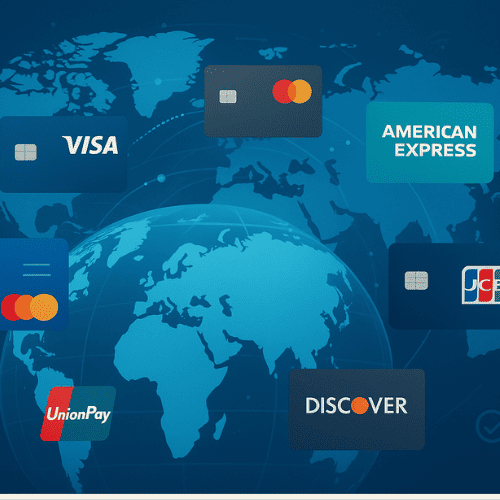
Credit cards have become more than just payment tools; they represent a critical infrastructure in global finance, shaping how consumers, businesses, and banks interact. Whether buying a cup of coffee in New York, booking a hotel in Paris, or shopping online from Tokyo, credit cards connect millions of merchants and cardholders worldwide. Yet, the global credit card landscape is not defined by a single network—it is powered by several major card schemes, often called “card brands” or “payment networks.” Each of these networks—Visa, Mastercard, American Express, Discover, UnionPay, JCB, and Diners Club International—has distinct strengths, geographic reach, and innovation strategies.
This article explores the world’s leading credit card networks in depth, analyzing how they operate, their unique selling points, and the ways they are adapting to a digital-first era. By understanding these networks, consumers and businesses alike can make informed choices about payment acceptance, loyalty programs, and cross-border financial strategies.
Visa: The Global Powerhouse
Visa is the most widely recognized and accepted credit card network in the world. With operations in over 200 countries and territories, it processes billions of transactions annually through its secure global payment system, VisaNet.
Strengths of Visa:
-
Global Reach: Few networks rival Visa’s presence, making it the default choice for travelers and international shoppers.
-
Partnership Model: Unlike American Express or Discover, Visa does not issue cards directly but partners with banks and financial institutions, creating flexibility and scalability.
-
Security Innovations: Visa invests heavily in fraud detection, tokenization, and artificial intelligence to ensure seamless yet secure transactions.
Visa is often viewed as the network of choice for everyday transactions due to its wide acceptance and consumer trust. Its adaptability in integrating with digital wallets like Apple Pay, Google Pay, and Samsung Pay cements its role in the future of payments.
Mastercard: The Challenger That Redefined Competition
Mastercard is Visa’s closest competitor, operating in more than 210 countries. While smaller in market share compared to Visa, Mastercard has built a reputation for innovation, premium card benefits, and strong partnerships with fintech companies.
Strengths of Mastercard:
-
Technological Edge: Mastercard invests in blockchain, biometrics, and AI-driven payment solutions, positioning itself as a forward-looking network.
-
Loyalty and Rewards: Its premium cards, like World Elite Mastercard, offer superior travel, shopping, and lifestyle perks.
-
Fintech Collaboration: By actively partnering with digital banks and startups, Mastercard integrates deeply with next-generation financial ecosystems.
Mastercard’s success lies in balancing global reach with innovation. Its ability to adapt quickly to changing consumer needs makes it a favorite among both banks and consumers seeking modern, flexible payment options.
American Express: Premium Service and Exclusivity
American Express, or Amex, stands apart from Visa and Mastercard because it operates as both a card issuer and a network. Known for exclusivity, customer service, and rewards, Amex targets affluent customers and business clients.
Strengths of American Express:
-
Rewards Ecosystem: Membership Rewards is one of the most flexible and valuable loyalty programs, allowing points to be transferred to airlines, hotels, and retailers.
-
Merchant Relations: Although Amex has fewer global acceptance points than Visa or Mastercard, it attracts high-value merchants due to higher transaction fees and affluent cardholders.
-
Prestige and Perks: Amex cards are synonymous with premium benefits like airport lounge access, concierge services, and superior travel protections.
Amex prioritizes quality over quantity. While it is less accepted internationally, its focus on high-spending customers ensures its relevance in luxury travel, corporate spending, and lifestyle services.
Discover: The U.S.-Centric Innovator
Discover is primarily recognized in the United States, though it also partners globally with Diners Club International to expand its footprint. Known for consumer-friendly policies, Discover offers no annual fees on most cards and straightforward cash-back programs.
Strengths of Discover:
-
Customer-Friendly Model: No foreign transaction fees, no annual fees, and generous cash-back rewards appeal to budget-conscious consumers.
-
Technological Simplicity: Discover’s focus on simplicity makes it attractive to users seeking clarity in credit card terms.
-
Partnership Expansion: By collaborating with Diners Club International, Discover achieves acceptance in over 185 countries.
Although Discover lags in global prestige, its transparent model and competitive rewards make it popular in the United States.
UnionPay: China’s Payment Giant
UnionPay, also known as China UnionPay (CUP), is the dominant card network in China and has rapidly expanded internationally. With over 9 billion cards issued globally, it is now the largest card network by transaction volume, surpassing Visa in certain metrics.
Strengths of UnionPay:
-
Market Scale: Its dominance in China ensures it handles the majority of transactions in the world’s second-largest economy.
-
International Expansion: Through partnerships, UnionPay cards are accepted in more than 180 countries.
-
Mobile Integration: UnionPay is highly integrated with mobile wallets like Alipay and WeChat Pay, reflecting China’s mobile-first payments ecosystem.
UnionPay’s future lies in balancing domestic dominance with international credibility. Its growth is a reminder of how regional networks can become global leaders.
JCB: Japan’s Global Player
Japan Credit Bureau (JCB) is Asia’s leading international payment brand. While smaller than Visa and Mastercard, JCB has gained traction in Asia-Pacific, the Middle East, and Europe.
Strengths of JCB:
-
Asian Partnerships: JCB has strategic alliances with banks and payment providers in Asia, ensuring strong regional adoption.
-
Customer Experience: JCB offers cultural and travel benefits tailored for Japanese and Asian customers abroad.
-
Expansion Strategy: JCB steadily increases acceptance worldwide, particularly in regions with significant Asian tourism.
For travelers from Japan and Asia, JCB cards provide reliable access and benefits designed for cross-border experiences.
Diners Club International: The Classic Network
As one of the oldest credit card brands, Diners Club International has a legacy of prestige and travel. Acquired by Discover, it now functions as part of the Discover Global Network but retains its identity.
Strengths of Diners Club:
-
Travel Heritage: Known as the original travel and entertainment card, Diners Club maintains a reputation in premium travel segments.
-
Global Reach Through Discover: Cardholders benefit from Discover’s partnerships, increasing acceptance worldwide.
-
Corporate Focus: Diners Club maintains relevance through corporate and business travel programs.
Though less prominent than in its early days, Diners Club’s legacy continues to attract loyal cardholders who value its exclusivity.
The Future of Global Credit Card Networks
Credit card networks face new challenges as digital wallets, cryptocurrencies, and real-time payment systems gain popularity. However, their established infrastructure, brand trust, and global partnerships ensure they will remain critical players. Innovations like biometric verification, AI-driven fraud prevention, and blockchain-based settlement systems are reshaping how these networks operate.
The competition among global credit card brands highlights different strategies: Visa and Mastercard aim for universality, Amex pursues exclusivity, Discover emphasizes simplicity, UnionPay leverages scale, JCB builds regional strength, and Diners Club relies on heritage. Consumers benefit from this diversity, gaining choices that align with their lifestyle, travel, and financial preferences.
Conclusion
Credit card networks are not just about plastic cards—they are ecosystems of trust, innovation, and global connectivity. From Visa’s worldwide dominance to UnionPay’s rapid ascent and Amex’s premium exclusivity, each network plays a role in shaping the future of payments. As consumer habits evolve and digital-first solutions gain ground, these card brands will continue adapting, ensuring that whether you are shopping online, traveling abroad, or managing corporate expenses, credit card networks remain at the heart of financial transactions.