Introduction
Once you grasp the fundamental concept of an interest rate—the cost of borrowing money—you unlock the next layer of financial literacy: understanding its behavior. Not all interest rates are created equal. They generally come in two distinct “personalities”: the stable and predictable fixed interest rate, and the ever-changing variable interest rate. The choice between these two can have a profound impact on your monthly budget and the total cost of your financing over time. Whether you’re considering a mortgage, an auto loan, or even just managing your credit card debt, knowing the difference is essential. In today’s changing economic landscape, this understanding is more critical than ever for making smart decisions that protect your financial stability and align with your long-term goals.
The Predictable Path: Understanding Fixed Interest Rate Loans
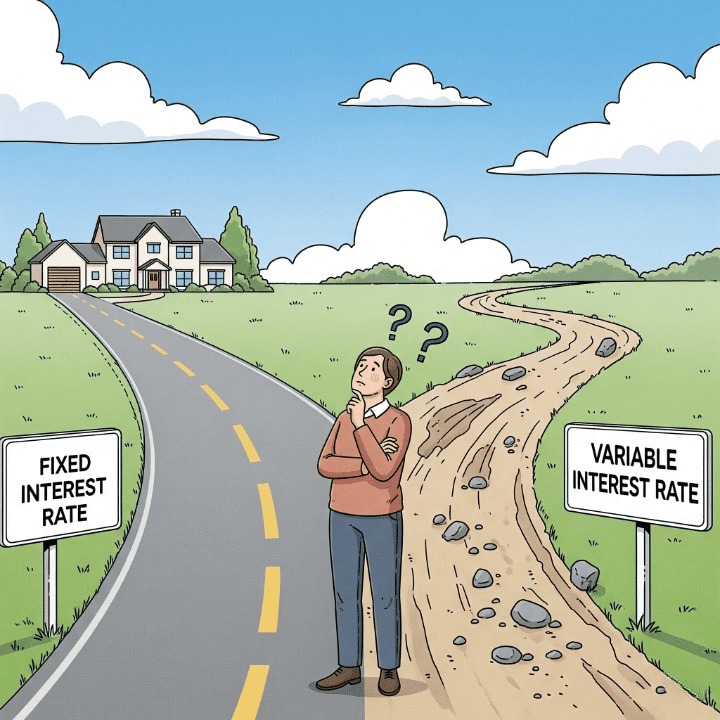
A fixed interest rate is exactly what it sounds like: it is locked in for the entire term of the loan. From your first payment to your very last, the interest rate charged on your financing will not change, regardless of what happens in the broader economy.
The primary advantage of a fixed interest rate is predictability. Because the rate is constant, your monthly principal and interest payment also remains the same. This consistency makes budgeting incredibly straightforward and provides a powerful sense of security. You know exactly what to expect each month, which helps you plan your other expenses and savings goals with confidence. This stability can be particularly beneficial for your financial and mental health, as it removes the anxiety of unexpected payment increases.
Pros of a Fixed Interest Rate:
- Stability: Your payment will not rise, even if market rates go up.
- Simplicity: It’s easy to understand and budget for.
- Security: Ideal for long-term financing where predictability is crucial.
Cons of a Fixed Interest Rate:
- Potentially Higher Initial Rate: Lenders sometimes offer a slightly higher starting rate on fixed loans compared to the introductory rate on variable loans.
- No Benefit from Falling Rates: If market interest rates decrease, you will not benefit unless you go through the process of refinancing.
Fixed rates are most common for mortgages, auto loans, and personal loans.
The Fluctuating Journey: How Variable Interest Rates Work
A variable interest rate, also known as an adjustable or floating rate, is not locked in. Instead, it is tied to an underlying benchmark index or reference rate (like the Prime Rate). As this benchmark rate changes, your interest rate will adjust accordingly—meaning it can go up or down over the life of the loan.
The main appeal of a variable interest rate is that it often comes with a lower introductory rate than what you would get with a fixed-rate loan. This can result in a lower initial monthly payment, which might be attractive to borrowers looking to keep costs down in the short term. If the benchmark rate stays low or falls, a borrower with a variable rate could end up paying less in interest over time.
However, this comes with a significant risk. If the benchmark rate rises, so will your interest rate and your monthly payment. This unpredictability can make budgeting more challenging and could potentially strain your finances if payments increase beyond what you can comfortably afford.
Pros of a Variable Interest Rate:
- Lower Initial Rate: Often starts cheaper than a fixed-rate loan.
- Potential for Savings: You could save money if market rates fall.
Cons of a Variable Interest Rate:
- Unpredictability: Your monthly payment can change.
- Risk of Higher Payments: If rates rise, your payments will increase, potentially significantly.
Variable interest rates are standard for products like a credit card, home equity lines of credit (HELOCs), and adjustable-rate mortgages (ARMs).
The Credit Card Connection: A Prime Example of Variable Rates
The most common place people encounter a variable interest rate is with their credit card. Have you ever noticed that your card’s APR can change even if you haven’t done anything differently? That’s because it’s tied to a benchmark rate. When you hear news that the central bank has raised interest rates, the Prime Rate typically rises as well. Within a billing cycle or two, your credit card issuer will adjust your card’s APR upward by the same amount. This direct link to economic policy means that in a rising-rate environment, carrying credit card debt becomes progressively more expensive.
Making the Choice: Key Factors to Consider
So, how do you decide which type of interest rate is right for your financing? The answer depends on several personal and financial factors.
- Your Risk Tolerance: This is the most important question. Are you comfortable with the possibility of your monthly payments changing? Or do you value stability and predictability above all else? The stress of a fluctuating payment can impact your overall health and well-being, so be honest with yourself about what you can handle.
- The Loan Term: For short-term financing, a variable rate might be a reasonable gamble, as there’s less time for rates to rise dramatically. For long-term financing, like a 15- or 30-year mortgage, a fixed interest rate provides crucial long-term security.
- Your Financial Stability: If your income is very stable and you have a solid financial cushion, you might be better equipped to handle a potential increase in a variable-rate payment. If your budget is tight, a fixed rate is the safer choice.
- Your Credit Score: Regardless of which type you choose, your personal credit score will be the primary factor in determining the initial interest rate you are offered. A higher credit score will qualify you for a better rate on both fixed and variable loans, saving you money in either scenario.
Conclusion
The decision between a fixed and a variable interest rate is a fundamental choice in managing your finances. There is no single answer that is right for everyone. The choice represents a trade-off between the security of predictable payments and the potential for the lower initial costs of a variable rate. By understanding how both types of rates work, assessing your personal risk tolerance, and considering the term of the financing, you can move beyond simply accepting a loan offer. You empower yourself to analyze the terms, ask the right questions, and make a strategic choice that protects your budget, supports your financial health, and aligns perfectly with your long-term goals.