Introduction
As you step into the world of higher education, you’ll encounter a flood of new terms, especially when it comes to finances. One phrase you’ll hear over and over again is “interest rate.” It might sound like complex financial jargon, but in reality, it’s one of the most powerful and important concepts you will ever learn. Understanding what an interest rate is and how it works can be the difference between a future of financial freedom and one burdened by unnecessary debt. It’s a single number that quietly influences the total cost of your education, the price of your future car, and the growth of your personal savings.
This article will serve as your simple, clear guide to this crucial topic. We’re not here to be a boring textbook. Instead, we’ll break down what an interest rate means for you as a student. We’ll explore its massive impact on student loans, explain its connection to your personal credit score, and demystify how it functions with that first credit card you might have in your wallet. Grasping this concept now is a gift you give to your future self, paving the way for a healthier financial journey.
What Exactly Is an Interest Rate?
At its core, an interest rate is simply the cost of borrowing money. Think of it like renting money. When you take out a loan, you’re “renting” a lump sum from a lender (like a bank), and the interest is the fee you pay for that privilege. This fee is typically expressed as a percentage of the loan amount.
Conversely, when you save money in a savings account, the roles are reversed. You are lending your money to the bank, and the interest they pay you is their “fee” for using your funds.
For students, you’ll primarily encounter interest rates in two major areas:
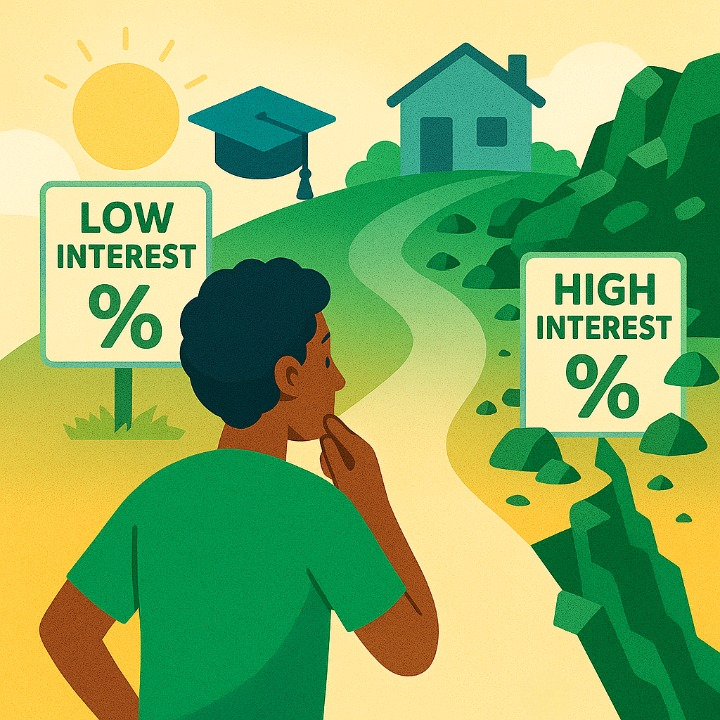
- Borrowing: On student loans, car loans, and credit card balances. Here, a lower interest rate is always better, as it means you pay less over time.
- Saving: On high-yield savings accounts or other investments. Here, a higher interest rate is what you want, as it means your money is growing faster.
The Biggest Player: Interest Rate on Student Loans
For most students, the largest financial agreement they’ll enter into is for student loans. This is where understanding the interest rate is not just helpful—it’s essential. The financing of your education will likely be your first major lesson in how interest works.
There are two main types you’ll see:
- Fixed Interest Rate: The rate is locked in when you take out the loan and will not change for the entire life of the loan. This offers predictability and stability in your future payments.
- Variable Interest Rate: The rate can fluctuate over time based on market conditions. It might start lower than a fixed rate, but it carries the risk of increasing, which would raise your monthly payments.
Let’s see a quick example. Imagine you borrow $10,000. With a 5% interest rate, the cost of borrowing is much lower than with a 7% interest rate. Over a 10-year repayment period, that 2% difference could mean paying thousands of dollars more. This is why carefully reviewing the interest rate on any student loan offer is one of the most important steps in managing your educational financing.
Your Credit Score: The Key to a Better Interest Rate
Why does one person get a lower interest rate than another? A huge factor is their credit score. A credit score is a number that represents your financial trustworthiness. A high score tells lenders that you have a history of paying your debts on time, making you a low-risk borrower. To reward that low risk, lenders offer you better terms, including a lower interest rate.
As a student, you might not have much of a credit history, but now is the perfect time to start building a positive one. Simple actions like paying your phone bill on time or responsibly using a student credit card can establish a foundation of good credit. This won’t just help you with future loans; it builds a lifelong habit of financial responsibility. Think of building good credit as a long-term project that unlocks better financial opportunities down the road.
The Credit Card Trap: How High Interest Rates Work
Many students get their first credit card during college. It offers convenience and is a tool for building credit. However, it can also be a dangerous trap if you don’t understand how its interest rate, known as the Annual Percentage Rate (APR), works.
Credit card APRs are typically much higher than those for student loans. If you don’t pay your balance in full each month, the remaining balance will be charged this high rate. For example, a $500 purchase on a credit card with a 22% APR can quickly grow with interest, and if you only make the minimum payments, it could take you years and hundreds of extra dollars to pay off. The lesson is simple: a credit card is a useful tool, but it’s not free money. Always aim to pay the balance in full to avoid the sting of a high interest rate.
Meet Ben: A Tale of Two Interest Rates
Consider two friends, Ben and Sarah, both starting university. They each take out a small private loan to cover some expenses. Ben’s parents had helped him open a student credit card a year earlier, which he used for small purchases and paid off in full every month. As a result, he had a small but positive credit history and qualified for a loan with a 6% interest rate. Sarah had no credit history and got a loan with a 7.5% interest rate.
During college, Sarah used her credit card frequently for dining out and shopping, often not paying the full balance. By graduation, she had some credit card debt at a high interest rate. Five years later, Ben, having made his payments on his lower-interest loan, was in a great position. Sarah, however, was struggling to pay down both her student loan and her credit card debt, with much of her payments going just to cover the interest. Her financial journey was significantly harder, all stemming from that initial difference in interest rates and credit habits.
Conclusion
The term interest rate might seem intimidating, but it is a concept that empowers you once you understand it. It is the invisible engine that can either work for you or against you in your financial life. By understanding its impact on the financing of your education, appreciating the power of a good credit history, and being cautious with high-interest debt like that from a credit card, you are taking control of your future.
As you move through your university years, pay attention to this simple but powerful number. Reading the fine print on any loan or credit card application is not just a chore; it’s a crucial step in building a secure and prosperous life.