Executive Summary
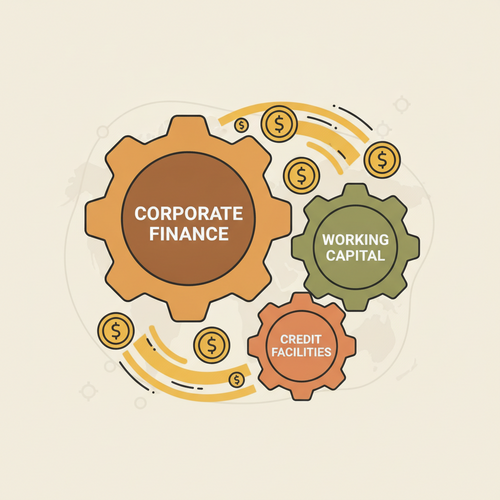
- Corporate credit facilities offer crucial liquidity, facilitating strategic operational advantages.
- Working capital arbitrage systematically exploits market inefficiencies for enhanced financial returns.
- Developing a robust infrastructure supports sophisticated leveraging and optimizes capital deployment.
Strategic Imperatives of Corporate Credit Facilities
Corporate credit facilities represent vital financial instruments. They provide immediate access to capital for various corporate objectives. These facilities extend beyond mere short-term funding needs. They are fundamental components of a company’s overall capital structure.
Revolving credit facilities (RCFs) are common. They offer flexibility in borrowing and repayment. Term loans provide structured financing for specific projects or acquisitions. Understanding the nuances of each facility type is critical for effective treasury management.
Types and Structural Characteristics
Credit facilities vary significantly in their structure. A revolving credit facility permits repeated borrowing up to an agreed maximum. Interest accrues only on drawn amounts. An unused commitment fee often applies to the undrawn portion.
Term loans typically involve a lump-sum disbursement. Repayment occurs over a fixed schedule. These are often categorized by tenor, such as short-term or long-term. Syndicated loans involve multiple lenders. This diversifies risk and provides larger capital pools.
Covenant Compliance and Pricing Dynamics
Debt covenants are integral to credit facility agreements. They are legally binding conditions. Covenants protect lenders by stipulating financial ratios and operational parameters. Maintaining covenant compliance is paramount. Breaching covenants can trigger severe penalties.
Pricing typically involves a base rate plus a spread. The base rate often references SOFR or a regional equivalent. The spread reflects the borrower’s creditworthiness. It also accounts for market conditions and facility type. Optimal pricing minimizes borrowing costs.
Working Capital Optimization and Liquidity Management
Efficient working capital management is essential. It directly impacts liquidity and profitability. Businesses must balance current assets and current liabilities. This ensures smooth operations without excessive capital lock-up. An optimized cash conversion cycle is a primary objective.
Effective liquidity management prevents solvency issues. It also allows for opportunistic investments. Surplus cash should not remain idle. It should be deployed to generate incremental returns. This strategy forms the bedrock of arbitrage opportunities.
Components of Working Capital Excellence
Accounts receivable management accelerates cash inflow. Proactive collection strategies reduce DSO (Days Sales Outstanding). Timely invoicing and robust credit policies are key. Electronic invoicing systems can streamline this process.
Inventory optimization minimizes holding costs. It prevents obsolescence and stockouts. Just-in-time (JIT) methodologies can significantly reduce inventory levels. Advanced forecasting tools improve accuracy. This frees up capital tied in unsold goods.
Accounts payable management extends payment terms strategically. It maximizes DPO (Days Payable Outstanding) without damaging supplier relationships. Dynamic discounting programs offer early payment incentives. This creates a win-win scenario for both parties.
Principles of Working Capital Arbitrage
Working capital arbitrage systematically exploits financial market inefficiencies. It seeks to generate risk-adjusted returns from temporary mispricings. This often involves leveraging differing costs of capital. Geographical or temporal rate differentials provide opportunities. This strategy requires sophisticated financial analysis.
Expert Insight: “Successful working capital arbitrage transcends simple interest rate plays. It demands an integrated view of treasury, supply chain, and tax implications to uncover true value.”
Identifying Arbitrage Opportunities
Interest rate differentials between jurisdictions present clear opportunities. Borrowing in a low-cost region and deploying capital in a higher-yielding one can generate spread. Cross-currency swaps can mitigate foreign exchange risk inherent in such strategies.
Temporal arbitrage involves timing capital deployment. Short-term surplus cash can be invested in highly liquid, higher-yielding instruments. This utilizes the time value of money effectively. Overnight repo markets are one such avenue.
Capital structure arbitrage focuses on optimizing funding sources. It involves comparing the cost of internal capital versus external credit. Deploying the lowest-cost capital to highest-return activities enhances shareholder value. This requires a granular understanding of WACC.
Architecting the Arbitrage Infrastructure
Building a robust infrastructure is paramount. It enables scalable and repeatable arbitrage strategies. This requires integrated systems, skilled personnel, and clear governance. Without this foundation, arbitrage efforts remain ad-hoc and inconsistent.
Technological Stack and Data Integration
A sophisticated Treasury Management System (TMS) is indispensable. It provides real-time visibility into cash positions globally. The TMS integrates with ERP systems for accurate financial data. This facilitates informed decision-making.
Data analytics platforms are crucial. They identify patterns and potential arbitrage opportunities. Predictive modeling tools forecast cash flows with greater accuracy. Artificial intelligence can automate the detection of market anomalies.
Organizational Structure and Governance
A dedicated treasury team is often responsible for these operations. They possess expertise in capital markets and risk management. Clear roles and responsibilities prevent operational overlaps. Regular training ensures skill sets remain current.
Robust governance frameworks are essential. They define decision-making processes and escalation paths. Internal controls prevent unauthorized transactions. Compliance with internal policies and external regulations is strictly enforced.
Advanced Leveraging Strategies and Use Cases
Beyond basic arbitrage, corporate credit facilities enable complex leveraging. These strategies enhance returns and optimize capital allocation. They require deep market understanding and precise execution. The goal is maximum efficiency.
Intercompany Lending and Cash Pooling
Multinational corporations utilize intercompany lending. This optimizes global liquidity. It centralizes cash management within the group. External borrowing costs are minimized. Cash pooling aggregates balances from multiple subsidiaries. This creates a single notional or physical account. It reduces overdrafts and maximizes interest income.
Supply Chain Finance Integration
Integrating credit facilities with supply chain finance provides significant advantages. Companies can offer early payment to suppliers at a discount. This improves supplier relationships and potentially reduces input costs. The corporate credit facility funds these early payments. This transforms accounts payable into a profit center.
Invoice factoring also falls under this umbrella. Companies sell their accounts receivable at a discount. This provides immediate cash flow. The credit facility can back the factoring arrangement. This strategy accelerates the cash conversion cycle.
Risk Mitigation and Regulatory Compliance
Arbitrage strategies, while profitable, carry inherent risks. Effective risk management is non-negotiable. Regulatory compliance adds another layer of complexity. Financial institutions and corporate treasuries must navigate a complex landscape. Prudent risk controls are vital.
Financial Risk Management Frameworks
Interest rate risk arises from fluctuating market rates. Hedging instruments like interest rate swaps can mitigate this exposure. These swaps convert variable interest payments into fixed ones, or vice versa. This provides certainty in funding costs.
Foreign exchange (FX) risk is present in cross-border transactions. Forward contracts, options, and currency swaps manage this volatility. A robust FX policy outlines acceptable hedging levels. It specifies approved financial instruments.
Counterparty risk concerns the default of a trading partner. Diversifying counterparties reduces concentration risk. Credit assessments of all partners are ongoing. Master netting agreements can also reduce potential losses.
Navigating the Regulatory Landscape
Regulatory frameworks impose strict guidelines. Dodd-Frank legislation significantly impacted financial markets. Basel III capital requirements affect bank lending capacity. Understanding these regulations is critical for compliance.
Cross-border activities face complex tax implications. Transfer pricing rules must be strictly adhered to. Non-compliance can lead to substantial fines. Legal counsel and tax advisors are indispensable in this environment. Transparency is paramount.
Performance Measurement and KPI Frameworks
Quantifying the impact of leveraging and arbitrage is essential. A robust framework of Key Performance Indicators (KPIs) measures success. This allows for continuous optimization. It demonstrates tangible value creation to stakeholders.
Key Metrics for Arbitrage Efficacy
Return on Invested Capital (ROIC) tracks the efficiency of capital deployment. Enhanced ROIC indicates successful arbitrage strategies. It directly impacts shareholder value. A higher ROIC is always desirable.
Weighted Average Cost of Capital (WACC) reflects the overall cost of financing. Effective leveraging and arbitrage aim to reduce WACC. Lower borrowing costs improve profitability. This makes the company more competitive.
Net Interest Margin (NIM) measures the spread between interest earned and interest paid. A positive and growing NIM signifies effective arbitrage. It indicates efficient treasury operations. This is a critical profitability metric.
Cash Conversion Cycle (CCC) reduction is a direct benefit. Shorter cycles mean capital is freed up faster. This allows for quicker redeployment. It signifies operational and financial efficiency.
Conclusion
Corporate credit facilities are powerful tools. They enable sophisticated working capital arbitrage. This requires an integrated approach to finance and technology. Prudent risk management is non-negotiable. Strict regulatory compliance must be maintained.
Strategic leveraging enhances financial performance. It optimizes liquidity and capital deployment. Continuous monitoring and adaptation are vital for sustained success. Are your treasury operations fully optimized for these advanced strategies?