Introduction
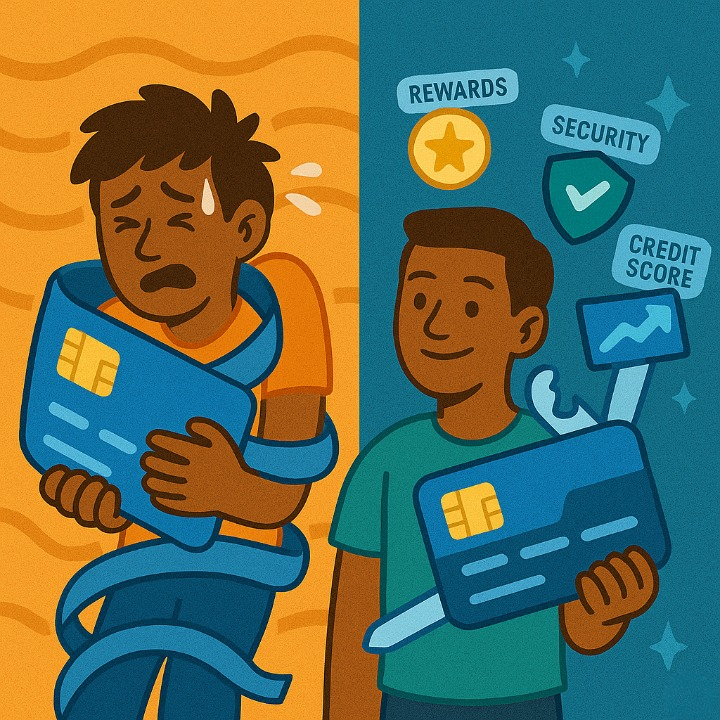
In the world of personal finance, few tools are as common—or as misunderstood—as the credit card. For some, it represents convenience and financial flexibility, a tool for building a positive credit history and earning rewards. For others, it’s a source of stress and a slippery slope into debt. What makes the difference? The answer isn’t in the card itself, but in the knowledge and habits of the person holding it. A credit card can be one of the most powerful tools in your financial toolkit, or it can become a trap, largely due to the powerful effect of its interest rate. For anyone starting their financial journey, learning to navigate the world of credit is a critical skill. This guide is designed to demystify the credit card, helping you understand how to use it as a strategic asset for your financial health rather than a source of debt.
Understanding the Basics: What Is a Credit Card, Really?
At its core, a credit card is a short-term loan. When you swipe or tap your card, you aren’t spending your own money from a bank account. Instead, a financial institution (like a bank) is paying the merchant on your behalf, with the promise that you will pay them back. This simple concept comes with a few key terms that every user needs to understand to stay in control.
- Credit Limit: This is the maximum amount of money the issuer will allow you to borrow. This limit is based on factors like your income and credit history. It’s not a spending target; it’s a boundary.
- Billing Cycle: This is the period, typically about 30 days, during which your purchases are recorded. At the end of the cycle, you receive a statement summarizing all your transactions, your total balance, and your payment due date.
- Minimum Payment: This is the smallest amount of money you are required to pay by the due date to keep your account in good standing. As we will see, only paying the minimum is one of the most common traps for new credit card users.
- Grace Period: This is the time between the end of your billing cycle and your payment due date. If you pay your entire balance in full during this period, you typically will not be charged any interest on your purchases.
Understanding these elements is the first step in shifting from a passive consumer to an informed user of credit.
The Double-Edged Sword: The Power and Pitfalls of a Credit Card
A credit card is a tool, and like any tool, its impact depends on how you use it. When managed responsibly, it offers significant advantages. When mishandled, the consequences can be costly and long-lasting.
The Power: Benefits of Wise Credit Card Use
- Building Credit History: Responsible credit card use is one of the most effective ways to build a positive credit history. Lenders look at your credit score to assess your reliability when you apply for major financing, like a car loan or a mortgage. A history of on-time payments demonstrates that you are a trustworthy borrower.
- Rewards and Cash Back: Many credit cards offer rewards programs, such as cash back on purchases, travel points, or discounts. When you pay your balance in full each month, these rewards are essentially a free bonus for your regular spending.
- Convenience and Security: Cards offer a secure and convenient way to pay. They provide protection against fraud (you can dispute unauthorized charges) and are often safer to carry than large amounts of cash.
The Pitfalls: The Dangers of Mismanagement
- The Temptation to Overspend: Because you’re not seeing cash leave your hand, it can be easy to spend more than you can afford. This psychological distance can lead to impulse purchases and a rapidly growing balance.
- The High-Interest Rate Trap: This is the single biggest danger. If you don’t pay your balance in full by the due date, the remaining amount starts to accrue interest. The interest rate on most credit cards is very high, often ranging from 15% to 25% or even more. This interest compounds, meaning you start paying interest on your interest, causing debt to snowball quickly.
The Golden Rule of Credit Cards: Pay Your Balance in Full
If there is one principle to remember, it’s this: always aim to pay your statement balance in full and on time, every single month. By doing so, you take advantage of the grace period and pay zero dollars in interest. This simple habit allows you to enjoy all the benefits of a credit card—rewards, convenience, and credit-building—without any of the costly downsides.
Paying only the minimum amount is a recipe for long-term debt. The minimum payment is calculated to keep you paying for as long as possible, maximizing the interest the card issuer earns from you. Making this a habit ensures that a small purchase can end up costing you double or triple its original price over time.
A Practical Scenario: The Tale of Two Spenders, Leo and Maria
Let’s imagine two friends, Leo and Maria. They both get their first credit card with a $2,000 credit limit and a 21% annual interest rate. They each make a one-time purchase of a new laptop for $1,200.
- Leo’s Approach: Leo is excited by the freedom of his card. He makes the $1,200 purchase and, when the bill arrives, decides to pay only the minimum payment of $35. The next month, his remaining balance of $1,165 is charged interest. That interest is added to his balance, and the cycle continues. After a year of only paying the minimum, not only has he barely made a dent in the original $1,200, but his total balance has remained high due to the compounding interest. He will end up paying for that laptop for many years and will pay hundreds of dollars in interest alone.
- Maria’s Approach: Maria also buys the $1,200 laptop, but she planned for it. She had already saved the money in her bank account. She uses the credit card for the purchase to get the 2% cash back reward ($24). When her statement arrives, she pays the full $1,200 balance before the due date. She pays zero interest, successfully built a positive payment record on her credit report, and earned a small reward.
This scenario highlights that the card wasn’t the problem; the strategy was. Maria treated her credit card like a debit card, only spending money she already had.
5 Practical Habits for Using a Credit Card Wisely
- Treat It Like a Debit Card: The simplest rule is to only charge what you know you can pay off immediately. Before swiping, ask yourself: “Do I have this money in my bank account right now?”
- Automate Your Payments: To avoid ever missing a due date, set up automatic payments. You can automate the minimum payment as a safety net, but it’s even better to automate the payment for the full statement balance.
- Track Your Spending: Don’t wait for the monthly statement to see where your money went. Use a budgeting app or check your account online weekly to stay aware of your spending and ensure you’re staying within your budget.
- Read Your Statement: Take a few minutes each month to review your statement. Check for any unfamiliar charges, note your spending patterns, and see exactly how much you would be charged in interest if you were to carry a balance.
- Know Your Terms: Be aware of your card’s annual interest rate (APR), credit limit, and any annual fees. Knowledge is the first step toward control.
Conclusion
A credit card is a defining tool in modern personal finance. It holds the potential to build your financial future or to create significant obstacles. The key to unlocking its power lies in discipline, knowledge, and treating it with respect. By understanding the profound impact of the interest rate and committing to paying your balance in full, you transform the card from a potential liability into a strategic asset. It becomes a mechanism for earning rewards, establishing your creditworthiness, and making transactions securely. The goal is not to fear credit, but to master it. By adopting wise habits, you can ensure your plastic works for you, not against you.