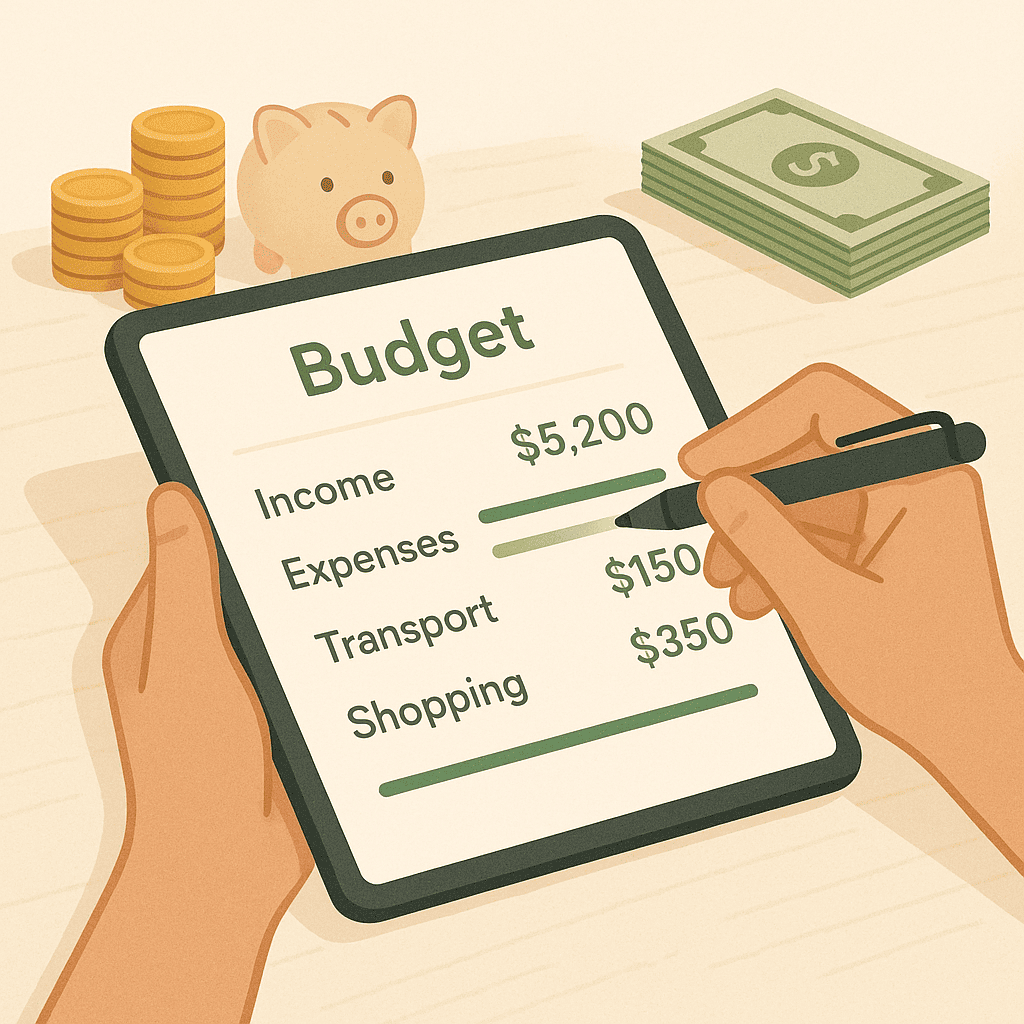
Introduction
Ever feel like your money disappears faster than a free sample at the grocery store? You’re not alone! For many of us, the idea of personal finance can feel overwhelming, especially when it comes to managing where our hard-earned cash actually goes. But what if I told you there’s a simple tool that can give you control, reduce stress, and even help you reach your financial dreams? That tool is a personal budget.
A budget isn’t about restricting yourself or cutting out all the fun. Instead, it’s a roadmap that shows you exactly where your money comes from and where it’s going. It’s about making informed choices, achieving your financial goals, and ultimately, gaining peace of mind. Ready to stop wondering where your money went and start telling it where to go? Let’s dive into the simple steps to building your first budget!
Step 1: Know Your Income
The very first step in any budgeting journey is to understand how much money you actually have coming in. This is your starting point, your foundation.
For most people, this means your take-home pay after taxes, insurance, and other deductions. If you have multiple income sources (like a side hustle or freelance work), make sure to include all of them.
- Actionable Tip: Gather your pay stubs, bank statements, or any records that show your income for the last month or two. Write down your total net income (after-tax income) for a typical month. If your income varies, try to calculate an average, or err on the side of a slightly lower estimate to be conservative.
Step 2: Track Your Spending
This is where the real eye-opening begins! Many people are surprised to discover where their money truly goes. Tracking your spending isn’t about judgment; it’s about awareness.
For one to two months, meticulously record every single dollar you spend. Yes, every coffee, every subscription, every late-night online purchase.
- How to track:
- Apps: Budgeting apps like Mint, YNAB (You Need A Budget), or PocketGuard can automatically categorize your transactions.
- Spreadsheets: A simple Google Sheet or Excel document works wonders.
- Pen and paper: Old school, but effective! Keep a small notebook with you.
Think of Sarah, a 28-year-old marketing assistant. She thought she was careful with money, but after tracking her spending for a month, she realized she was spending nearly $200 a month on daily coffee shop visits and impulse buys at the convenience store! This awareness allowed her to make conscious changes.
Step 3: Categorize Your Expenses
Once you have your spending data, it’s time to organize it. Group similar expenses together. This helps you see patterns and identify areas where you might be overspending.
Common categories include:
- Fixed Expenses (usually the same every month): Rent/mortgage, loan payments (car, student), insurance premiums, subscriptions.
- Variable Expenses (change month-to-month): Groceries, utilities (electricity, water), transportation (gas, public transit), dining out, entertainment, clothing.
Step 4: Create Your Budget Plan
Now for the fun part: putting it all together! The basic budgeting formula is simple: Income – Expenses = What’s Left (or What You Overspent).
Assign a specific amount of money to each of your spending categories for the upcoming month. Be realistic, not idealistic. Use your tracked spending data from Step 2 as a guide.
A popular budgeting method is the 50/30/20 Rule:
- 50% of income for Needs: Housing, utilities, groceries, transportation, insurance, minimum loan payments.
- 30% of income for Wants: Dining out, entertainment, hobbies, travel, new gadgets, subscription services (beyond essentials).
- 20% of income for Savings & Debt Repayment: Emergency fund, retirement contributions, extra debt payments.
- Actionable Tip: Don’t be afraid to adjust these percentages to fit your unique situation! The goal is to make it work for you. If your expenses currently exceed your income, this is where you start looking for areas to trim.
Step 5: Adjust and Optimize
Your first budget probably won’t be perfect, and that’s okay! A budget is a living document, meant to be reviewed and adjusted regularly.
- Identify areas for cuts: Are you spending too much on dining out? Can you find a cheaper phone plan? Look for “leaks” in your spending.
- Find ways to save: Can you cook more meals at home? Shop generic brands? Look for free entertainment options?
- Prioritize goals: Are you saving for a down payment on a house? Paying off high-interest debt? Make sure your budget reflects these priorities. You might need to temporarily cut back on “wants” to free up more money for “needs” or “savings.”
Step 6: Stick With It and Track Progress
A budget only works if you stick to it. This doesn’t mean you can never deviate, but it does mean being mindful of your spending throughout the month.
- Regular Check-ins: At least once a week, or whenever you get paid, review your budget. How are you doing in each category? Are you on track?
- Use your tools: Continue using your budgeting app, spreadsheet, or notebook to log your expenses and compare them against your planned budget. This continuous monitoring is crucial.
Step 7: Review and Adapt Monthly
At the end of each month, take some time to review your budget.
- Did you stick to your limits?
- Where did you overspend?
- Where did you underspend?
- Are your categories still relevant?
- Have your income or major expenses changed?
Adjust your budget for the next month based on what you learned. Maybe you consistently spend more on groceries than you allocated – adjust that category for next month. Or perhaps you found you have extra cash at the end of the month that you can now put towards savings or debt. This continuous cycle of tracking, reviewing, and adapting is key to long-term financial success.
Conclusion
Building your first personal budget might seem like a daunting task, but by following these 7 simple steps, you’ll be well on your way to taking control of your finances. Remember, a budget is a tool for empowerment, not deprivation. It gives you clarity, reduces financial stress, and helps you achieve your biggest financial goals. Start small, be consistent, and celebrate your progress along the way. Your future self will thank you!
So, what are you waiting for? Grab a notebook, open a spreadsheet, or download a budgeting app and start building your budget today!