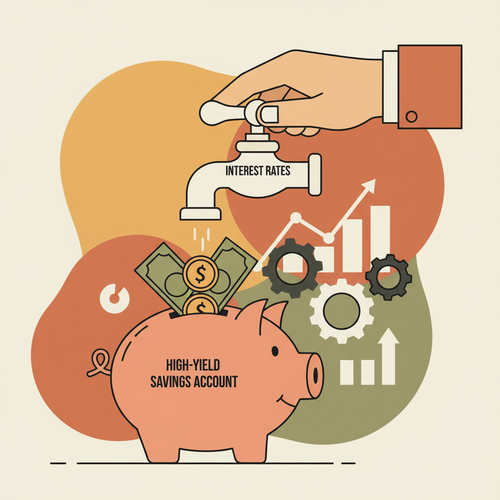
Understanding Federal Reserve rate cuts and high-yield savings accounts is crucial for any saver. Specifically, these monetary policy changes directly influence your earning potential. Many beginner investors wonder about the effects. Therefore, grasping this connection helps you make informed financial decisions. This article will explain how the Federal Reserve operates. Furthermore, we will explore the direct impact on your high-yield savings. You will also learn strategies to navigate a changing interest rate environment. Ultimately, managing your savings wisely becomes easier with this knowledge.
Understanding the Federal Reserve’s Role
The Federal Reserve, often called “the Fed,” acts as America’s central bank. Indeed, its primary job is maintaining a stable financial system. Specifically, it manages the nation’s money supply. This includes controlling inflation and promoting maximum employment. The Fed influences interest rates through various tools. Consequently, these actions impact everything from mortgages to your savings. The Federal Open Market Committee (FOMC) sets key interest rate targets. Therefore, their decisions carry significant weight. The Federal Reserve’s official website offers more details.
The Federal Funds Rate Explained
A crucial tool for the Fed is the federal funds rate. Indeed, it is a target rate. Specifically, it affects what banks charge each other for overnight loans. Banks use these loans to meet reserve requirements. The Fed does not directly set consumer rates. However, changes in the federal funds rate ripple through the economy. Thus, it influences other interest rates. For instance, mortgage rates often follow this trend. Similarly, rates on credit cards adjust. Ultimately, the federal funds rate serves as a benchmark.
How Federal Reserve Rate Cuts Operate
When the Federal Reserve “cuts” interest rates, it lowers its target for the federal funds rate. This action aims to stimulate economic growth. Consequently, borrowing money becomes cheaper for banks. Banks, therefore, pay less to borrow from each other. They then pass on some of these savings to consumers. This encourages more borrowing and spending. Lower rates make loans more attractive. For instance, car loans and business loans might see reduced interest. The goal is to boost economic activity. Thus, a rate cut is a signal of easier credit conditions.
Exploring High-Yield Savings Accounts
A high-yield savings account (HYSA) offers a significantly higher interest rate. These rates surpass traditional savings accounts. Typically, online banks provide these accounts. They have lower overhead costs. Therefore, they can offer better rates. HYSAs remain a popular choice. Many individuals use them for emergency funds. Others save for short-term goals. For instance, a down payment on a car or home often goes into an HYSA. Funds deposited are generally liquid. This means you can access your money relatively easily. Furthermore, these accounts are FDIC-insured. This protects your deposits up to specific limits. Consequently, they are considered a very safe place for your money.
Direct Impact on Your High-Yield Savings Account
Federal Reserve rate cuts directly affect high-yield savings accounts. When the Fed lowers its benchmark rate, banks typically follow suit. Specifically, the annual percentage yield (APY) on your savings account will likely decrease. This happens because banks themselves earn less. They earn less on the money they lend out. Therefore, they can afford to pay less interest to depositors. High-yield accounts remain competitive. However, their rates will trend downwards. Savers might notice a drop in their monthly interest earnings. For instance, an account earning 4.00% APY might adjust to 3.50% or lower. This change is not always immediate. However, it is usually inevitable. Consequently, your money earns less over time. This is a natural reaction to a looser monetary policy. Understanding this connection is vital for managing expectations.
Why Banks Adjust High-Yield Savings Rates
Banks lower rates on high-yield savings accounts for several reasons. Firstly, their own borrowing costs decrease. As mentioned, the federal funds rate influences interbank lending. When this rate drops, banks pay less to borrow. Therefore, they have less incentive to attract deposits with high rates. Secondly, competition plays a role. If all banks expect rates to fall, they adjust together. No single bank wants to overpay for deposits. Furthermore, banks need to maintain profit margins. Paying high interest on savings while earning less on loans is unsustainable. Thus, they must balance these factors. The overall economic environment also influences decisions. During periods of economic slowdown, rates often fall. This stimulates spending. Consequently, banks respond by reducing deposit rates. They align with the broader economic policy. Specifically, this helps encourage lending rather than saving.
Strategies for Savers During Rate Cut Cycles
Navigating a period of declining interest rates requires proactive steps. Indeed, savers can employ several strategies. Firstly, shop around for the best available rates. Different banks react differently to Fed cuts. Some may lag others in lowering their annual percentage yields (APYs). Therefore, comparing options regularly is wise. Use online comparison tools for this purpose. You might find a regional bank still offering a competitive rate. Online-only banks frequently lead with better offerings. Specifically, they have lower operating costs. Consequently, they can often pass those savings to you. Consistently reviewing your options maximizes your earnings. This takes a little effort but can pay off.
Secondly, consider Certificate of Deposits (CDs). A CD locks in an interest rate for a specific term. Effectively, this protects your earnings from further rate drops. However, your money is less accessible. You pay a penalty for early withdrawals. For instance, a 1-year CD might offer a stable rate. Conversely, a 6-month CD offers less commitment. Longer-term CDs typically offer higher rates. This compensates for the reduced liquidity. Therefore, CDs are suitable for money you won’t need immediately. They provide predictability in uncertain times. Always check the early withdrawal penalties. This ensures you understand the commitment.
Thirdly, explore other investment options. This might include short-term bonds or money market funds. However, these often carry different risks. Money market funds invest in highly liquid, short-term debt. They typically offer slightly higher returns than HYSAs. Yet, they are not always FDIC-insured. Research their specific protections. Short-term bond funds invest in government or corporate debt. They offer income potential. Conversely, they are subject to market fluctuations. Therefore, their principal value can change. Always understand the risks before investing. Furthermore, consult a financial advisor if needed. They can help align investments with your risk tolerance. They also consider your financial goals.
Lastly, always maintain an adequate emergency fund. Keep it in a liquid, safe place. Even with lower rates, accessibility is key. Therefore, an HYSA remains suitable for this purpose. Aim for three to six months of living expenses. Crucially, it provides a financial safety net. Do not compromise liquidity for slightly higher returns here. An emergency fund’s primary purpose is immediate access. Thus, its security and availability outweigh maximizing interest. Adaptability is your best asset. Adjust your strategy as economic conditions evolve. Staying informed helps you make smarter choices.
Broader Economic Implications of Rate Cuts
Federal Reserve rate cuts extend beyond your personal savings. Indeed, they have significant economic implications. Primarily, cuts aim to stimulate economic growth. Lower borrowing costs encourage businesses to invest. They also prompt consumers to spend more. For instance, mortgages become more affordable. This can boost the housing market. Similarly, car sales might increase. The economy experiences a boost in demand. Consequently, it often leads to job creation. Therefore, the Fed uses cuts during economic slowdowns.
However, rate cuts also carry potential risks. One primary concern is inflation. When money is cheaper and spending increases, prices can rise. The Fed must balance stimulating growth with controlling inflation. Excessive inflation erodes purchasing power. Moreover, this offsets some benefits of economic growth. The Fed constantly monitors economic data. They adjust policy based on these indicators. Therefore, their decisions are complex.
The long-term outlook for interest rates depends on many factors. Economic growth, inflation, and global events all play a role. Savers must remain vigilant. Understanding these broader implications helps you contextualize rate changes. It also informs your financial planning. Ultimately, the Fed strives for a stable and prosperous economy. Its actions ripple through every financial aspect. Reuters often covers these economic shifts. Bloomberg provides in-depth market analysis. The Wall Street Journal also provides excellent financial reporting.
Conclusion
In conclusion, Federal Reserve rate cuts directly influence your high-yield savings account. Understanding this relationship empowers you. While your APY may decrease, you possess strategies to mitigate the impact. Remember, the Fed aims to stimulate the economy. Your savings strategy should adapt accordingly. Shop for competitive rates. Consider fixed-rate options like CDs. Explore other suitable investments. Always prioritize your emergency fund’s liquidity. By staying informed, you can navigate changing interest rate environments effectively. Therefore, remain proactive in managing your money. This approach ensures your financial well-being. Ultimately, informed decisions lead to better outcomes.