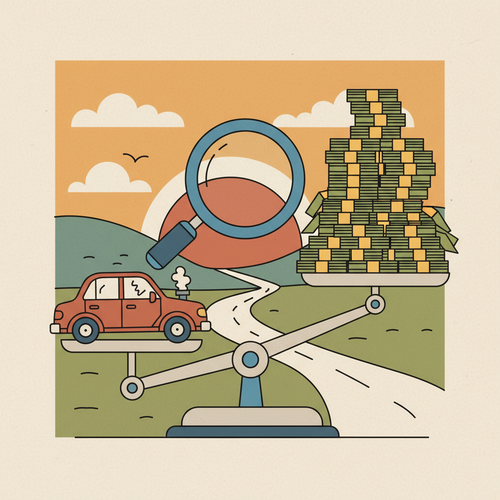
Purchasing a new vehicle brings immense excitement and the promise of new adventures. However, amidst the joy, a critical financial question often arises: do you need gap insurance for your new vehicle? This specific type of coverage provides a vital safety net, protecting you from a potentially devastating financial loss. Consequently, understanding its intricacies and evaluating its necessity through a detailed cost-benefit analysis becomes paramount. This article will thoroughly explore gap insurance, helping you determine if it aligns with your financial strategy and vehicle ownership.
Understanding Gap Insurance: What is it and How Does it Work?
Understanding gap insurance is fundamental to making an informed decision about your vehicle’s financial protection. Essentially, this coverage addresses a specific vulnerability that arises shortly after purchasing a new car. It bridges the financial gap between what you owe on your vehicle and its actual cash value (ACV) if it’s declared a total loss or stolen. Therefore, it prevents you from being left with a substantial outstanding loan balance on a vehicle you no longer possess.
What is Gap Insurance?
Gap insurance, often an optional add-on to your standard auto policy, is designed to protect car owners in unfortunate circumstances. Suppose your brand-new car is totaled in an accident or stolen and unrecoverable. Your primary auto insurance policy typically pays out the vehicle’s actual cash value at the time of loss. Noteworthy, this ACV is almost always less than what you paid for the car, especially in the first few years. This difference can leave you owing thousands of dollars to the lender or lessor. Remarkably, gap insurance steps in to cover precisely this deficit.
How Standard Auto Insurance Falls Short
Standard collision and comprehensive insurance policies are indispensable for protecting your vehicle. Nevertheless, they primarily compensate you for the car’s depreciated value, not the original purchase price or your outstanding loan balance. Vehicle depreciation begins the moment you drive a new car off the dealership lot. Experts estimate that a new car can lose 10-20% of its value in the first year alone. Consequently, this rapid devaluation creates a significant financial exposure.
For example, imagine you buy a car for $35,000, financing the full amount. A few months later, the car is totaled. Your insurer assesses its ACV at $28,000. You still owe $34,000 on your loan. Without gap insurance, you would be personally responsible for paying the $6,000 difference ($34,000 – $28,000) to your lender. Moreover, you would still need to secure another vehicle. This scenario highlights a common financial pitfall for new car owners. Furthermore, this gap can grow larger with longer loan terms or smaller down payments. For a deeper understanding of actual cash value, you can refer to Investopedia’s explanation of ACV.
The Rapid Depreciation of New Vehicles: A Core Problem
The swift decline in a new vehicle’s value represents a fundamental challenge for many car buyers. This phenomenon, known as depreciation, is an unavoidable reality of car ownership. Immediately after driving a new car off the lot, its value drops significantly, sometimes by thousands of dollars. This initial depreciation is often the steepest, establishing a substantial “gap” between the purchase price and the car’s market value.
The Reality of Driving Off the Lot
Car depreciation is a relentless process. Many sources, including consumer reports, consistently show that a new car can lose up to 20% of its value within its first year of ownership. This percentage can vary based on the make, model, and market demand, but the trend remains constant. Specifically, this rapid devaluation means that even a minor accident leading to a total loss shortly after purchase can result in a considerable financial shortfall when your standard insurance policy pays out. Understanding this reality is crucial for financial planning. Furthermore, this immediate loss of value often surprises first-time new car buyers.
When Your Loan Outpaces Your Vehicle’s Value
Negative equity occurs when the amount you owe on your car loan exceeds the car’s current market value. This situation is particularly common with new vehicles due to the immediate depreciation mentioned above. Several factors contribute to negative equity. Firstly, making a small down payment, or no down payment at all, means you start with a higher principal balance. Secondly, opting for an extended loan term, such as 72 or 84 months, slows down the rate at which you build equity in the vehicle. Lastly, high interest rates increase the total cost of the loan, further widening the gap. Consequently, if your vehicle is totaled while you have negative equity, your standard insurance payout will not cover the full loan amount, leaving you to pay the difference out of pocket. For more details on car depreciation and its impact, explore resources from the Edmunds car depreciation guide.
Who Truly Needs Gap Insurance? A Deep Dive into Scenarios
While the concept of gap insurance is straightforward, its necessity is highly individual. Certain situations significantly increase your risk of facing a substantial financial loss without it. Analyzing these scenarios helps determine if this coverage is a wise investment for your specific circumstances.
Leased Vehicles
If you are leasing a vehicle, gap insurance is almost universally a requirement. Lessors include it in nearly all lease agreements for a compelling reason. When you lease, you do not own the car; you are essentially renting it for a fixed period. In the event of a total loss, your standard auto insurance would pay the actual cash value, which would likely be less than the remaining lease payments and any end-of-lease penalties. The lessor would then hold you responsible for this difference. Therefore, gap insurance protects you from this significant financial exposure, ensuring you don’t owe money on a vehicle you can no longer drive.
Long Loan Terms and Low Down Payments
Individuals who finance a new car with a small down payment, or no down payment at all, are prime candidates for gap insurance. A low down payment immediately places you in a position where the loan amount is very close to, or even exceeds, the car’s initial depreciated value. Similarly, choosing an extended loan term (e.g., 60, 72, or 84 months) means your principal balance decreases slowly. Over time, your car’s value will likely decline faster than you pay down the loan, creating a persistent state of negative equity. Consequently, gap insurance provides critical protection in these high-risk scenarios.
Expensive Vehicles and High-Interest Loans
The total financial exposure increases proportionally with the price of the vehicle. Purchasing an expensive car means a larger initial loan amount and, thus, a potentially much larger gap between what you owe and its depreciated value. Furthermore, if your loan carries a high interest rate, a greater portion of your early payments goes towards interest rather than reducing the principal. This dynamic exacerbates the negative equity situation. Therefore, for costly vehicles or those financed with less favorable terms, gap insurance becomes a more compelling consideration. This additional coverage helps to mitigate the significant financial risk involved.
Conversely, When You Might NOT Need It
Not every new car owner requires gap insurance. Several situations make this coverage less necessary. Firstly, if you made a substantial down payment, perhaps 20% or more, you likely started with immediate equity in the vehicle. Secondly, if you chose a short loan term, such as 36 or 48 months, you will pay down the principal much faster, minimizing the time you spend in a negative equity position. Moreover, if you paid cash for your new vehicle, gap insurance is entirely unnecessary, as there is no loan to cover. Finally, some standard auto insurance policies offer “new car replacement” or “extended replacement cost” coverage. These unique clauses typically cover the cost of a brand-new vehicle of the same make and model if yours is totaled within a certain timeframe or mileage limit, effectively rendering traditional gap insurance redundant. Always review your policy carefully.
Cost-Benefit Analysis: Is Gap Insurance Worth the Investment?
Deciding whether to purchase gap insurance ultimately boils down to a personal cost-benefit analysis. You must weigh the financial outlay for the coverage against the potential financial relief it offers in the worst-case scenario. This evaluation requires understanding both sides of the equation.
The Cost of Gap Insurance
The cost of gap insurance can vary significantly depending on where you purchase it. Dealerships often offer it as a lump sum, which can be rolled into your vehicle loan, increasing your monthly payments and total interest paid. Alternatively, your auto insurance provider might offer it as an add-on to your existing policy, typically for a small increase in your monthly or annual premium. Finally, some third-party companies specialize in gap coverage. Annual costs for gap insurance from an insurer typically range from $20 to $60, while a one-time lump sum from a dealer can be several hundred dollars. Comparing these options is vital for securing the best value. Consequently, shopping around can yield considerable savings.
The Potential Financial Benefit
The primary benefit of gap insurance is the avoidance of significant out-of-pocket expenses following a total loss. Without it, you could be left owing thousands of dollars on a car you no longer own, alongside the burden of purchasing a new vehicle. This situation can be financially crippling for many. Furthermore, gap insurance offers considerable peace of mind, knowing that a sudden accident won’t derail your financial stability. It protects your credit score by ensuring your loan is fully paid off, preventing missed payments on a non-existent asset. Therefore, the financial security it provides can be invaluable, especially for those with limited emergency savings. It acts as a shield against unforeseen economic hardship.
Calculating Your Personal Risk
To determine your personal need, calculate your estimated gap. Firstly, find your current loan balance. Secondly, research the current market value (ACV) of your specific vehicle make and model. Sites like Kelley Blue Book or Edmunds can provide excellent estimates. Thirdly, compare these two figures. If your loan balance is significantly higher than the ACV, you have a substantial gap. Moreover, consider your financial resilience. Could you comfortably pay the difference if a total loss occurred today? If the answer is no, gap insurance is likely a prudent investment. This simple calculation offers a clear picture of your vulnerability. For reliable information on consumer financial protection, consider resources from the Consumer Financial Protection Bureau on auto loans.
Alternatives and Important Considerations
Before committing to gap insurance, it is prudent to explore all available options and carefully consider your personal financial landscape. There might be alternatives or existing coverages that meet your needs, or specific strategies to minimize your financial exposure.
Review Your Standard Auto Policy
Your existing auto insurance policy might already offer some level of protection against the gap. Some premium policies include “new car replacement” coverage, which ensures that if your car is totaled within a certain period (e.g., first year or 15,000 miles), the insurer replaces it with a brand new one of the same make and model. Other policies may have “extended replacement cost” coverage. Always read your policy documents thoroughly or speak with your insurance agent to understand what you are currently covered for. Knowing your deductible is also crucial, as gap insurance typically covers the amount beyond what your standard policy pays and your deductible. Therefore, a comprehensive review of your current coverage is your first step.
Shop Around for Coverage
Do not feel pressured to purchase gap insurance from the dealership. While convenient, dealership-offered gap insurance can often be more expensive than options from your existing auto insurer or third-party providers. It is highly recommended to compare prices and terms from at least three different sources. Firstly, inquire with your current auto insurance company about their gap insurance options and pricing. Secondly, research reputable third-party providers specializing in gap coverage. Lastly, review the dealership’s offer. By comparing these options, you can ensure you are getting the most cost-effective coverage for your needs. Consequently, a little research can save you a significant amount of money.
Consider Your Financial Situation
Ultimately, your personal financial health plays a significant role in the decision-making process. If you have a robust emergency fund that could comfortably cover a potential gap of several thousand dollars, gap insurance might be less critical. However, for those with tighter budgets or who prefer to minimize financial risk, the relatively small cost of gap insurance can provide invaluable peace of mind. Assess your ability to absorb a sudden, uninsured loss. Are you comfortable taking on the risk of negative equity, or would you prefer the certainty of full loan coverage? Your comfort level with financial risk should guide your decision. Furthermore, consider your long-term financial goals and how a sudden car loan deficit might impact them.
Conclusion
The question of “do you need gap insurance for your new vehicle?” does not have a one-size-fits-all answer. It is a nuanced financial decision that hinges on your individual circumstances, including your down payment, loan term, interest rate, and personal risk tolerance. While it offers a crucial safety net for many, protecting against the rapid depreciation of a new car and potential negative equity, it may not be necessary for everyone.
Carefully evaluate your specific situation by performing a personal cost-benefit analysis. Review your current auto insurance policy for existing gap-like coverage, compare prices from various providers, and consider your financial preparedness for an unexpected total loss. Ultimately, an informed decision about gap insurance ensures that your excitement for a new vehicle is not overshadowed by unforeseen financial burdens, safeguarding your investment and your peace of mind.